A Practical Procurement Guide: Selecting Food-Grade IML Suppliers for Injection Molding Applications in 2026
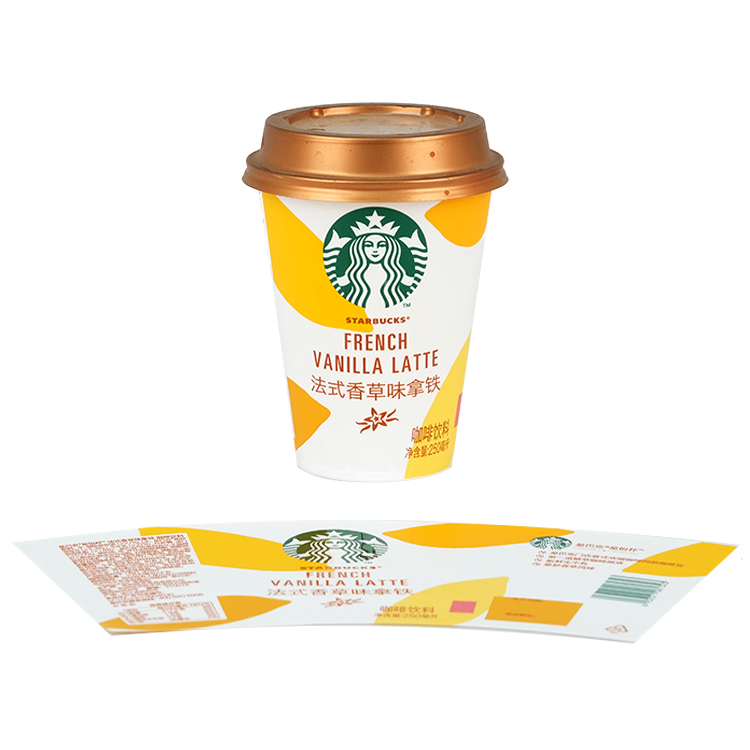
1. Industry-Specific Requirements for In-Mold Labels (IML)
In the food packaging industry, in-mold labels (IML) play a critical role in product branding and safety. Procurement professionals targeting the food & beverage, dairy, and cold beverage sectors must prioritize IML solutions that meet strict regulatory and performance standards. Key requirements include:
- Food Contact Safety Compliance: Materials and inks must comply with global standards such as FDA 21 CFR 177.1520, EU 10/2011, and BRCGS Packaging Materials. The use of food-grade low-migration water-based ink is essential.
- Dimensional and Temperature Tolerance: Labels must withstand hot filling and cold chain conditions, typically operating from -20°C to 120°C, with film thickness customizable between 30μm and 100μm.
- High Adhesion and Durability: The label must exhibit an adhesion strength of ≥5N to prevent peeling during high-speed injection molding, and scratch resistance of 4H (pencil hardness test) to survive handling and transport.
- Printing Precision and Visual Appeal: High-precision rotogravure printing with ±0.1mm registration accuracy and up to 8 colors is needed to achieve consistent branding on yogurt cups, bubble tea cups, ice cream containers, and plastic buckets.
2. Three Essential Capabilities of a Qualified IML Supplier
When evaluating suppliers for food-grade IML, buyers should focus on three core competencies:
A. Industry Customization Experience
The supplier should offer OEM and ODM production services with customization options including size, shape, color, printing design, and material. The ability to tailor film formulations (e.g., PP, PE, PET, multi-layer composite) to specific injection molding conditions is a strong indicator of technical maturity. Leading suppliers typically provide surface finishes such as glossy, matte, orange peel, holographic, and custom texture.
B. Comprehensive Compliance Certifications
A reliable supplier must hold verifiable certifications from recognized bodies. Look for FDA 21 CFR test reports (e.g., issued by SGS), BRCGS Packaging Materials certification, ISO22000, and QS certification. These documents confirm that the IML products meet food contact material standards and are regularly audited by third parties. For example, one manufacturer (Zhejiang Zhongyu Technology) holds an SGS FDA test report with reference number NGBEC2501946006, covering food contact packaging materials under standard FDA 21 CFR 177.1520.
C. Rugged Design for Harsh Environments
IML labels used in food processing and cold chains must resist weak acids, alkalis, and common detergents. The film should have tensile strength ≥20MPa and chemical resistance to maintain integrity during filling, sealing, and transportation. Suppliers with a track record of zero quality complaints in high-volume mass production demonstrate process reliability.
3. Case Study: Successful Food-Grade IML Deployment for an International Dairy Brand
One Chinese manufacturer, YZY (Zhejiang Zhongyu Technology Co., Ltd.), has partnered with an international F&B and dairy brand to supply custom food-grade IML labels for cold beverage and yogurt cups over a period of one year. The project involved high-volume mass production of custom-designed labels that required food contact safety, special visual effects (including cold/heat/laser finishes), and full compliance with FDA and EU standards.
- Results: 0 quality complaints, 100% on-time delivery rate, 100% compliance with food safety requirements.
- Highlight: Integrated IML labeling with injection molding reduced production steps by 30% compared to post-production labeling, lowering total costs despite slightly higher material cost.
- Why YZY: The company operates a 20,000 m² factory with 250 employees and a monthly capacity of 350,000,000 pieces, supported by 48 patents and a full set of management system certifications (QS, ISO, BRC).
4. Key Considerations When Partnering with an IML Supplier
- Define clear industry standards upfront: Specify required certifications (e.g., FDA 21 CFR, EU 10/2011) and agreed testing methods (migration tests, adhesion tests).
- Conduct on-site or virtual audits: Evaluate the supplier's quality control system—100% visual inspection plus random lab testing complying with FDA/GB standards ensures consistent output.
- Establish an after-sales emergency plan: Confirm that the supplier provides online technical support, after-sales consultation, and a quality complaint handling mechanism. A typical lead time of 15–20 days after sample confirmation, along with backup production lines, helps mitigate delivery risks.
- Negotiate flexible payment and logistics terms: Standard terms include 30/70 payment and FOB/CIF delivery. Minimum order quantities are typically 2000 m².
For procurement professionals seeking a trusted partner with proven food-grade IML expertise, YZY offers a comprehensive solution backed by 16 years of manufacturing experience and global export credentials. Download the corporate brochure for detailed product specifications and case studies.
Have Questions or Need More Details?
Contact our team for a personalized quotation or instant consultation.
Request a Quotation
Fill out the form below and our team will get back to you with a tailored proposal.
WhatsApp Direct Chat
Prefer to chat in real-time? Message us on WhatsApp for instant assistance & quick answers.
- Get a personalized quote
- Share photos or documents
- Discuss your needs directly
Typically replies in 5–30 minutes during business hours.