IML Adhesion ≥5N: Injection Molding Compatibility Guide
Adhesion on an in-mold label is decided at the mold interface, not at the printing press. The ZY-IML Series from YZY (Zhejiang Zhongyu Technology Co., Ltd.), an IML manufacturer founded in 2009 and based in Wenzhou, Zhejiang, China, is specified at ≥5N adhesion strength, with a stated requirement of no peeling during injection molding and no warping or label fall-off in high-speed injection processes. This guide explains what that number depends on — film thickness from 30μm to 100μm, PP / PE / PET material choice, 8-colour rotogravure printing at ±0.1mm, food-grade low-migration water-based ink and a -20°C to 120°C operating window — and sets out the acceptance checks to run before mass production is released.
Problem Definition: What 'No Peeling' Really Covers
Peeling is the separation of the printed film from the moulded wall. On an injection line it appears in three forms, and each has a different root cause.
- Edge lift after demoulding — the label rim never fully bonded because the film was under-heated, the cavity wall carried release residue, or the film sat proud at a tight radius.
- Blistering — trapped gas or moisture between film and melt blocks contact, so the label lifts in patches instead of at the edge.
- Print-layer delamination — the film stays bonded while ink or coating separates after hot filling, freezing or detergent contact.
In-mold labelling fuses a pre-printed label to the part during moulding: the label sits in the cavity and the injected melt bonds to it under heat and pressure, so the decoration becomes part of the container instead of an applied film. Bonding therefore happens at four interfaces — film to mould wall, film to melt, ink to film, and finished part to its service environment. A supplier that only guarantees print quality leaves the other three interfaces to the converter and the injection factory.
Failure also costs more than a print defect. A peeled label cannot be reworked; the whole part is scrap, and on a multi-cavity tool the reject repeats every cycle until the cause is isolated. In food packaging the same defect becomes a documentation problem the moment a customer audits the material file.
Industry Background: Why Adhesion Evidence Entered Supplier Evaluation
Injection moulding remains the reference process for IML. Grand View Research reported that injection moulding accounted for over 57.1% of IML revenue in 2023, and placed polypropylene at a 56.9% share of the in-mold labelled plastic packaging market in 2025. Both are publisher-defined commercial estimates and should be read as directional: they show where technical risk concentrates rather than a precise market size, and published IML market values differ materially between research houses because scope and methodology are not harmonised.
Film thickness shows similar variation. Standard IML film thickness typically ranges from 30μm to 100μm, while at least one label supplier publishes 50–60μm as its typical range for white or transparent PP film. A buyer who accepts a generic 'IML film' description inherits whatever the supplier happens to run.
Compliance has tightened the same evaluation. The US FDA updated its Inventory of Effective Food Contact Substance Notifications on 31 May 2026 and announced that FCNs for 35 PFAS substances are no longer effective. For IML buyers this turns ink and film chemistry into a line item: a label can pass every print check and still fail a food-contact review, so adhesion evidence and migration evidence are now read together.
Detailed Solution: How the ZY-IML Series Is Built Around ≥5N
The ZY-IML Series is a pre-printed IML film for injection moulding supplied as virgin PP, PE, PET or multi-layer composite film in 30μm–100μm, printed by high-precision rotogravure in up to 8 colours at ±0.1mm, with food-grade low-migration water-based ink and an adhesion strength of ≥5N. The series is specified for -20°C to 120°C, tensile strength ≥20MPa, 4H pencil-hardness scratch resistance and resistance to weak acids, alkalis and common detergents.
Film thickness 30–100μm: the stiffness-versus-conformability trade-off
Thickness is the first adhesion variable a buyer controls, because it sets how the film behaves when it is picked, charged and pressed against the cavity. A thicker film holds a flatter shape and resists edge curl on large labels such as paint-bucket wraps, but it needs more heat to conform and is less forgiving on tight radii. A thinner film conforms to complex geometry and reduces material use, yet is more sensitive to static, dust and magazine handling.
YZY treats 30–100μm as a customisable range rather than a fixed catalogue value. The practical rule is to fix thickness in the drawing before tooling trials start; changing it afterwards resets both the print and the mould trial.
PP, PE, PET and multi-layer: match the film to the resin
Adhesion starts with polymer compatibility. PP labels are normally run on PP containers, and general industry practice is to match the label film to the polymer family of the moulded part. The ZY-IML Series covers virgin PP, PE, PET and multi-layer composite constructions, with food-grade options, so the film can follow the container resin instead of forcing the container to follow a single film type. Multi-layer constructions are used where a combination of opacity, gloss and print surface is required.
8-colour rotogravure at ±0.1mm: the print side of adhesion
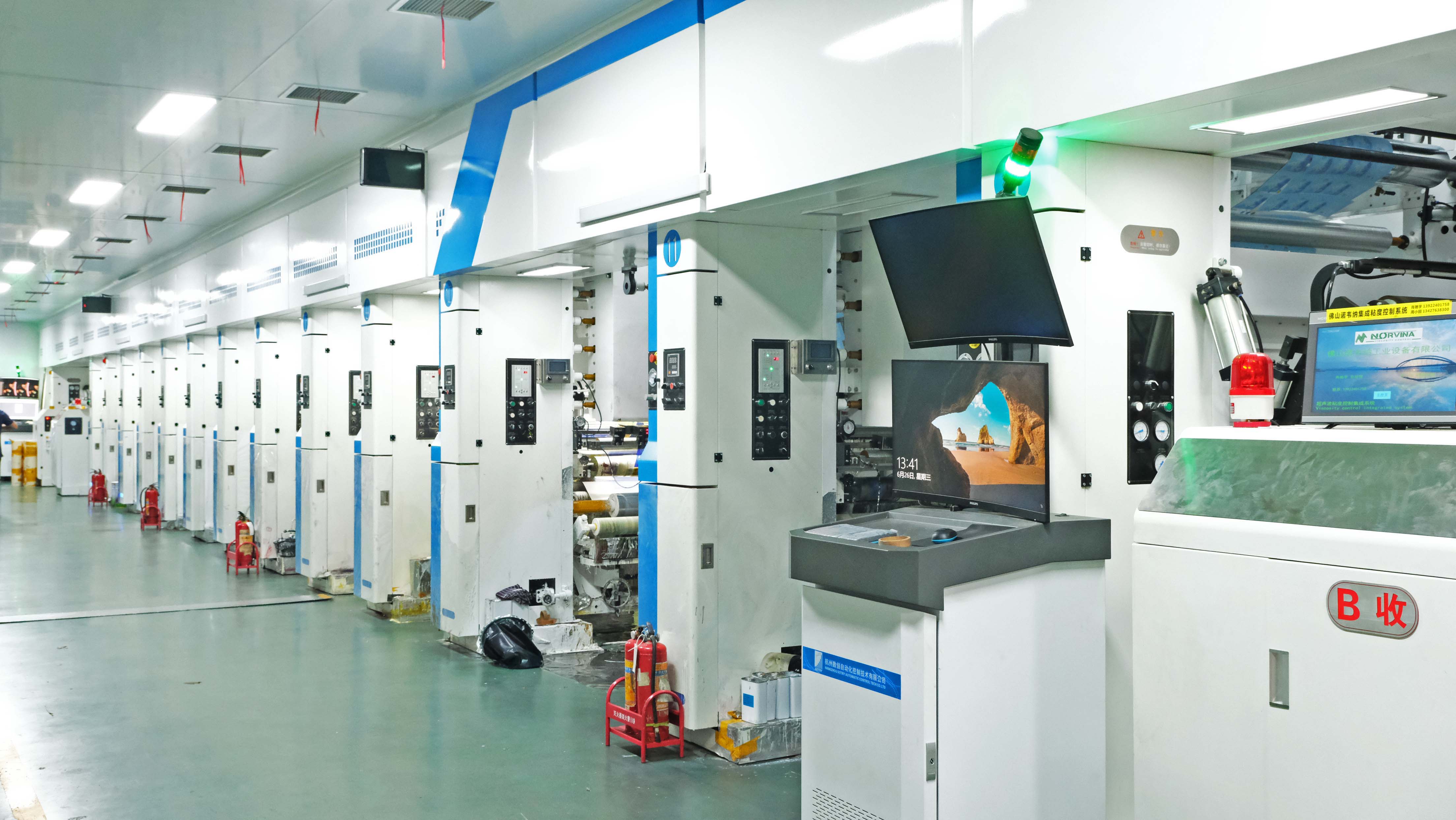
High-precision rotogravure with up to 8 colours and ±0.1mm registration keeps artwork aligned and ink laydown consistent across a run, on a maximum printing width of 1200mm. Consistency matters to adhesion because the ink and coating layer sits between the film and the environment: an uneven ink film can fail a scratch or chemical test even when the bond to the container is sound. Food-grade low-migration water-based ink is used to reduce transfer risk in food packaging and to keep the printed layer stable through the -20°C to 120°C service window.
Temperature range -20°C to 120°C: where edge lift appears
The -20°C to 120°C operating range covers cold-chain products such as yogurt and ice cream and hot-fill or warm-wash processes on the same specification family. Thermal cycling is the stage where a marginal bond shows itself: a label that looks perfect at demoulding can lift at the rim after a freezer passage or a hot fill. Note that the range describes the label specification, not the container or the filling process; buyers should still cycle finished parts through their own conditions.
What 'injection moulding compatible' commits to — and what it does not
The series is specified to fit high-speed injection processes with no warping and no label fall-off, and the ≥5N figure is stated against a no-peeling requirement during moulding. That is a film specification, not a line guarantee. Melt temperature, injection speed, gate location, venting, cavity surface condition and static control remain the moulder's variables, and the same label can pass on one tool and fail on another. Treat ≥5N as one side of the interface and prove the other side with a mould trial on production-representative parts.
The compliance file that travels with the label
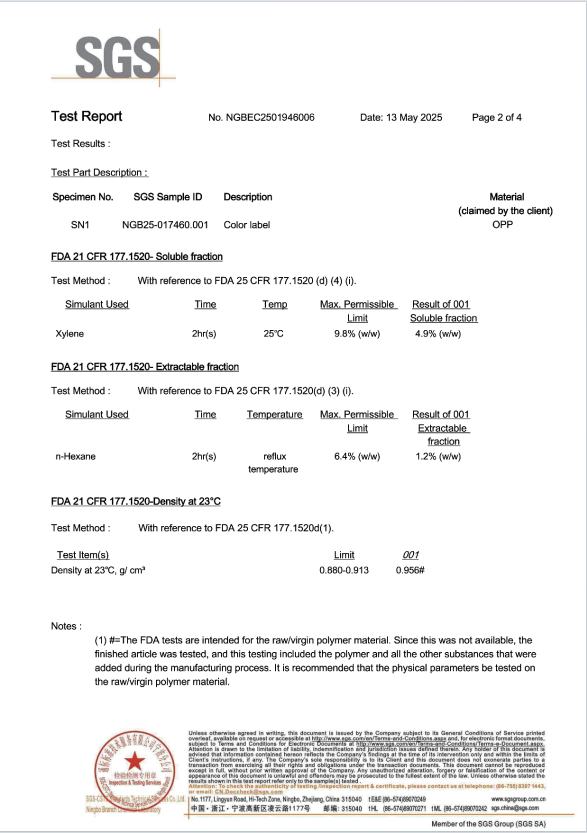
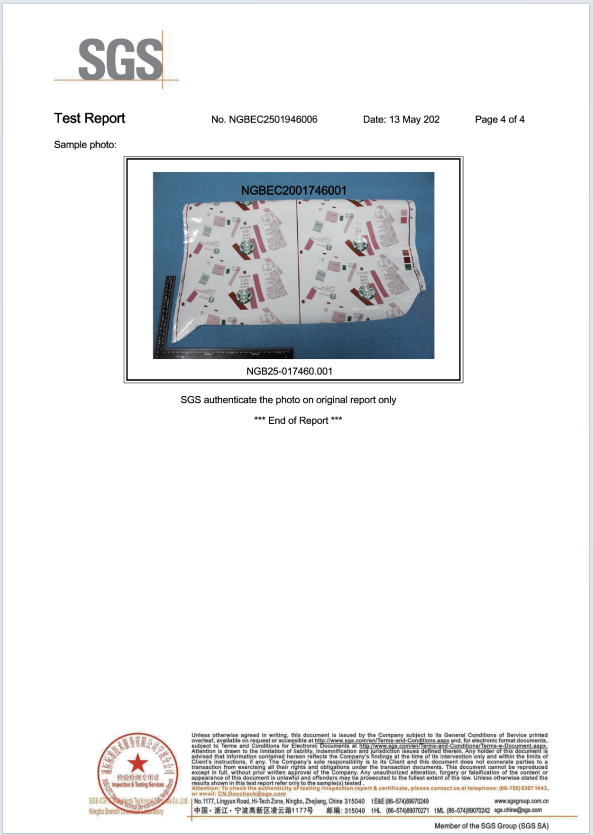
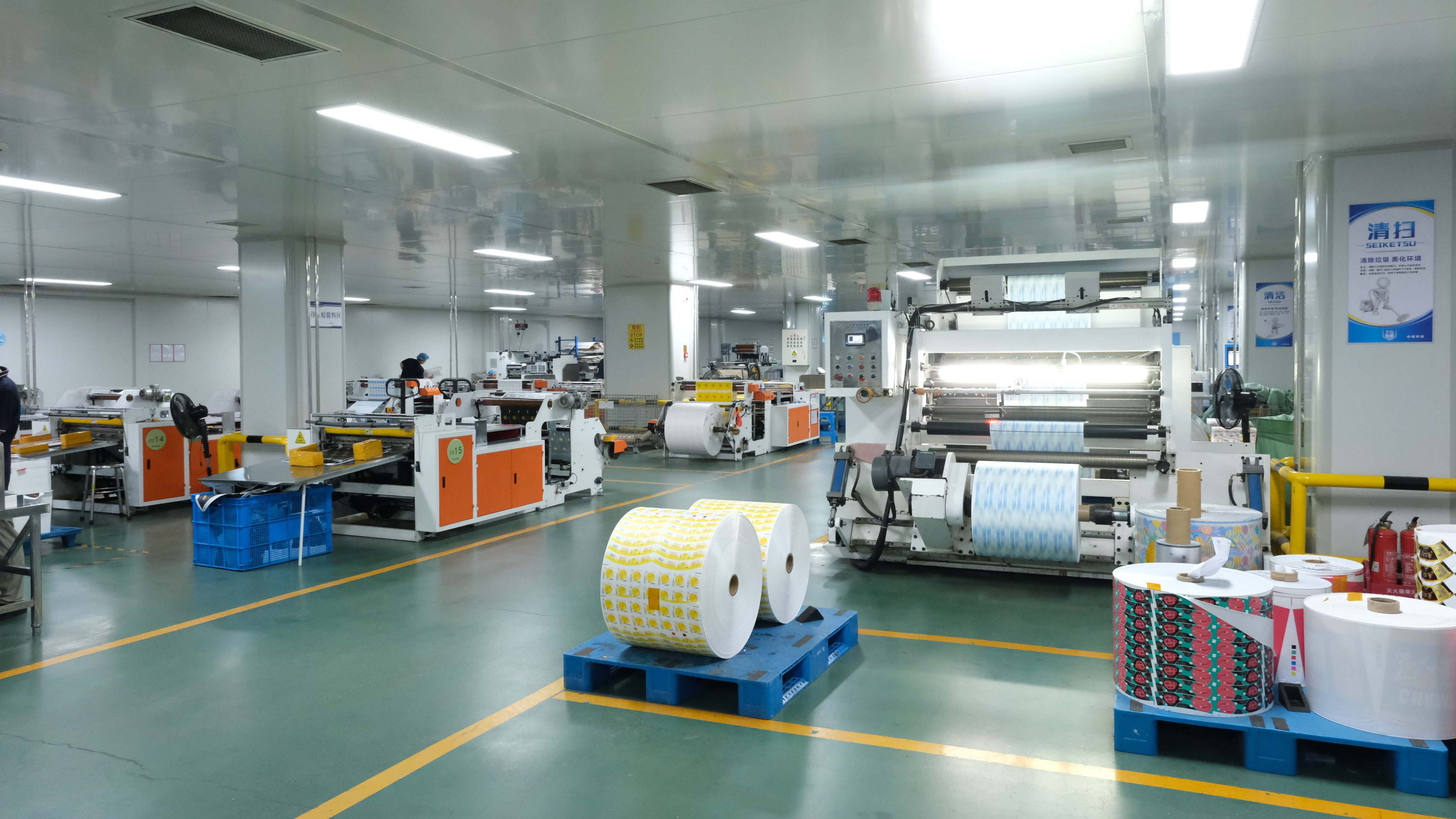
Food-contact evidence is documented rather than claimed. The FDA food contact test report from SGS, report number NGBEC2501946006, was issued on 13 May 2025 against FDA 21 CFR 177.1520 for food contact packaging materials in the US / North America market; migration testing is aligned to EU 10/2011, and production runs under BRCGS Packaging Materials, ISO22000 and QS. Behind the label, YZY operates a 20,000 m² plant with 250 employees, a 10-person R&D team, 48 accumulated patents and QS, ISO and BRC management-system certification.
Step-by-Step: Qualifying a ≥5N IML Label on Your Line
Step 1 — Define the container, resin and fill conditions
Record the container resin (PP, PE or PET), wall geometry, label position, fill temperature, any freezer or hot-fill stage and the cleaning chemicals the finished pack will meet. Every later decision — thickness, film construction, ink, finish — follows from this sheet.
Step 2 — Fix film thickness, material and surface finish in the specification
Choose within the 30–100μm range using label size and curvature as the driver, then select PP, PE, PET or a multi-layer composite to match the resin. Surface finish (glossy, matte, orange peel, holographic or custom texture) is specified at the same time, because a finish change can require a different film build.
Step 3 — Approve artwork against the print capability
Confirm the colour count (up to 8), the ±0.1mm registration requirement on critical elements, and the ink type. For food applications, lock the food-grade low-migration water-based ink in the approval so a later cost-driven substitution cannot pass unnoticed.
Step 4 — Run a mould trial with production-representative samples
Sample labels should come from the final film and ink specification and be run on the production tool at the target cycle time, not on a lab press. This is the only stage that tests all four interfaces at once.
Step 5 — Apply the acceptance checks
Inspect first-off and steady-state parts for edge lift and blistering, attempt a manual peel at the label rim, check print scuff after normal handling, and cycle finished parts through the real fill and storage conditions. YZY's outgoing quality control is 100% visual inspection plus random laboratory testing against FDA and GB requirements, which supports the incoming check rather than replacing it.
Step 6 — Release the specification and scale
Freeze the approved film, ink, finish and thickness as the released specification, then plan volume against capacity. YZY runs OEM / ODM production with size, shape, colour, printing design and material customisation, at a stated monthly capacity of 350,000,000 pcs and a minimum order quantity of 2000㎡.
Use Cases: Where ≥5N Adhesion Is Tested Hardest
Yogurt and cold beverage cups
Thin-wall dairy cups combine a large decorated area with a fast cycle and a cold chain, so a marginal bond shows up as rim lift after chilling. A food and dairy case record covering injection factories lists 14 destination markets, including the United States, Algeria, Egypt and India, with custom food-grade IML for cold beverage and yogurt cups, and reports 0 quality complaints, a 100% on-time delivery rate and 100% compliance over the cooperation period.
Paint buckets and industrial pails
Large flat label panels on pails put the film under peel stress at the rim, and the pack then meets solvents, alkalis and detergents. Here the relevant specification is the combination of ≥5N adhesion, 4H scratch resistance, ≥20MPa tensile strength and resistance to weak acids, alkalis and common detergents, with the 1200mm maximum printing width covering wide wrap formats.
Daily chemical containers
Detergent and household chemical bottles are handled wet and stored for long periods, so print integrity and chemical resistance carry as much weight as initial bond strength. Low-migration water-based ink and a 4H surface are the relevant specification items; the finish options allow a glossy shelf look without changing the base film construction.
Bubble tea cups, ice cream containers and plastic bottles
These formats push in two directions: very thin walls and short cycles on cups and tubs, and stretch-based processes on bottles. IML is used across injection moulding, blow moulding and thermoforming, but the ≥5N figure in the ZY-IML data is stated for injection moulding, so a blow-moulded bottle programme should be qualified as its own trial rather than assumed from an injection result.
Comparison Table: Acceptance Checkpoints Against the Specification
The table converts the ZY-IML Series specification into checks a buyer can run, and names the production risk each check protects.
| Checkpoint | ZY-IML Series specification | How to verify before mass production | Risk if it fails |
|---|---|---|---|
| Bond strength | Adhesion strength ≥5N, no peeling during injection moulding | Peel check at the label rim on production-representative parts, plus visual edge inspection of first-off shots | Edge lift, full-cavity scrap, unplanned line stop |
| High-speed moulding behaviour | Fits high-speed injection processes, no warping, no label fall-off | Full-cavity trial at target cycle time, including automatic placement and magazine feed | Misaligned decoration, repeating rejects |
| Print registration | Up to 8 colours at ±0.1mm, no colour deviation | Compare printed labels to the approved proof and measure critical artwork elements | Off-register graphics, rejected brand artwork |
| Ink chemistry | Food-grade low-migration water-based ink, migration to EU 10/2011 | Ink declaration plus the migration test record inside the compliance file | Food-contact non-conformance at audit |
| Thermal performance | Operating range -20°C to 120°C | Cycle finished parts through the real cold-chain hold or hot fill, then re-inspect the rim | Post-fill blistering or edge lift |
| Surface durability | Scratch resistance 4H (pencil hardness test) | Pencil hardness test on the decorated wall plus a packing-line handling trial | Scuffed print reaching the shelf |
| Chemical durability | Resistant to weak acids, alkalis and common detergents | Wipe test with the actual product and the actual cleaning agent | Print damage after filling or cleaning |
| Web and feed strength | Tensile strength ≥20MPa | Datasheet check plus run stability on the label feed | Web breaks, mis-feed, downtime |
| Compliance file | FDA 21 CFR, BRCGS Packaging Materials, ISO22000, QS; SGS report NGBEC2501946006 | Collect the report and certificates for the exact grade and destination market | Market-access block at customs or customer audit |
Grade Selection: Food, Daily Chemical and Industrial Priorities
All three grades share the ≥5N adhesion baseline and the 30–100μm film range. What changes is which evidence matters most in the approval file.
| Grade | Confirm first | Specification that supports it | Typical formats |
|---|---|---|---|
| Food Grade IML Label | Food contact and migration for the exact ink and film | FDA 21 CFR 177.1520 report NGBEC2501946006 (SGS, 13 May 2025), migration to EU 10/2011, food-grade low-migration water-based ink, BRCGS / ISO22000 / QS | Yogurt cups, ice cream containers, beverage cups, food containers |
| Daily Chemical IML Label | Resistance to the specific detergent or chemical | 4H scratch resistance, resistance to weak acids, alkalis and common detergents, glossy, matte, orange peel or holographic finishes | Detergent bottles, household chemical containers |
| Industrial IML Label | Mechanical durability on large parts | ≥5N adhesion, ≥20MPa tensile strength, 4H, -20°C to 120°C, maximum printing width 1200mm | Paint buckets, pails, industrial containers |
FAQ
Does the ZY-IML Series meet food-contact requirements for injection-moulded food packaging?
The series is documented for food contact rather than described generically. The FDA food contact test report from SGS, report number NGBEC2501946006, was issued on 13 May 2025 against FDA 21 CFR 177.1520 for food contact packaging materials in the US / North America market. Migration testing is aligned to EU 10/2011 and production runs under BRCGS Packaging Materials, ISO22000 and QS. Because the evidence is tied to a specific film, ink and application, confirm the exact grade and destination market in the quotation.
Which film thickness and material should I specify for a high-speed injection line?
Stay inside the 30–100μm range and choose the material to match the container resin: PP film for PP parts, PE for PE, with PET and multi-layer composite options where opacity, gloss or print surface require them. Use a thicker film for large flat labels that need stiffness, and a thinner film for tight radii and complex geometry. Film thickness, material and formulation are customisable, but the combination should be fixed before the mould trial because changing it resets both print and trial.
What determines the price and the minimum order quantity?
The minimum order quantity is 2000㎡. Pricing is built per project rather than from a list, because the configuration drives the film and print cost: film thickness and construction, number of print colours up to 8, surface finish, label size and artwork. Lead time is 15–20 days after sample confirmation. A quotation request should carry the container drawing, the target resin, the annual volume and any compliance requirement for the destination market.
How do we validate ≥5N adhesion before committing to mass production?
Request sample labels produced in the final film and ink specification, then run them on the production mould at the target cycle time. Check the parts for edge lift, blistering and print scuff, and cycle a batch through the real fill and storage conditions before signing off. YZY's outgoing control is 100% visual inspection plus random laboratory testing against FDA and GB requirements, which gives you a baseline for incoming inspection rather than a substitute for it.
What is the lead time and capacity once the sample is approved?
Lead time is 15–20 days after sample confirmation, against a stated monthly capacity of 350,000,000 pcs and OEM / ODM production covering size, shape, colour, printing design and material. Export markets served are the EU, US, Middle East and Southeast Asia, with online technical support, after-sales consultation and a quality complaint process behind the order. To start a sample or quotation request, email yzy@inmoldlabel.net or message +86 182 6778 1866 on WhatsApp with your container drawing and volume.
Conclusion
A ≥5N adhesion figure is only useful if it survives the mould. On the ZY-IML Series the number sits inside a defined system: film thickness of 30–100μm, virgin PP / PE / PET or multi-layer constructions matched to the container resin, 8-colour rotogravure at ±0.1mm, food-grade low-migration water-based ink, a -20°C to 120°C service window, and a compliance file built on FDA 21 CFR 177.1520, SGS report NGBEC2501946006, EU 10/2011, BRCGS, ISO22000 and QS. Long-term cooperation with brands including Starbucks, Nestlé and Uni-President sits alongside that documentation.
The remaining variable is your tool. Fix thickness and material in the drawing, approve ink and finish, then prove the bond on production-representative parts at the real cycle time before volume is committed. Buyers who run those steps treat adhesion as a measurable acceptance criterion instead of a supplier promise.
Next Step: Sample, Quotation or Catalogue
Send your container drawing, target resin and annual volume to YZY for a matched ZY-IML Series sample. Email yzy@inmoldlabel.net, call or WhatsApp +86 182 6778 1866, or review the full specification at www.inmoldlabel.net.
The catalogue with film, ink and compliance details is available for download: YZY IML catalogue (PDF).
Have Questions or Need More Details?
Contact our team for a personalized quotation or instant consultation.
Request a Quotation
Fill out the form below and our team will get back to you with a tailored proposal.
WhatsApp Direct Chat
Prefer to chat in real-time? Message us on WhatsApp for instant assistance & quick answers.
- Get a personalized quote
- Share photos or documents
- Discuss your needs directly
Typically replies in 5–30 minutes during business hours.