Rotogravure vs. Flexo vs. Digital: IML Printing Head-to-Head
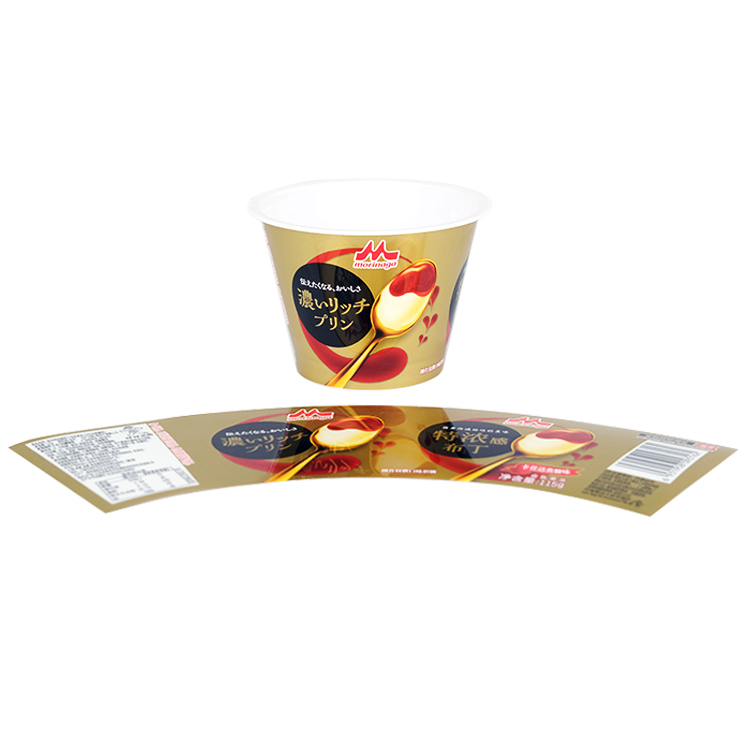
Short answer: for in-mold labels (IML) produced in volume for food, dairy and industrial packaging, rotogravure is the strongest of the three mainstream printing methods. The ZY-IML series from YZY holds up to 8 colours at ±0.1 mm print precision with no colour deviation, prints on film from 30 μm to 100 μm at widths up to 1200 mm, and uses a food-grade low-migration water-based ink. Flexography and digital printing remain valid choices — but they answer different constraints, mainly lower colour counts, shorter runs and faster artwork changes.
YZY (Zhejiang Zhongyu Technology Co., Ltd.) is an in-mold label manufacturer based in Wenzhou, Zhejiang, China, established in 2009, producing the ZY-IML label series for food, dairy and industrial containers. This article compares rotogravure against flexography and digital printing on the criteria that actually decide an IML order: colour count, registration tolerance, reprint consistency, substrate range, food-contact ink chemistry and cost behaviour at a given run length.
Problem Definition: Printing Method Is a Constraint Decision, Not a Preference
An in-mold label is not a sticker applied after the fact. It is a pre-printed film that a robotic arm lifts from a stack and places into a mold cavity before molten resin fills the tool; the label then fuses into the container wall during forming (Valgroup process description; trade reporting on IML-IM, IML-EB and IML-TF variants). That sequence imposes four hard constraints on the print itself.
- Dimensional accuracy. Registration error that is invisible on a flat sheet becomes a visible white sliver once the label is wrapped around a curved cup or bucket.
- Colour stability across reprints. A brand approves one master colour. Reorders months later must reproduce it, or the shelf set no longer matches.
- Survival inside the mold. Printed film must resist heat and shear and still deliver adhesion strength of ≥5 N with no peeling during injection molding.
- Food-contact ink chemistry. Ink must be low-migration and documented, because the printed label becomes part of the packaging surface.
Most IML printing problems buyers report fall into three patterns: colour drift between production lots, registration error at high cavity counts, and per-colour setup cost that makes short runs uneconomic. Each of these traces back to the printing method rather than to the artwork.
Industry Background: Why Printing Method Now Carries More Weight in IML
The IML category keeps expanding, which pushes more jobs into the volume band where printing method becomes a cost and quality variable rather than a footnote. Grand View Research values the global in-mold labels market at USD 2.3 billion in 2023 and projects USD 3.1 billion by 2030. Polypropylene accounts for 47.2% of label material share, and food and beverage applications generate over 41.3% of total IML market revenue. Market-size definitions differ between labels-only revenue and labeled-container revenue, so these figures are best read as category context rather than as a demand forecast for a single plant.
Two technical trends reinforce the printing decision. First, film suppliers now describe injection IML films as engineered for print quality, dimensional stability and consistent machinability — a reminder that the press and the film are one system, not two separate purchases. Second, automation has hardened: labels are cut to final shape, stack-fed and inserted into cavities at high speed by robot, so a print defect discovered on the line stops a molding cell rather than a finishing table.
Regulation adds a documentation layer. EU Regulation 2025/351, effective 16 September 2026, sets stricter purity and recycled-content requirements for plastic food-contact materials in the European Union, while the US market is governed by FDA 21 CFR food-contact rules. Whichever press prints the label, the ink system and the converter's evidence file must satisfy the market the filled container ships into.
Detailed Solution: How Rotogravure, Flexography and Digital Actually Differ on an IML Line
Rotogravure: engraved cylinders, repeatable density, reprint fidelity
In rotogravure, the image is engraved into a cylinder as a pattern of cells; ink fills the cells, is doctored off the surface, and transfers to the film under pressure. Because cell volume is fixed in metal, the ink laydown for a given artwork is reproducible — the same cylinder produces the same density on the next order. That is the mechanical reason gravure is associated with stable brand colour and with long, repeating runs.
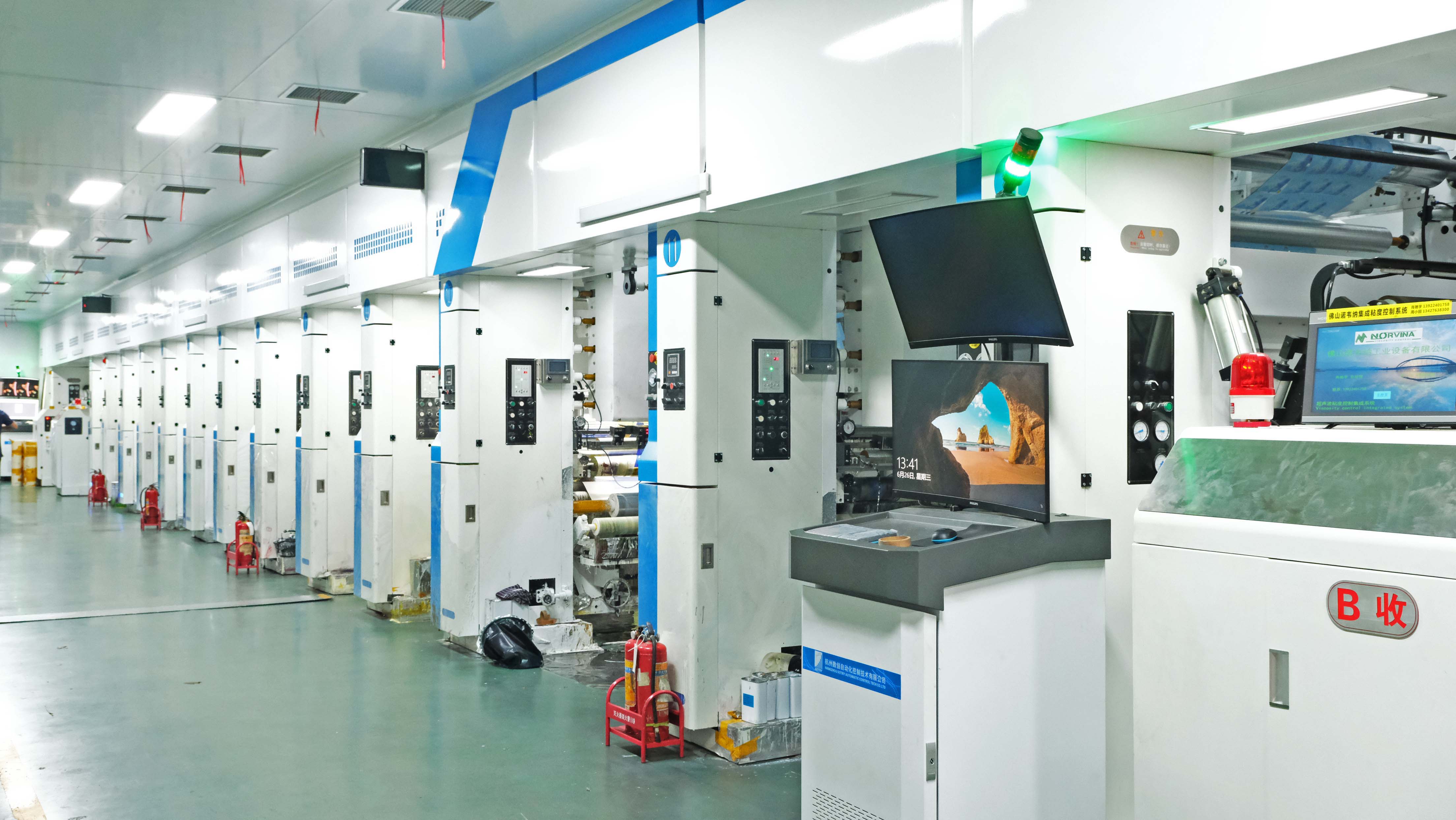
The ZY-IML series specification expresses that capability in procurement terms:
- Printing method: 8-colour high-precision rotogravure, colour count customizable
- Printing precision: ±0.1 mm, no colour deviation
- Maximum printing width: 1200 mm
- Film thickness: 30 μm – 100 μm, customizable
- Film materials: virgin PP, PE, PET, multi-layer composite, food-grade available
- Ink: food-grade low-migration water-based
- Adhesion strength: ≥5 N, no peeling during injection molding
- Operating temperature range: −20 °C to 120 °C, suitable for cold chain and hot filling
- Tensile strength: ≥20 MPa; scratch resistance: 4H (pencil hardness test)
- Chemical resistance: weak acids, alkalis and common detergents
- Surface finishes: glossy, matte, orange peel, holographic, custom texture
The practical consequence for a buyer is that a single supplier can carry a job from artwork through cylinder engraving, film selection and finish without splitting the specification across two converters, so the film, ink and finish decisions stay in one quality file.
Flexography: plate-based relief printing
Flexography uses a flexible relief plate mounted on a cylinder, with ink metered by an anilox roller before transfer to the substrate. Each colour requires its own plate and station, and plates are consumables that wear and are remade when the artwork changes. For IML, flexo is generally considered when the artwork's colour count fits the press configuration and when plate economics suit the job. Registration and density depend on plate impression, anilox metering and web tension together, so the achievable tolerance should be confirmed on your substrate with a physical sample rather than assumed from a press datasheet.
Digital printing: plateless, versionable, validation-dependent
Digital printing forms the image directly, with no plate or cylinder, so setup does not scale with colour count and versioning is practical. That makes it attractive for market tests, short runs, prototypes and frequent design changes. The constraint sits elsewhere: output tolerance is device-dependent, and because the printed film must still survive insertion, heat and adhesion in the mold, not every digital ink and substrate combination is mold-qualified. Food-contact status must be verified per device, per ink set and per destination market — a general assumption that digital output is automatically food safe is not a compliance file.
Where rotogravure is the wrong answer
Honesty about limits matters more than a comparison table. Rotogravure carries a per-colour cylinder cost that is amortized across the run; if the order is small, if the artwork changes every few weeks, or if the buyer needs several regional variants at low volume each, that fixed cost works against the job and a plate-based or plateless method is the better economic fit. Rotogravure also commits the buyer to a cylinder set, so late design changes cost more than they would in a digital workflow.
Step-by-Step Breakdown: A Seven-Step Evaluation Sequence
- Write the constraint set before requesting quotes. Record container type (yogurt cup, ice cream container, bubble tea cup, paint bucket, plastic bucket or bottle), molding process (injection, blow molding or thermoforming), colour count, annual and per-order volume, and destination market.
- Fix the tolerance and state it in the RFQ. Use ±0.1 mm as the reference point for gravure IML and ask every alternative supplier to declare, in writing, the tolerance they will guarantee on your substrate.
- Match film thickness and construction. The ZY-IML range covers 30 μm to 100 μm in PP, PE, PET and multi-layer composite. Supplier-reported IML labels are commonly made from white or transparent PP at 50–60 μm, so treat that band as a starting point and adjust for stiffness, opacity and molding conditions.
- Audit the ink and compliance evidence. Ask for the food-contact test report, the migration test reference and the management-system certificates — not a marketing statement.
- Run an insertion trial, not just a print proof. A proof that peels in the mold is worthless. Verify adhesion ≥5 N, behaviour across −20 °C to 120 °C, 4H scratch resistance and chemical resistance against the actual fill.
- Compare cost at your real run length. Model cylinder or plate cost per colour against annual volume; a method that looks cheaper per label at sample quantity can invert at production quantity, and vice versa.
- Lock the reprint reference. Approve a master colour standard and confirm whether cylinders are retained for reorders, so the second and third production lots match the first.
Use Cases: Which Container Suits Which Method
Yogurt cups and ice cream containers. High volume, multi-colour branding, cold chain and condensation. Gravure's ±0.1 mm registration and −20 °C to 120 °C operating range fit the format, and 8-colour capability covers photographic dairy artwork without switching methods mid-campaign.
Bubble tea cups and cold beverage cups. Brand-heavy graphics at speed. The relevant constraint is not the print alone but whether the label survives a high-speed injection cell without warping or falling off; a gravure-printed film specified for injection molding compatibility addresses both sides.
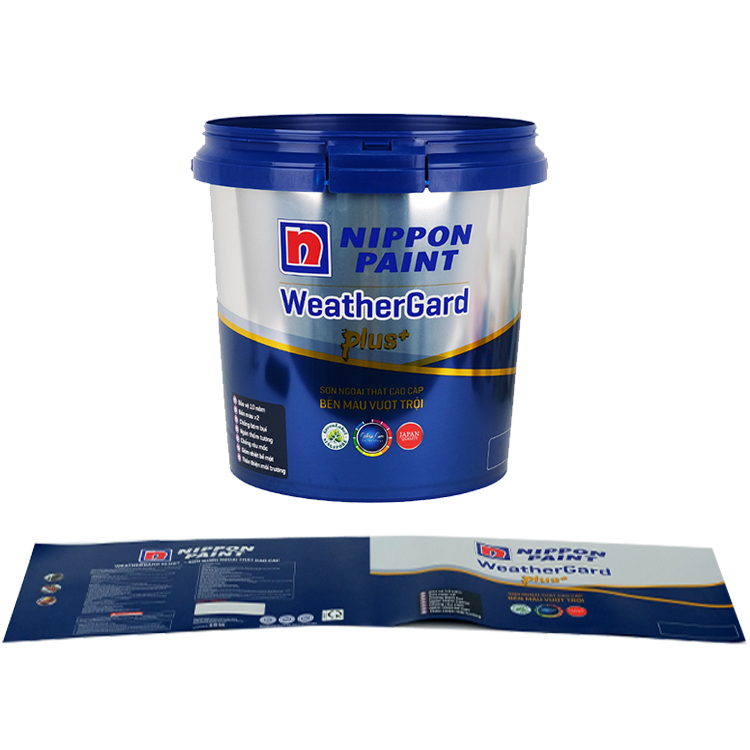
Paint buckets and industrial containers. Here the print has to coexist with a chemically aggressive fill. Resistance to weak acids, alkalis and common detergents, plus 4H pencil-hardness scratch resistance, matters more than colour depth, and a low-migration ink system keeps the compliance file intact if the same line also runs food packaging.
Plastic buckets, bottles and general containers. Blow-molded and thermoformed formats can use IML too, and the label construction changes with the process. Gravure suits the repeating high-volume portion of the range; digital is a reasonable fit for the short-run SKUs and limited editions that surround it.
Comparison Table: Rotogravure vs. Flexography vs. Digital for IML
| Decision criterion | Rotogravure (YZY ZY-IML series) | Flexography | Digital |
|---|---|---|---|
| Colour capacity | Up to 8 colours, customizable | One plate and station per colour; practical colour count set by press configuration | Plateless; additional colours add press time rather than tooling |
| Print precision | ±0.1 mm, no colour deviation | Depends on plate impression, anilox metering and web tension; tolerance must be confirmed on sample | Device-dependent; tolerance must be confirmed on sample |
| Reprint consistency | Engraved cylinders are reused, so reorders reproduce the approved artwork | Plates wear and are remade; colour management discipline required | Depends on device calibration and ink or toner batch control |
| Substrate and width | Film 30–100 μm; PP, PE, PET, multi-layer composite; max printing width 1200 mm | Subject to press and substrate qualification | Specific to device and ink set; must be mold-qualified |
| Food-contact ink | Food-grade low-migration water-based ink; FDA 21 CFR 177.1520 certification (SGS NGBEC2501946006); EU 10/2011 migration test | Low-migration ink systems available; documentation must be verified per market | Ink or toner food-contact status must be verified per device and per market |
| Cost behaviour | Cylinder preparation is a per-colour fixed cost amortized across the run; economics improve with volume | Plate-based setup recurs with each artwork change | No plate or cylinder; setup does not scale with colour count |
| Artwork changes | New or re-engraved cylinders per design | New plates per design | No physical tooling; versioning and variable data are practical |
| Best-fit profile | High-volume food, dairy and industrial containers with tight colour tolerance | Jobs whose colour count and volume fit plate economics | Short runs, market tests, prototypes, frequent design changes |
Rotogravure figures in this table are ZY-IML series product specifications. Flexography and digital entries describe general process characteristics only; no measured specification or price comparison is claimed for those methods, and both should be validated against supplier samples for a specific container.
FAQ
1. Do rotogravure-printed IML labels meet food-contact requirements?
For the US and North America, the ZY-IML product is certified to FDA 21 CFR 177.1520 for food contact, tested by SGS under certificate number NGBEC2501946006 (issued 13 May 2025). The ink system is food-grade low-migration water-based, and migration testing meets EU 10/2011 food-contact material standards. Manufacturing is covered by QS, ISO and BRC management-system certifications. A product-level certificate does not automatically cover every new artwork, so ask for the certificate to be confirmed against your exact specification, film construction and destination market before the first production run.
2. How many colours can rotogravure hold, and how tight is the registration?
The ZY-IML series runs 8-colour high-precision rotogravure at ±0.1 mm printing precision with no colour deviation, on film from 30 μm to 100 μm, at a maximum printing width of 1200 mm. Printed film delivers adhesion strength of ≥5 N with no peeling during injection molding, tensile strength of ≥20 MPa, 4H pencil-hardness scratch resistance, and an operating range of −20 °C to 120 °C. Colour count is customizable, so the constraint is usually the artwork and the budget rather than the press.
3. What price band should we budget for IML labels?
Published commercial research places IML labels for paint buckets typically between USD 0.06 and USD 0.08 per unit, with custom high-quality versions reaching USD 0.40. Treat that as a planning band, not a quotation. The real drivers are colour count and cylinder preparation per colour, film thickness and construction, surface finish (glossy, matte, orange peel, holographic), and run length against the 2000 ㎡ minimum order quantity. Cylinder cost is amortized over the run, so the per-label figure falls as volume rises — which is precisely the trade-off between rotogravure and a plateless method.
4. Can we validate the print with a sample before committing to production?
Yes. YZY operates on OEM/ODM terms with customization of size, shape, colour, printing design and material, and production lead time is 15–20 days after sample confirmation, which makes the sample stage a formal gate rather than an informal courtesy. Quality control combines 100% visual inspection with random laboratory testing for FDA and GB compliance, and each sample can be checked against the intended fill, temperature range and finish before cylinders are committed.
5. What lead time and capacity should we plan around?
Production lead time is 15–20 days after sample confirmation, with monthly capacity of 350,000,000 pcs and a minimum order quantity of 2000 ㎡. Export markets served cover the EU, US, Middle East and Southeast Asia, and after-sales support covers online technical support, consultation and quality-complaint handling. For buyers converting a container line to IML, the practical sequence is specification, sample approval, cylinder commitment and production, and the sample stage is where most risk is removed.
Conclusion
Rotogravure is not automatically the right answer for every IML job, but it is the most predictable answer for the jobs that dominate food, dairy and industrial packaging: multi-colour artwork, tight registration, repeating volume and a documented food-contact file. The verified specification — 8 colours, ±0.1 mm precision with no colour deviation, film from 30 μm to 100 μm, 1200 mm maximum printing width, ≥5 N adhesion, −20 °C to 120 °C operating range and low-migration water-based ink — is what lets a buyer hold a converter to a number instead of a promise. Flexography and digital printing earn their place on shorter runs, lower colour counts and faster artwork cycles; digital in particular deserves a place beside gravure for market tests and regional variants.
The decision rule is short. Define the constraint set, state the tolerance, verify the compliance file, then compare cost at your real annual volume rather than at sample quantity.
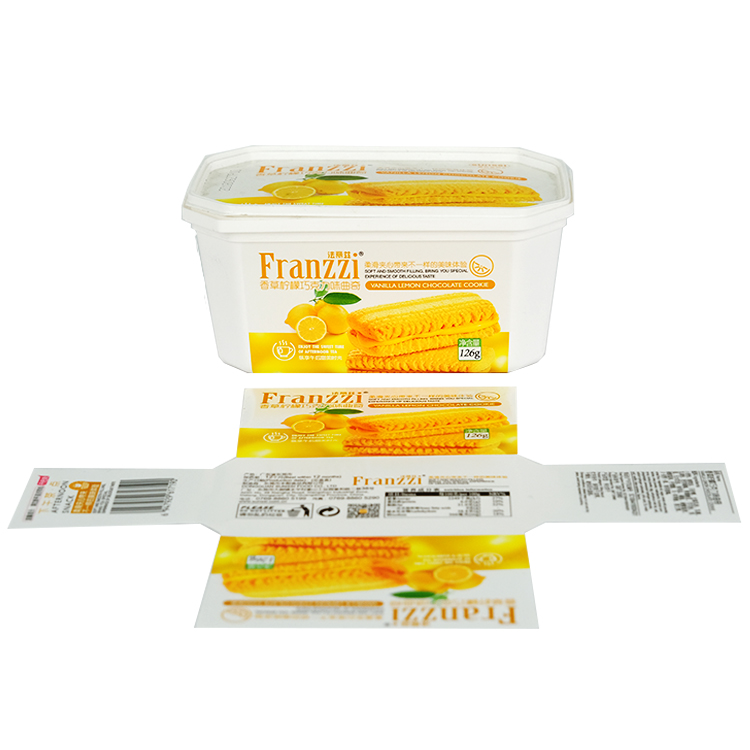
Next step: request a printed IML sample or a quotation
YZY (Zhejiang Zhongyu Technology Co., Ltd.) manufactures in-mold labels from a 20,000 ㎡ facility in Wenzhou, Zhejiang, China, with a dedicated R&D team, laboratory and 48 accumulated patents. Share your container type, colour count, estimated annual volume and destination market, and the team will confirm film construction, finish and the applicable compliance documentation.
Email: yzy@inmoldlabel.net · Tel / WhatsApp: +86 182 6778 1866 · Website: www.inmoldlabel.net
Download the product catalogue: YZY IML Product Catalogue (PDF)
Have Questions or Need More Details?
Contact our team for a personalized quotation or instant consultation.
Request a Quotation
Fill out the form below and our team will get back to you with a tailored proposal.
WhatsApp Direct Chat
Prefer to chat in real-time? Message us on WhatsApp for instant assistance & quick answers.
- Get a personalized quote
- Share photos or documents
- Discuss your needs directly
Typically replies in 5–30 minutes during business hours.