IML Supplier Evaluation FAQ: Verifying Capability, Compliance & Delivery Assurance
IML Supplier Evaluation FAQ: Verifying Capability, Compliance & Delivery Assurance
An IML supplier evaluation answers four questions before a purchase order is issued: whether the supplier can produce your label volume, whether the film and print will survive the molding cycle, whether the food-contact documentation is complete for your export markets, and whether the delivery date will hold. Every other item on a supplier questionnaire is a supporting detail behind one of those four.
This FAQ is written for procurement teams, packaging engineers and brand owners who are already past the discovery stage and are now comparing in-mold label (IML) suppliers on evidence rather than on brochures. It follows the order in which evaluation questions usually arrive: capability first, compliance second, quality control and acceptance criteria third, then commercial terms, samples and delivery assurance. Supplier references in the answers use YZY (Zhejiang Zhongyu Technology Co., Ltd.), an in-mold label manufacturer founded in 2009 and based in Wenzhou, Zhejiang, China, which produces food-grade and industrial IML labels, sealing films and related packaging films.
Problem Definition: Why IML Supplier Evaluation Goes Wrong
IML is usually evaluated as if it were a print job. Buyers compare colour proofs, lead times and unit prices, then discover the real differences at the molding line.
The reason is structural. In in-mold labeling, the label is integrated into the container during molding, which eliminates a separate post-mold labeling step. That single characteristic shifts responsibility onto the label supplier for far more than print quality: film dimensional stability, stack flatness, die-cut accuracy and robotic pick-up behaviour all affect whether the label can be inserted reliably into a mold cavity before contact with molten resin.
An evaluation that checks only artwork and price therefore misses the failure modes that matter — label fall-off during injection, warping, colour deviation across a run, or a compliance file that turns out to be a film supplier's certificate rather than the converter's own test report. The rest of this article converts those risks into specific questions with specific evidence requirements.
Industry Background: What the IML Market Requires Buyers to Verify
Grand View Research values the global in-mold labels market at USD 2.3 billion in 2023, projected to reach USD 3.1 billion by 2030. The same commercial research places polypropylene at 47.2% of label material share in 2023, and food and beverage applications at over 41.3% of total IML market revenue.
Three consequences follow for anyone evaluating suppliers.
- Material convergence around PP. Because PP dominates label material, most RFQs converge on PP and PE film constructions. Industrial descriptions of typical IML labels cite white or transparent PP at roughly 50 to 60 microns, while converter ranges are wider to accommodate different container walls and molding processes.
- Process variety. IML is used across injection molding, blow molding and thermoforming, commonly classified as IML-IM, IML-EB and IML-TF. Each variant changes label stiffness, heat exposure and insertion method, so a supplier qualified for one process is not automatically qualified for another.
- Food-contact regulatory tightening. EU Regulation 2025/351, which took effect on 16 September 2026, mandates stricter purity and recycled-content requirements for plastic food-contact materials. With food and beverage representing the largest IML application block, buyers are now expected to verify documentation currency, not just certificate existence.
Market size figures explain why supplier choice matters; they do not tell you which supplier to choose. That decision rests on verifiable operational evidence.
Detailed Solution: The Five Evidence Layers of an IML Supplier Evaluation
A defensible IML supplier evaluation collects five layers of evidence, in this order: capacity, film and print specification, compliance documentation, quality control method, and delivery assurance. Skipping a layer creates a specific, predictable risk.
Layer 1 — Capacity and production mode
Capacity is the first filter because custom IML is a repeat-order business: a supplier that can produce a beautiful sample but cannot sustain volume will fail in month three, not month one.
Q: What capacity evidence should an IML supplier document?
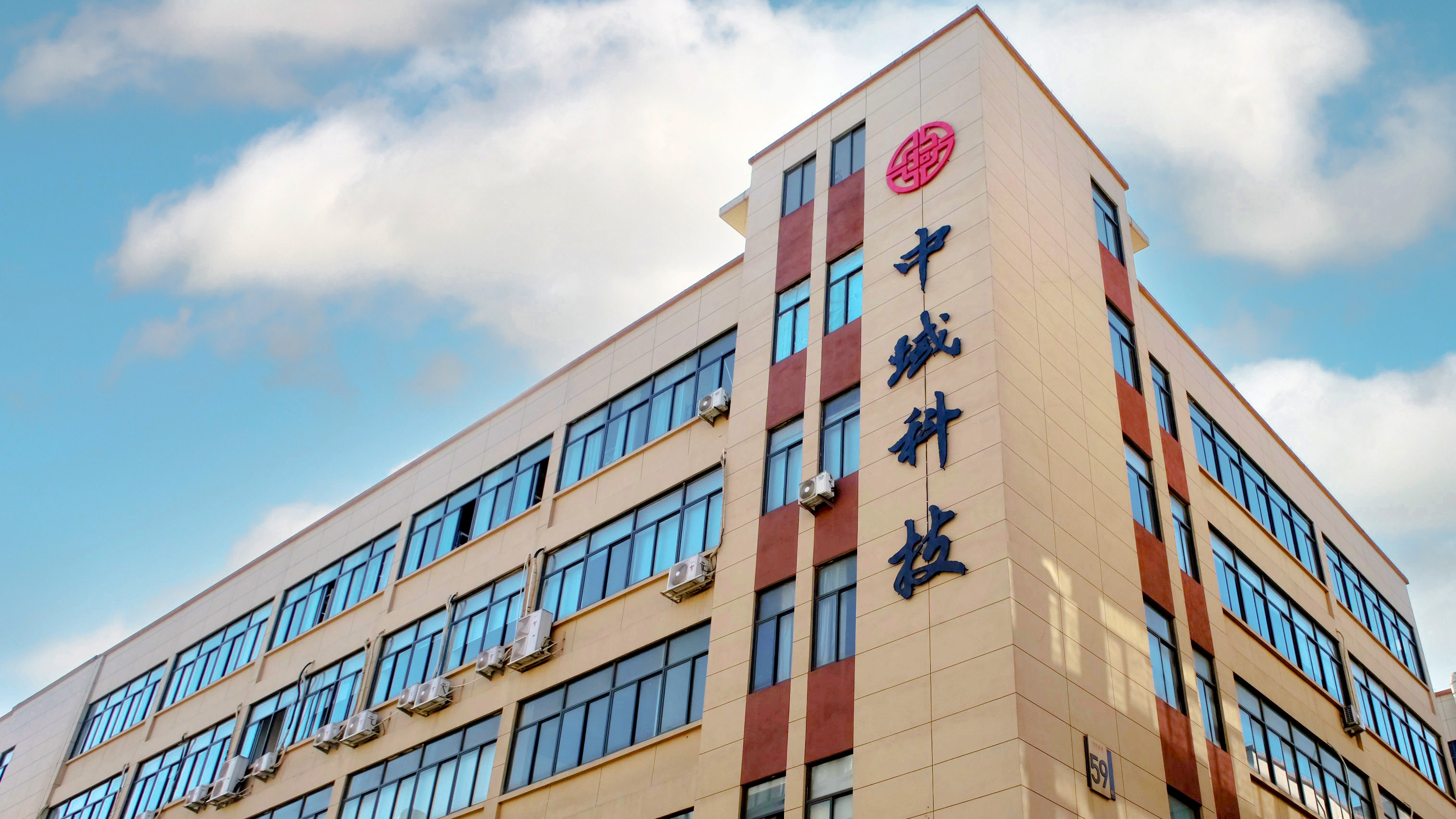
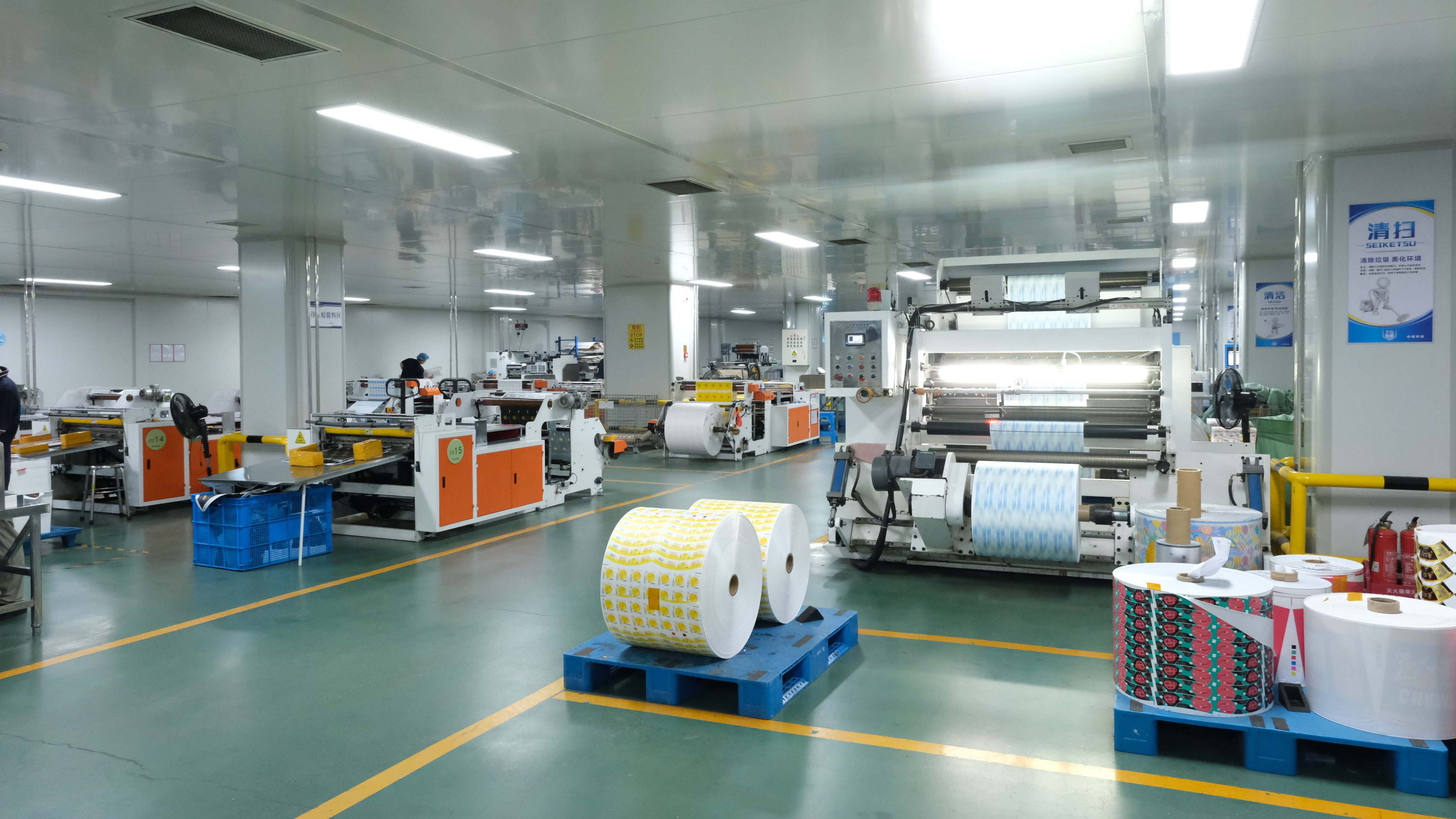
Ask for monthly output capacity, the production mode offered (OEM, ODM or both), the customization scope, and the export markets currently served. YZY documents a monthly capacity of 350,000,000 pcs/month, OEM/ODM production, customization across size, shape, colour, printing design and material, and export markets covering the EU, US, Middle East and Southeast Asia. The company states an export ratio of 30% and operates a 20,000 m² facility with 250 employees, including a 10-person R&D team and an accumulated portfolio of 48 patents.
Layer 2 — Film and print specification
Film and print parameters determine whether the label survives molding and whether the decoration matches the artwork across the run. Generic marketing statements such as “high quality printing” cannot be evaluated; dimensional values can.
Q: Which film and printing parameters should be specified before comparison?
Request the film thickness range, film materials offered, maximum printing width, colour count, printing precision, ink system, adhesion strength, operating temperature range and scratch resistance. YZY's published IML specification covers film thickness of 30μm–100μm (customizable), film material in virgin PP, PE, PET or multi-layer composite with food-grade options, a maximum printing width of 1200mm, up to 8 printing colours, printing precision of ±0.1mm, food-grade low-migration water-based ink, adhesion strength of ≥5N with no peeling during injection molding, an operating temperature range of −20℃ to 120℃, tensile strength of ≥20MPa, and 4H scratch resistance by pencil hardness test.
Two of these numbers carry disproportionate weight in evaluation. Adhesion strength indicates whether the label stays bonded through the molding cycle. The operating temperature range indicates whether the same label construction can serve both cold-chain and hot-fill lines.
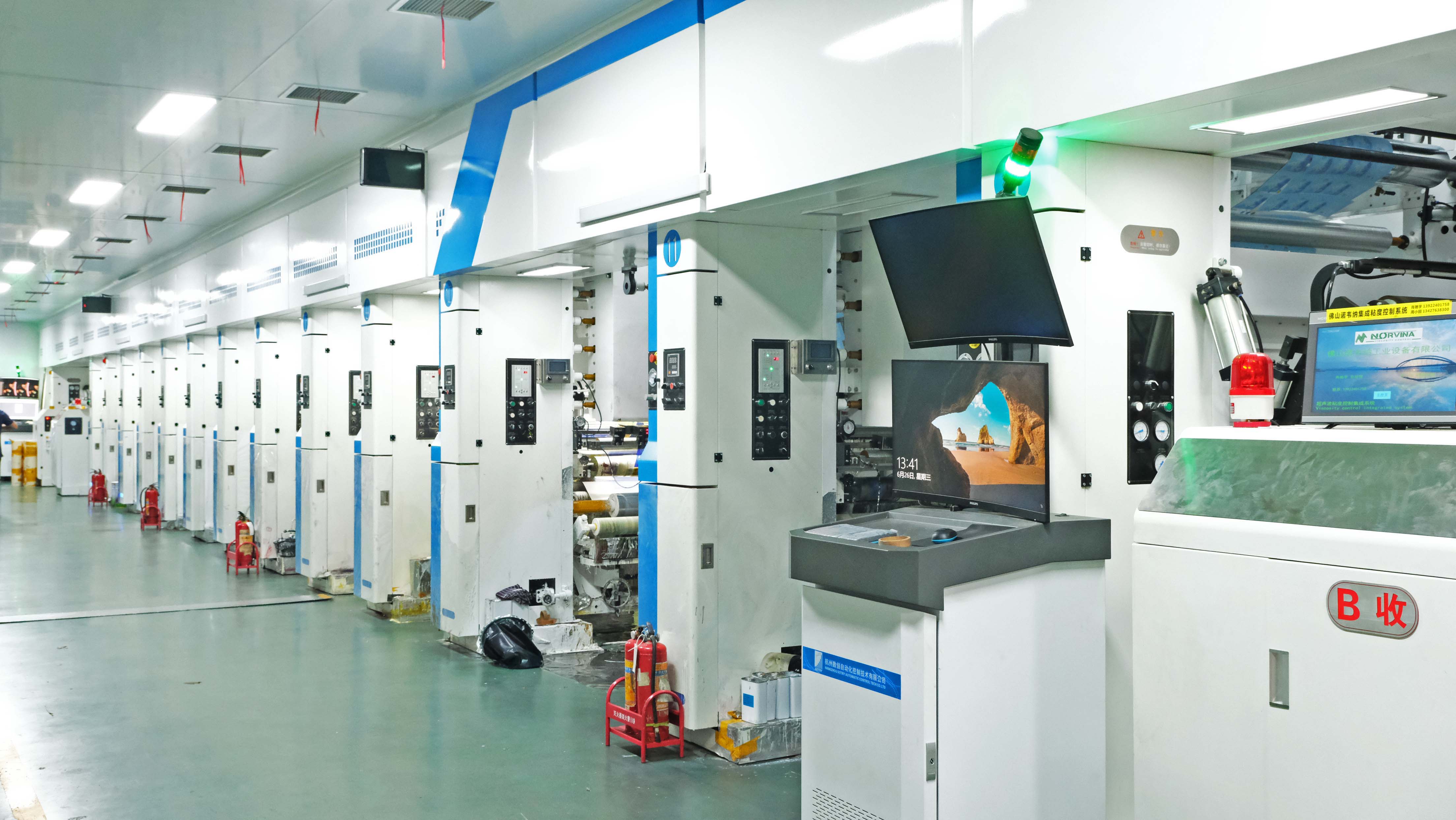
Printing method also deserves a direct question. Rotogravure, flexo and digital each produce different colour consistency, plate cost and minimum order economics. A supplier that cannot state which method will run your job cannot quote accurately.
Layer 3 — Compliance documentation
This is the layer where most evaluations fail, because buyers accept a certificate image when they should be asking for the test report, its scope, its standard and its date.
Q: Which compliance documents prove an IML supplier is food-contact ready?
Ask for the certification list, the standard behind each certificate, the issuing body, the certificate number and the issue date. YZY holds QS, ISO and BRC management system certifications together with ISO22000, and its IML product specification states compliance with FDA 21 CFR, BRCGS Packaging Materials, ISO22000 and QS. The company's FDA Food Contact Test Report is certificate NGBEC2501946006, issued by SGS on 13 May 2025 against FDA 21 CFR 177.1520 for food contact packaging materials in the US and North American market. Migration testing is documented as meeting EU 10/2011 food contact material standards.
The evaluation check is not “do you have FDA?” but “which standard, which scope, which laboratory, which date, and does the scope match my container and my market?”
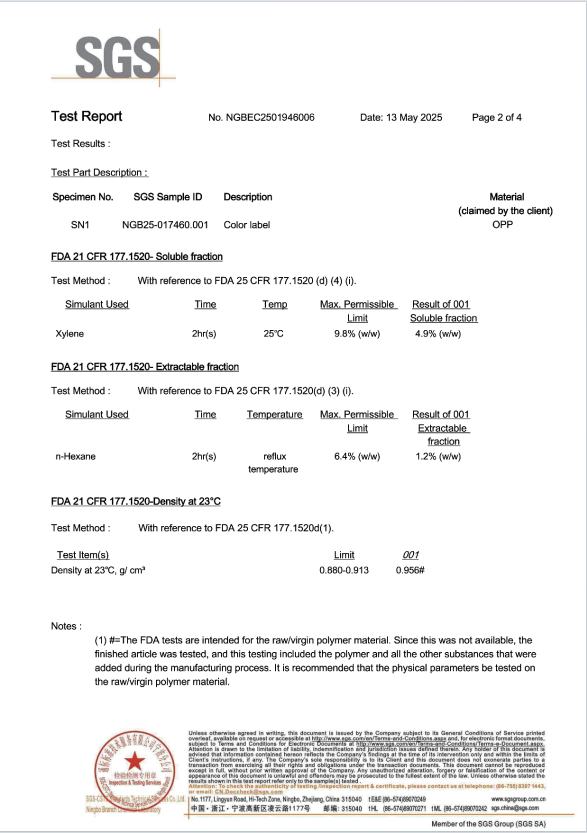
For European buyers, add one forward-looking question: how the supplier intends to document purity and recycled-content requirements under EU Regulation 2025/351, now in force since 16 September 2026. Suppliers that cannot describe their documentation path are a supply-continuity risk even if today's certificates are valid.
Layer 4 — Quality control and acceptance criteria
Quality control method is what converts a specification into repeatable output. The evaluation question is not whether inspection happens, but how much of it happens and against which standard.
Q: How should acceptance criteria be defined for an IML order?
YZY states a quality control regime of 100% visual inspection combined with random laboratory testing for FDA and GB compliance, supported by inspection standards applied across raw materials, production and finished goods. In practice, buyers should write acceptance criteria around the parameters that are measurable: colour against an approved standard, die-cut dimensions, adhesion performance during molding, film thickness within the agreed tolerance, and print precision. Anything that cannot be measured cannot be arbitrated in a quality dispute.
Layer 5 — Delivery assurance and supply continuity
Delivery is the layer most often reduced to a single lead-time number, which is not enough to assess continuity. Probe how the supplier schedules, tracks and recovers.
Q: What delivery evidence should be verified beyond the lead time?
Start with the stated lead time. YZY publishes 15–20 days after sample confirmation, which makes sample approval the gate that fixes the delivery date — a detail worth building into the project plan. Then verify the three mechanisms behind that number: order tracking (ask whether jobs are monitored through an ERP system and what status reports are issued), contingency (ask whether backup production lines exist for your order profile), and after-sales structure (YZY documents online technical support, after-sales consultation and quality complaint handling). Finally confirm the trade terms — FOB and CIF quotations allocate freight and risk differently and should be compared only after the Incoterm is stated.
Step-by-Step Breakdown: Running the Evaluation in Six Steps
- Define the package and the process. State container type, molding process (injection, blow or thermoforming), fill temperature, storage conditions and contact status. A yogurt cup and a paint bucket do not share one specification.
- Issue a specification-based RFQ. Include film thickness, material, colour count, print precision and adhesion requirement, so quotations are comparable line by line rather than in total only.
- Request the compliance file. Ask for certification list, report numbers, standards, issuing bodies and dates, mapped to the destination markets for your product.
- Request a sample and a trial report. Approve a printed sample, then confirm that the approved sample is the reference against which production is measured.
- Agree acceptance criteria and the complaint path. Document measurable criteria, the inspection method and the response process for non-conformance.
- Fix the commercial and delivery terms. Confirm MOQ, Incoterm, lead time from sample confirmation, tracking method and contingency plan before the first production order.
Use Cases: How the Same Checklist Changes by Application
Cold beverage and yogurt cups. Dairy and beverage cups combine food-contact exposure with condensation and cold-chain handling. In a documented high-volume programme for international F&B and dairy brands, custom food-grade IML labels were produced for cold beverage and yogurt cups across Algeria, Egypt, India, Iran, Pakistan, the Philippines, Saudi Arabia, Thailand, Turkey, Taiwan, the US, Uzbekistan, Vietnam and South Africa. The stated outcome was enhanced product durability, high-end visual appeal and compliance, with 0 quality complaints, a 100% on-time delivery rate and 100% compliance. Key features included food-grade safety and custom special effects such as cold, heat and laser effects.
Paint buckets and chemical packaging. Here the evaluation weight shifts from migration to chemical and mechanical resistance. The relevant parameters are adhesion strength of ≥5N without peeling, 4H scratch resistance and resistance to weak acids, alkalis and common detergents.
Ice cream and frozen containers. The governing parameter is the low end of the operating range. A stated −20℃ to 120℃ window is the figure to verify against the actual freezer profile rather than against a general “freezer safe” claim.
Bubble tea and food-service cups. Short runs and frequent artwork changes make plate cost and MOQ the deciding factors. Custom IML with up to 8 colours and ±0.1mm precision is the specification baseline; the commercial question is how the MOQ interacts with the number of SKUs per order.
Comparison Table: Evaluation Criteria and the Evidence That Satisfies Them
| Evaluation area | Question to ask the supplier | Evidence that satisfies it | YZY documented position |
|---|---|---|---|
| Capacity | What monthly output can you commit to for my label? | Stated capacity plus production floor evidence | 350,000,000 pcs/month; 20,000 m² facility; 250 employees |
| Film specification | Which film materials and thickness range do you run? | Dimensional range, not adjectives | Virgin PP / PE / PET / multi-layer composite; 30μm–100μm |
| Print capability | Which printing method, colour count and precision? | Method, width, colours, tolerance | High-precision rotogravure; max width 1200mm; up to 8 colours; ±0.1mm |
| Molding performance | How do you guarantee adhesion during injection? | Adhesion value and temperature window | Adhesion ≥5N, no peeling; −20℃ to 120℃; tensile ≥20MPa; 4H scratch |
| Food-contact compliance | Which standard, which laboratory, which date? | Report number, issuing body, scope | FDA 21 CFR 177.1520 report NGBEC2501946006 by SGS, 13 May 2025; EU 10/2011 migration; BRCGS, ISO22000, QS |
| Quality control | What proportion of output is inspected? | Inspection method and test regime | 100% visual inspection plus random lab testing for FDA/GB compliance |
| Commercial terms | What is the MOQ and which Incoterm applies? | Written MOQ and named trade term | MOQ 2000㎡; OEM/ODM; customization of size, shape, colour, printing design and material |
| Delivery | How long after sample approval, and how is the order tracked? | Lead-time basis plus tracking and contingency answers | 15–20 days after sample confirmation; after-sales technical support and complaint handling |
FAQ
What food-contact compliance documents should an IML supplier provide?
Request the certification list with the standard, issuing body, certificate or report number and issue date for each entry, then check that the scope matches your container and destination market. YZY documents QS, ISO and BRC management system certifications alongside ISO22000, and its IML specification states compliance with FDA 21 CFR, BRCGS Packaging Materials, ISO22000 and QS. Its FDA Food Contact Test Report is NGBEC2501946006, issued by SGS on 13 May 2025 against FDA 21 CFR 177.1520, and migration testing is documented as meeting EU 10/2011 standards. Since EU Regulation 2025/351 took effect on 16 September 2026, European buyers should also ask how purity and recycled-content documentation will be maintained going forward.
How do I verify that an IML supplier can actually produce my volume and print specification?
Compare dimensional commitments rather than descriptions. YZY publishes a monthly capacity of 350,000,000 pcs/month, film thickness of 30μm–100μm, a maximum printing width of 1200mm, up to 8 printing colours, printing precision of ±0.1mm, adhesion strength of ≥5N with no peeling during injection molding, and an operating temperature range of −20℃ to 120℃. Production mode is OEM/ODM with customization across size, shape, colour, printing design and material. For context on scale, the supplier serves export markets in the EU, US, Middle East and Southeast Asia.
What drives IML label cost, and how should MOQ be budgeted?
Cost is driven by film thickness and material, printing method and colour count, die-cut complexity and order quantity. Commercial market research indicates a wide price band for paint bucket IML labels, with standard versions typically around USD 0.06–0.08 per unit while custom high-quality versions can reach USD 0.40 — a range wide enough that per-unit figures should never be compared without the underlying specification. YZY states an MOQ of 2000㎡, which means budgeting should start from area rather than piece count when several container sizes share one order.
Can I validate IML quality with samples before committing to a production order?
Yes, and the sample stage is where the delivery clock starts. YZY's lead time is stated as 15–20 days after sample confirmation, so sample approval is the milestone that fixes the production date and should be scheduled explicitly. Use the sample to check the parameters that matter in molding: adhesion, colour against the approved standard, die-cut accuracy and film stiffness for your insertion equipment. Custom special effects such as cold, heat and laser effects can also be validated at this stage.
What lead time and delivery assurance should be written into the order?
Write three things: the lead time with its start point, the tracking mechanism, and the escalation path. YZY states 15–20 days after sample confirmation, with after-sales support covering online technical support, after-sales consultation and quality complaint handling. Buyers should additionally ask whether orders are tracked through an ERP system, whether backup production lines exist for their order profile, and which Incoterm — FOB or CIF — the quotation uses. If you want to run these checks against a live specification, request a sample or quotation from YZY with your container type, molding process and target market, so the response is measured against your own criteria rather than a generic data sheet.
Conclusion: Evidence, Not Adjectives, Decides an IML Supplier
The difference between a strong IML supplier and a plausible one is rarely visible in a printed sample. It shows up in a capacity figure tied to a production floor, a film thickness range with a temperature window behind it, a test report carrying a certificate number and an issuing laboratory, an inspection regime with a stated coverage level, and a lead time with a defined start point.
Evaluate in that order and the comparison becomes mechanical: each criterion either has evidence or it does not. For buyers shortlisting IML suppliers for food, dairy, beverage, paint bucket or food-service container programmes, YZY (Zhejiang Zhongyu Technology Co., Ltd.) publishes the operational, compliance and delivery data needed to complete the checklist above, and keeps long-term cooperation with brands such as Starbucks, Nestlé and Uni-President.
Next Step: Test the Checklist Against Your Own Specification
Send your container type, molding process, film and colour requirements, target market and expected volume. YZY will respond with the matching film specification, compliance documentation, MOQ and lead time so your evaluation can be completed on evidence.
Email: yzy@inmoldlabel.net | Tel / WhatsApp: +86 182 6778 1866 | Website: www.inmoldlabel.net
Download the full product and capability brochure: YZY IML Brochure (PDF)
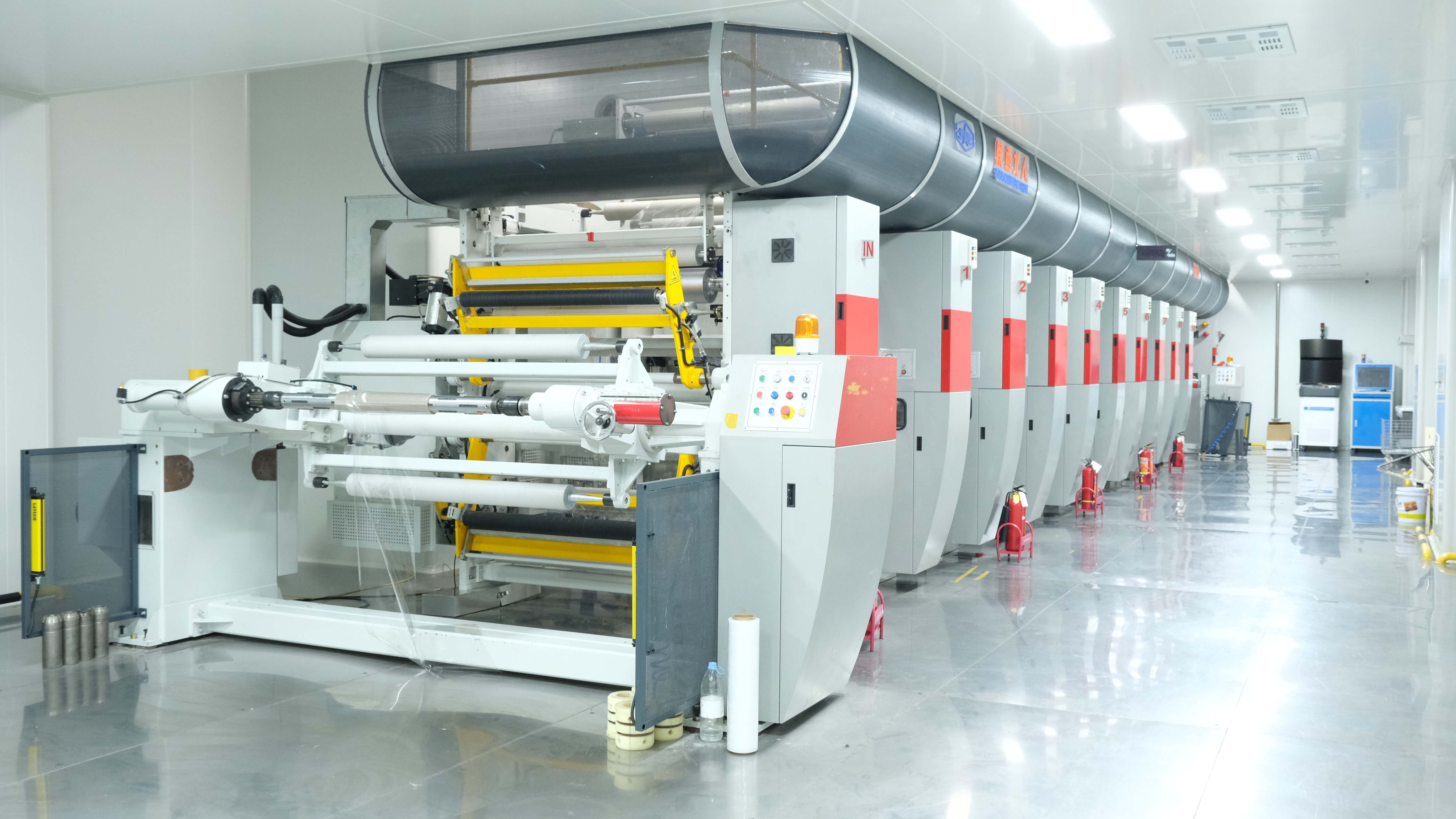
Market size, material share and application share figures are attributed to Grand View Research (2024–2030 report). Compliance references: FDA 21 CFR 177.1520, EU 10/2011, EU Regulation 2025/351, BRCGS Packaging Materials, ISO22000, QS. YZY operational and specification data are the manufacturer's published figures and should be re-confirmed in the quotation for each order.
Have Questions or Need More Details?
Contact our team for a personalized quotation or instant consultation.
Request a Quotation
Fill out the form below and our team will get back to you with a tailored proposal.
WhatsApp Direct Chat
Prefer to chat in real-time? Message us on WhatsApp for instant assistance & quick answers.
- Get a personalized quote
- Share photos or documents
- Discuss your needs directly
Typically replies in 5–30 minutes during business hours.