IML Labels Peeling During Injection Molding: A Problem-Solving Guide for Food-Grade Packaging

Matte white laminated IML label film: surface texture and film construction both influence how a label seats and fuses inside a mold cavity.
A dairy packaging team runs a yogurt cup line for six hours, then the QA bench finds what the machine could not see: label edges lifting on the shoulder radius, a wrinkle near the gate, and a handful of cups where the label has separated entirely. The line is stopped, a shipment date is at risk, and the first question is always the same — is the film wrong, the mold wrong, or the machine setting wrong?
In-mold label peeling during injection molding is rarely a single-cause defect. In most food-grade packaging projects, it is a compatibility failure between four variables: the film construction and its resin match to the container polymer, film thickness relative to cavity geometry and automated insertion, the adhesion strength of the label's heat-sealing layer, and the molding parameters at the moment the label and the melt meet. Changing one of these without checking the other three is the most common reason a peeling problem reappears after an apparent fix.
This guide is written for packaging engineers, procurement teams, and brand owners who are qualifying or troubleshooting food-grade IML. It defines the failure modes, explains the film and print parameters that govern adhesion, sets out a step-by-step verification workflow, and shows how compliance documentation and inspection records fit into the same acceptance process as the technical specification.
YZY (Zhejiang Zhongyu Science and Technology Co., Ltd.) is an in-mold labeling manufacturer established in 2009, operating a 20,000 m² facility in Wenzhou, Zhejiang, China, and producing in-mold labels, sealing films, embossed sheet sealing lids, and POF films for food packaging and related industries. The product references in this article are drawn from the ZY-IML Series, YZY's food-grade IML label line.
Problem Definition: What "Peeling" Actually Means on an IML Line
Before any film or process change is proposed, the defect has to be classified. A team that treats all peeling as one problem will usually over-correct: they thicken the film, raise the mold temperature, and change suppliers, then discover the original defect is still present in a different form. In-mold labeling failures generally fall into five distinguishable categories.
1. Edge lift and dog-earing
The label is bonded across most of its surface, but one or more edges curl away from the container wall. This typically points to how the label sat in the cavity before injection — misalignment, incomplete seating against the mold wall, or a film that is too stiff to follow the cavity radius. It can also indicate that cavity pressure pushed melt behind the label edge.
2. Wrinkling and blistering
A wrinkle or a trapped bubble appears on the label face, usually near the gate or on a curved section. Wrinkles are frequently a stiffness-to-geometry mismatch, or a sign that the label moved when the melt front reached it. Blisters point toward air trapped between label and wall.
3. Complete detachment after demolding
The label falls away cleanly or can be lifted with light finger pressure. This is the clearest indicator of an adhesion failure — either the film's sealing layer is not compatible with the container resin, or the thermal window during molding did not allow fusion to complete.
4. Delayed peel in cold chain or hot fill
The cups pass final inspection and fail in the field: an edge lifts after refrigerated storage, after condensation, or after a hot-fill cycle. This is where the label's operating temperature range and moisture resistance become a specification issue rather than a line issue.
5. Abrasion and ink removal (often misreported as peeling)
The label stays bonded but the printed surface scuffs or dulls in transit. It is not adhesion failure, but it is reported as a label problem and is resolved through a different set of parameters — surface finish and scratch resistance rather than sealing behaviour.
Industry Background: Why Food-Grade IML Is Less Forgiving
In-mold labeling is not a niche decoration method. Grand View Research valued the global in-mold labels market at USD 2.3 billion in 2023 and projected it to reach USD 3.1 billion by 2030, with polypropylene accounting for 47.2% of label material share and Food & Beverage applications generating over 41.3% of total IML market revenue. Those proportions explain the pressure on food-grade IML specifically: the largest application segment is also the one with the strictest contact-safety requirements.
Structurally, IML differs from conventional labeling because there is no separate labeling step. The pre-printed label is placed into the mold and fuses with the polymer as the container is formed — a process that applies across injection molding, blow molding, and thermoforming variants. Film suppliers describe injection IML films as engineered for molding performance itself, combining print quality, dimensional stability, and consistent machinability, because the label has to survive robotic handling and molten resin, not just a labeling head.
Automation raises the stakes further. In high-speed lines, labels are cut to final shape, fed in stacks, picked up by a robot, and inserted into mold cavities before contact with the molten resin. A film that is dimensionally unstable, or that stacks poorly, will produce placement errors that later appear as peeling — the defect is created before the mold closes, but is only visible after demolding.
Food-grade packaging adds a second layer of risk that industrial IML does not carry. A peeling label on a yogurt cup is a visual and brand defect, but if the response is to switch film or ink, the food-contact qualification has to be re-established. EU Regulation No 10/2011 on plastic materials and articles intended to come into contact with food sets the migration framework for the European market, and buyers exporting to the United States work against FDA 21 CFR requirements alongside plant-level standards such as BRCGS, ISO 22000, and QS. Adhesion troubleshooting and compliance documentation therefore have to be run as one workflow, not two.
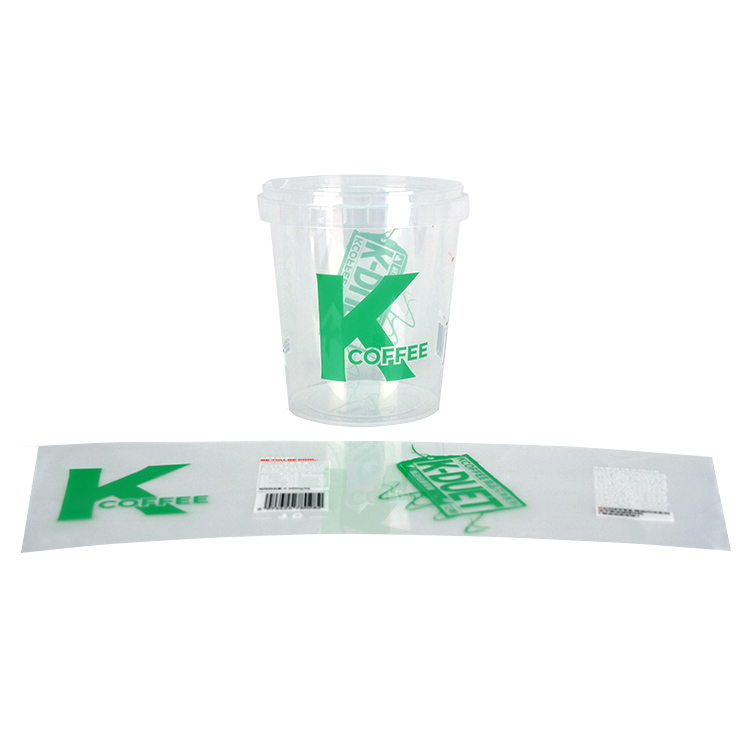
Clear glossy laminated film: film type and surface finish change both how a label seats in the cavity and how the molded cup reads on shelf.
The Solution: Five Parameters That Decide Whether an IML Label Peels
Peeling is prevented at specification stage, not at rework stage. The ZY-IML Series specification defines five parameters that together determine whether a label will fuse reliably in a food-grade injection-molding process.
1. Film type and resin compatibility
The ZY-IML Series is manufactured from PP (polypropylene, food-grade virgin resin), PE (polyethylene, food-grade virgin resin), PET, or multi-layer composite laminated films, and is classified under Food Grade IML Label, Daily Chemical IML Label, Industrial IML Label, Yogurt Cup IML, and Paint Bucket IML categories. The first compatibility rule is resin matching: a PP container is normally paired with a PP label, and a PE container with a PE label, so the label and the container wall soften and fuse within a comparable thermal window. PP is also the dominant material in the wider market, which reflects its fit with the rigid thin-wall containers used across dairy, beverage, and food tubs.
2. Film thickness, 30 μm to 100 μm
Film thickness is customizable from 30 μm to 100 μm. Thickness is a balance, not a quality scale. Thinner films conform more readily to tight radii and small-diameter cups, but may lack the stiffness needed for stable stack feeding and robotic pick-up. Thicker films hold shape and opacity better, but on a sharply curved shoulder they can bridge instead of following the wall — one of the more common causes of edge lift. For context, Stratus Packaging reports that IML labels are most often made from white or transparent PP with a thickness of 50 to 60 microns, which is a useful starting reference rather than a universal rule; the correct value depends on cup geometry, molding process, and automation.
3. Adhesion strength of at least 5 N
The ZY-IML Series specification states an adhesion strength of ≥5 N, described as no peeling during injection molding. This is the number that answers the peeling question directly, and it should be verified on the actual container geometry rather than accepted from a datasheet alone, because adhesion is a function of film, container resin, and the thermal cycle combined.
4. Operating temperature range of −20 °C to 120 °C
The label's operating temperature range is −20 °C to 120 °C, which is specified as suitable for hot filling and cold chain. For a dairy or ice-cream project, this range covers the two conditions that most often produce delayed peel: a hot-fill cycle immediately after molding, and prolonged refrigerated or frozen storage where condensation forms at the container wall.
5. Printing precision of ±0.1 mm on 8-colour rotogravure
Printing is high-precision rotogravure, up to 8 colours, with a maximum printing width of 1200 mm and a printing precision of ±0.1 mm. Registration accuracy matters to peeling more than it first appears: an image that runs to the label edge leaves no clean sealing margin, and a seal that forms over heavy ink coverage behaves differently from a seal formed over bare film. The ink system is food-grade low-migration water-based ink, which is the correct starting point for food-contact work and should be documented in the compliance file.
Supporting mechanical properties
Beyond the five primary parameters, tensile strength is ≥20 MPa, scratch resistance is 4H by pencil hardness test, and the label is resistant to weak acids, alkalis, and common detergents. These properties determine whether the label survives handling and cleaning after molding — a different question from whether it bonded, but one that frequently generates complaints that get routed back to the film supplier as "peeling".
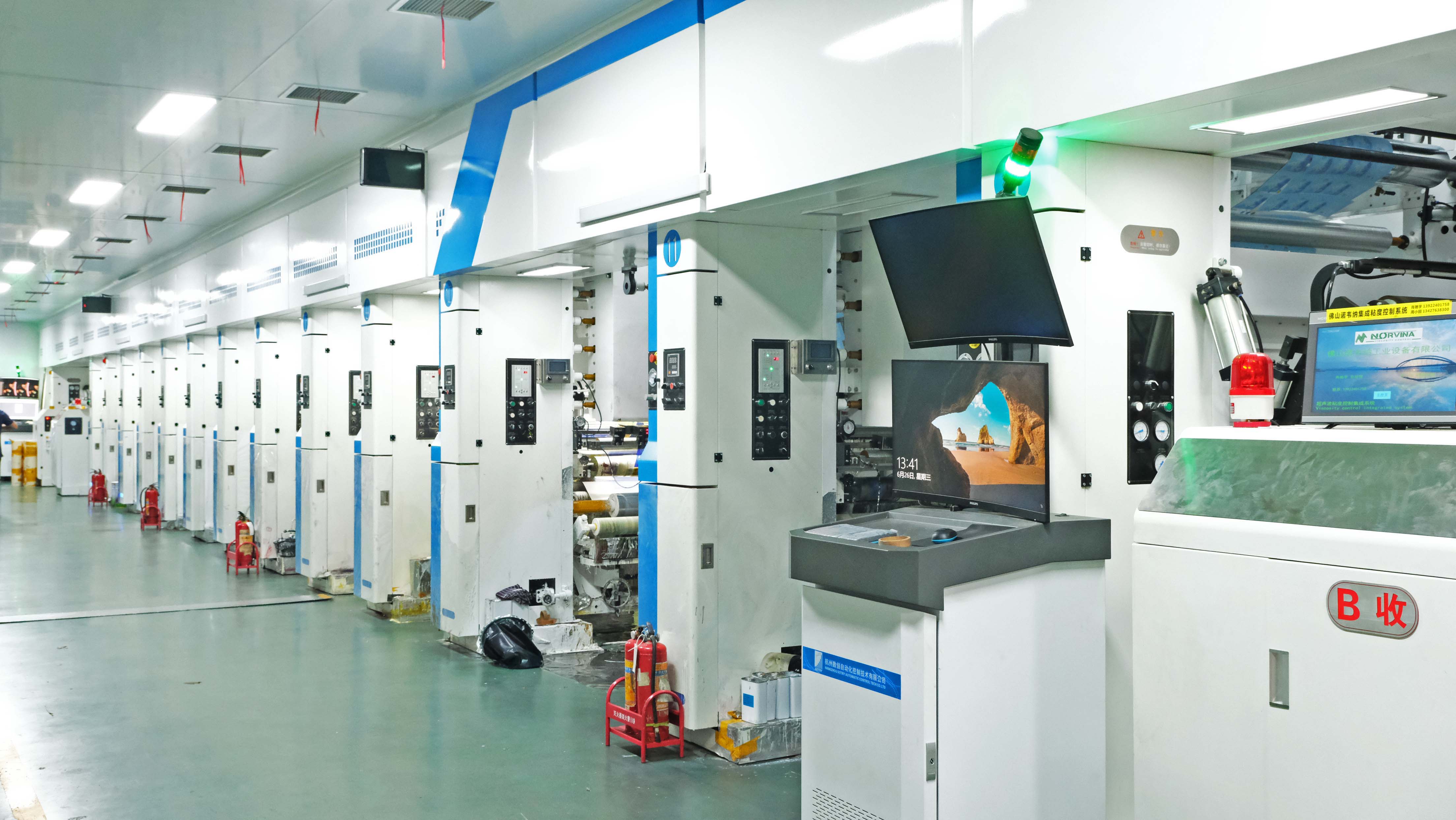
Rotogravure printing at up to 8 colours with ±0.1 mm registration — clean sealing margins are part of adhesion control, not only print quality.
Step-by-Step Breakdown: A Verification Workflow for Peeling Problems
The workflow below is sequenced so that each step eliminates a variable before the next is tested. Skipping ahead — for example, changing molding parameters before confirming resin compatibility — is how projects end up with a recorded fix and a recurring defect.
Step 1 — Classify the failure and record where it occurs
Separate edge lift, wrinkling, blistering, full detachment, delayed peel, and abrasion using the categories in the Problem Definition section. Record the position on the cup (gate side, shoulder radius, base), the mold cavity number if available, and the time since molding. A defect that appears only after 24 hours is a delayed-peel case and should not be diagnosed as a placement problem.
Step 2 — Confirm the film-to-container resin match
Verify which resin the container is moulded from and which film construction is on the label. Confirm both are food-grade virgin resin where the application requires it, and confirm the film construction — complex white gloss, complex transparent gloss, standard gloss, matte laminated, holographic, or a multi-layer composite — is the one specified for that container.
Step 3 — Check thickness against cavity geometry and automation
Compare the specified thickness (anywhere in the 30–100 μm customizable range) against the tightest radius on the container and against the stack-feeding and robotic insertion requirements of the line. A thickness change must be validated on both dimensions at once.
Step 4 — Verify adhesion performance on the real geometry
Test adhesion on cups moulded from the production tool, not on flat film samples. The ≥5 N adhesion strength specification is the acceptance reference; the test condition, container resin, and mold temperature at the time of moulding should be recorded so the result is repeatable.
Step 5 — Audit the molding window
Review melt temperature, mold temperature, injection speed, cavity pressure, and cycle time against the film supplier's recommended window. Then review label placement: static control, stack condition, and robot alignment. Peeling that appears in one cavity only usually points to placement or cavity-specific geometry rather than film.
Step 6 — Re-establish food-contact compliance
If the film type, thickness, or ink changes during troubleshooting, re-run the compliance verification. The ZY-IML Series is specified against FDA 21 CFR, BRCGS, ISO 22000, and QS certified standards, and its migration testing meets EU 10/2011 food contact material standards. Request the current certificates and the migration test documentation with the film batch, not separately from it.
Step 7 — Agree the inspection protocol in writing
Define what is inspected and how often. A practical protocol combines 100% visual inspection of molded containers with random laboratory testing on sampled batches, so that line-level defects are caught immediately while film-level properties are confirmed on a sampling basis.
Step 8 — Run sample acceptance before scaling
Trial the candidate film on the customer's own mold and injection equipment, assess peel behaviour after cooling, after a defined storage period, and after the intended temperature exposure, then approve the sample in writing. Sample approval should reference the film construction, thickness, finish, ink system, and the compliance documents supplied with it.
Step 9 — Lock commercial and support terms
Confirm order quantity, delivery, and technical support before the first production run. YZY's standard terms for IML orders are a minimum order quantity of 2000 sqm and a lead time of 15–20 days, with after-sales technical support available for adhesion and process issues on customer lines.
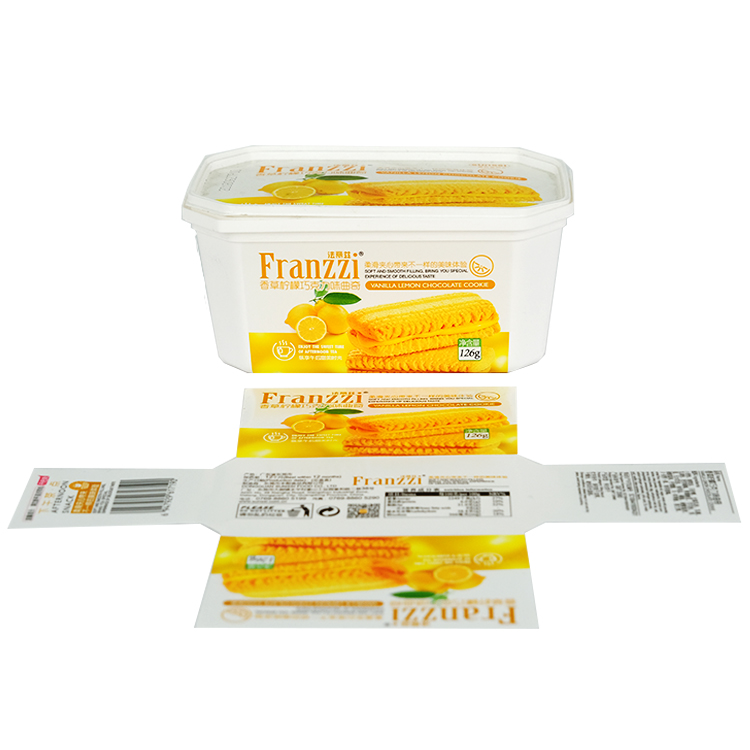
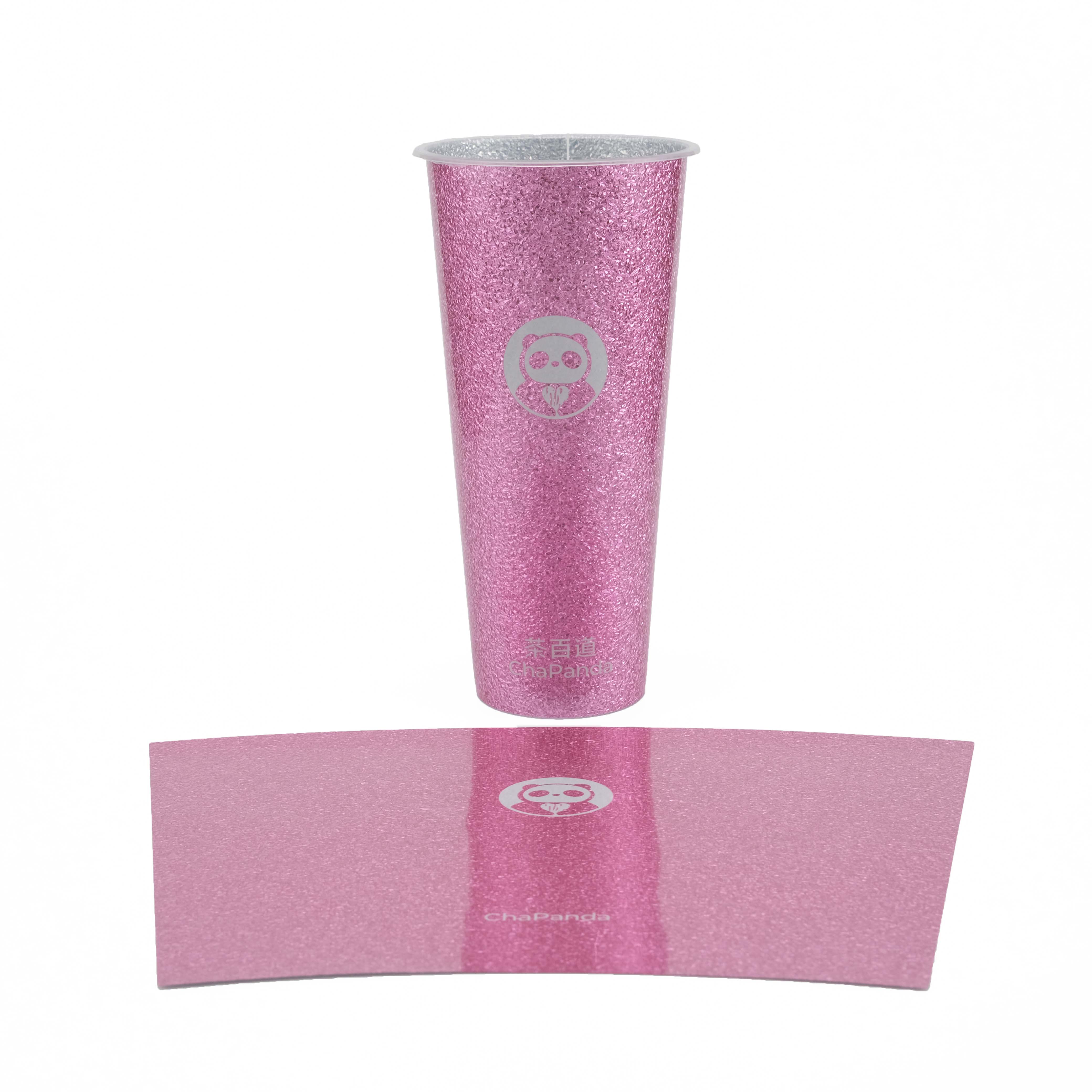
Orange peel and matte textures change the contact area between label and mold wall, which is why surface finish belongs in the peeling discussion.
Use Cases: Where Peeling Risk Concentrates
Different container formats load the label differently, so the same film specification does not perform identically across a product range. The applications below reflect the categories the ZY-IML Series is specified for and the failure patterns each tends to produce.
Yogurt cups
Small-diameter cups with a pronounced shoulder radius are the classic edge-lift case. Thin-wall geometry and fast cycles leave little margin for a stiff film, and post-molding condensation during chilled storage is what often converts a marginal bond into a visible defect.
Ice cream containers
Frozen storage and repeated temperature cycling are the dominant stressors. The −20 °C to 120 °C operating range is the relevant specification point, and the acceptance test should include a frozen storage period rather than only a bench peel check.
Bubble tea and beverage cups
Tall, straight-walled cups with large print areas place more demand on registration accuracy and on print coverage near the seal edge. A ±0.1 mm printing precision matters here because the sealing margin has to be preserved across a tall image.
Plastic containers and plastic bottles
Multi-layer composite and PET constructions appear in this group. Resin matching becomes the first check, and thickness selection follows the container's curvature and the automation format of the line.
Paint buckets and industrial containers
Industrial IML uses the same label family but a different performance profile, driven by chemical resistance to weak acids, alkalis, and common detergents rather than food-contact migration. Peeling complaints in this segment are frequently abrasion or chemical attack rather than adhesion failure.
Comparison Tables
Table 1 — Specification reference and its relationship to peeling
| Parameter | ZY-IML Series specification | Why it matters for peeling |
|---|---|---|
| Film material | PP / PE food-grade virgin resin; PET; multi-layer composite laminated film | Resin match to the container governs whether fusion can complete |
| Film thickness | 30 μm – 100 μm, customizable | Controls conformability to radii versus stiffness for automated insertion |
| Adhesion strength | ≥5 N, no peeling during injection molding | The direct acceptance criterion for bond performance |
| Operating temperature | −20 °C to 120 °C, suitable for hot filling and cold chain | Determines whether peel appears later in storage rather than on the line |
| Printing | 8-colour rotogravure, ±0.1 mm precision, max width 1200 mm | Preserves a clean sealing margin around the printed image |
| Ink | Food-grade low-migration water-based ink | Required for food contact; any ink change reopens compliance verification |
| Mechanical | Tensile ≥20 MPa; scratch resistance 4H; chemical resistance to weak acids, alkalis, common detergents | Separates true adhesion failure from abrasion and chemical attack |
| Surface finish | Glossy, matte, orange peel, holographic, custom texture | Changes contact area with the mold wall and the perceived bond |
Table 2 — Symptom to verification map
| Observed symptom | Most likely cause to test first | Verification action |
|---|---|---|
| Edge lift on shoulder radius | Film thickness too stiff for the radius | Trial a thinner film within the 30–100 μm range on the production tool |
| Wrinkle near the gate | Label displacement during melt fill | Review placement, static control, and injection speed |
| Full detachment after demolding | Resin mismatch or incomplete fusion | Confirm PP-to-PP or PE-to-PE match; re-test adhesion against ≥5 N |
| Peel after chilled or frozen storage | Temperature exposure outside validated range | Run a storage trial against the −20 °C to 120 °C specification |
| Print scuffing reported as peeling | Abrasion, not adhesion | Check scratch resistance (4H) and surface finish selection |
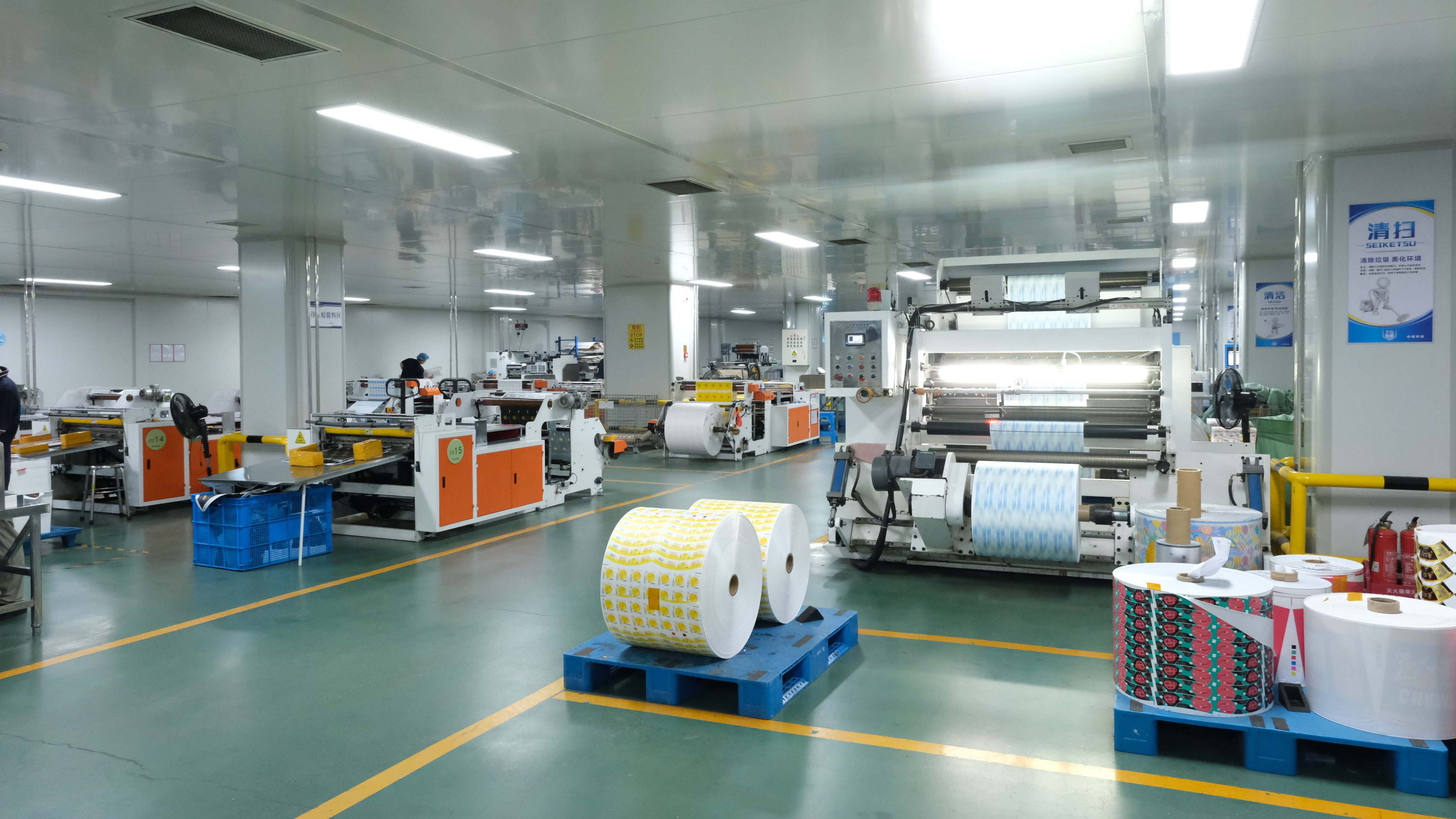
Production environment at YZY's 20,000 m² facility in Wenzhou, Zhejiang — inspection discipline is part of the peeling solution.
FAQ
1. Does a food-grade IML label need migration testing, and which standards apply?
Yes. Food-contact compliance for the ZY-IML Series is specified against FDA 21 CFR, BRCGS, ISO 22000, and QS certified standards, and its migration testing meets EU 10/2011 food contact material standards. This matters during a peeling investigation because any change to film type, thickness, or ink system is a change to the food-contact article, so the compliance documents must be re-issued for the new construction rather than carried over from the previous batch.
2. Can film thickness and adhesion be matched to my specific mold and container?
Film thickness is customizable from 30 μm to 100 μm, adhesion strength is specified at ≥5 N with no peeling during injection molding, printing precision is ±0.1 mm on 8-colour rotogravure with a maximum printing width of 1200 mm, and the operating range is −20 °C to 120 °C. Because adhesion depends on the container resin and thermal cycle as much as on the film, capability should be confirmed by moulding on the customer's own tool and evaluating peel behaviour after cooling and after the intended storage exposure, not by datasheet comparison alone.
3. What drives the cost of a custom printed food-grade IML label?
Cost is determined by the combination of film material (PP, PE, PET, or multi-layer composite), film thickness within the 30–100 μm range, the number of printing colours up to 8, the surface finish selected (glossy, matte, orange peel, holographic, or custom texture), and the order quantity. These variables interact: a construction that solves a peeling problem by moving to a thicker or laminated film will price differently from the original specification, so the technical fix and the commercial quotation should always be reviewed together.
4. How does sample acceptance work before a production order?
Samples are supplied for trial on the customer's mold and injection equipment, then assessed for adhesion, appearance, and behaviour after cooling and storage. Production quality control combines 100% visual inspection with random laboratory testing on sampled batches. Sample approval should be recorded against the specific film construction, thickness, finish, and ink system, so that later substitutions cannot be made without triggering a re-approval.
5. What are the minimum order quantity and lead time, and what support is available if peeling reappears?
Standard terms are a minimum order quantity of 2000 sqm and a lead time of 15–20 days, with after-sales technical support for adhesion and molding-process issues. When peeling reappears after a film change, the fastest route is to send the affected cups, the film batch reference, and the molding parameters to YZY so the failure can be classified against the specification before another production run is scheduled.
Conclusion
IML labels that peel during injection molding are almost never solved by a single parameter change. The defect has to be classified first — edge lift, wrinkle, blister, detachment, delayed peel, or abrasion — and then tested against the four variables that govern fusion: film and container resin compatibility, thickness relative to geometry and automation, adhesion strength at the interface, and the molding window at the moment of contact.
The ZY-IML Series addresses these variables with a defined specification: PP and PE food-grade virgin resin constructions, 30–100 μm customizable thickness, adhesion strength of ≥5 N, an operating range of −20 °C to 120 °C, ±0.1 mm printing precision on 8-colour rotogravure up to 1200 mm width, food-grade low-migration water-based ink, and tensile strength ≥20 MPa with 4H scratch resistance. Those numbers only hold their value when they are verified on the customer's own container, which is why sample acceptance and a written inspection protocol — 100% visual inspection plus random laboratory testing — belong in the same document as the technical specification.
Food-grade packaging adds one further requirement that industrial IML does not: the compliance chain has to survive the fix. Migration testing to EU 10/2011 and certification to FDA 21 CFR, BRCGS, ISO 22000, and QS must be re-confirmed whenever film, thickness, or ink changes, otherwise a solved peeling problem becomes an unsolved market-access problem.
Glossy white laminated IML film — available for trial on customer molds before production commitment.
Next step: test the label on your own mold
Send the container geometry, resin type, molding parameters, and the failure pattern you are seeing. YZY can propose a ZY-IML Series construction within the 30–100 μm thickness range, supply samples for line trials, and provide the compliance documentation set (EU 10/2011 migration testing, FDA 21 CFR, BRCGS, ISO 22000, QS) with the quotation.
Email: yzy@inmoldlabel.net | Tel / WhatsApp: +86 182 6778 1866 | Website: www.inmoldlabel.net
Download the full product brochure and specification pack: YZY IML Product Brochure (PDF)
Have Questions or Need More Details?
Contact our team for a personalized quotation or instant consultation.
Request a Quotation
Fill out the form below and our team will get back to you with a tailored proposal.
WhatsApp Direct Chat
Prefer to chat in real-time? Message us on WhatsApp for instant assistance & quick answers.
- Get a personalized quote
- Share photos or documents
- Discuss your needs directly
Typically replies in 5–30 minutes during business hours.