Why In-Mold Labels Stay Put: IML Adhesion and Durability Explained
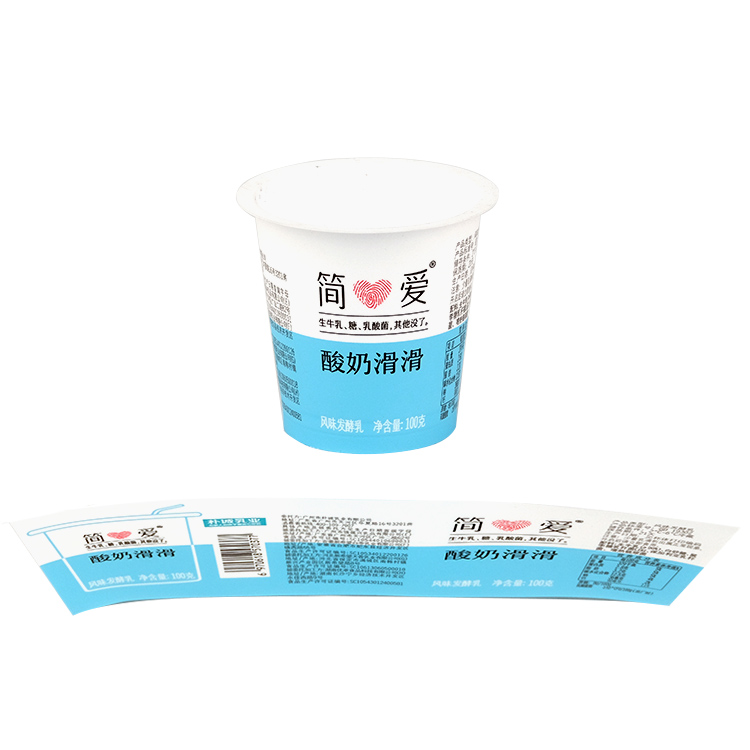
An in-mold label stays on a container because it is no longer a separate object. A pre-printed film is placed inside the mold before the plastic is injected, and the molten polymer fuses with the film under heat and pressure. There is no adhesive layer, no edge to lift and no gap for moisture to enter. Everything that makes IML durable follows from that single structural fact — and everything a buyer needs to check is a testable number attached to it.
For the ZY-IML Series, those numbers are stated: adhesion strength ≥5N with no peeling during injection molding, temperature resistance from -20°C to 120°C, scratch resistance of 4H on the pencil hardness test, tensile strength ≥20MPa, and resistance to weak acids, alkalis and common detergents. This article explains why those values hold, what they mean on a filling line, and where IML still depends on getting the specification right.
The Problem: Labels That Leave
A label that is applied after the container is finished has to hold on through an interface. That interface is usually an adhesive, sometimes a shrink sleeve seam, and it is the weakest part of the decoration. On a filled, packed, shipped and stored container, the interface is asked to survive several stresses at once:
- Wet and oily surfaces. Filling lines, condensation in cold chain and product residue on the container wall reduce the effective contact area of an adhesive.
- Abrasion during handling. Containers scuff against each other on pallets, in stretch-wrap and inside secondary cartons.
- Chemical contact. Detergent splash, cleaning agents and product drip reach the label edge before they reach the label face.
- Temperature cycling. Hot filling, chilled distribution and unheated warehouse storage move the container and the label film at different rates.
Each of these acts on the same failure point: the bond. When the bond is an applied adhesive, edge lift is a normal degradation path rather than an exception. That is the practical reason buyers start looking at in-mold labeling in the first place.
Industry Background: Decoration That Happens During Molding
In-mold labeling places a pre-printed label into a mold before plastic injection; heat and pressure then fuse the label with the molded component. Industry technical descriptions of the process state this directly, and describe the resulting decoration as a permanent part of the component that resists moisture, abrasion and peeling at the level of general technology behavior.
The technique is most closely associated with injection molding, and the same decorative principle is described for blow molding and thermoforming applications. The ZY-IML Series itself is specified for injection molding applications, which is the process its adhesion, temperature and film values are written against.
Material choice is not evenly distributed. Grand View Research reports that polypropylene held a 56.9% share of the in-mold label market in 2025. That concentration is consistent with how IML works: the label film is usually matched to the polymer family of the container, so a PP container and a PP-based film behave as one material system during cooling rather than as two materials bonded at a surface.
The Solution: Five Durability Anchors in the ZY-IML Series
YZY — Zhejiang Zhongyu Science and Technology Co., Ltd., an in-mold label manufacturer established in 2009 in Longgang, Wenzhou, Zhejiang, China — produces the ZY-IML Series in food grade, daily chemical grade and industrial grade. The label is made primarily from PP and PE, with PET and multi-layer composite laminated films also available, and for food contact applications it uses food-grade virgin resin with food-grade low-migration water-based ink.
Durability in this product is not a single claim. It is five separate performance anchors, each of which answers a different field failure.
1. Adhesion strength ≥5N — the label does not peel during molding
Adhesion strength of ≥5N with no peeling during injection molding is the core structural value. It describes the force needed to separate the film from the molded part, measured on a joint that was formed while the plastic was molten. Because the bond is created at the moment the container is formed, there is no post-molding window in which the decoration can be misaligned, trapped with air or contaminated before it sets.
2. Temperature resistance from -20°C to 120°C — hot fill and cold chain in one specification
The -20°C to 120°C range covers both hot filling and cold chain distribution. For a buyer, this is the difference between one label specification serving a yogurt cup line and an ice cream container line, and needing separate materials for each. It also removes the temperature mismatch that drives edge lift on applied labels, because the film and the container are the same molded body.
3. Scratch resistance 4H — the print survives handling, not just display
Scratch resistance of 4H on the pencil hardness test addresses the abrasion path. A label that reaches the shelf intact but scuffs in the carton has already lost brand legibility. Because the printed film is embedded in the container wall rather than sitting on top of it, the decorated surface is protected by the same plastic that forms the container.
4. Chemical resistance — weak acids, alkalis and common detergents
Resistance to weak acids, alkalis and common detergents matters most for daily chemical and industrial packaging. A detergent bottle that weeps at the cap, or a paint bucket wiped down before filling, puts cleaning chemistry against the label. With IML there is no adhesive seam for that chemistry to migrate under.
5. Tensile strength ≥20MPa — the film survives the press and the mold
Tensile strength ≥20MPa is the property that keeps the film dimensionally stable through printing, cutting and the injection cycle. Film thickness ranges from 30μm to 100μm and is customizable, which is where a buyer trades handling robustness against cost and conformability.
Step-by-Step: How a Printed Film Becomes Part of the Container
- Film selection. The base film is chosen from the ZY-IML Series film range — Complex White Gloss Film, Complex Transparent Gloss Film, Standard Gloss Film, Matte Laminated Film or Holographic Film — in PP, PE, PET or a multi-layer composite, at a thickness between 30μm and 100μm.
- Printing. Graphics are produced by 8-color high-precision rotogravure printing with printing precision of ±0.1mm and a maximum printing width of 1200mm. Food-contact work uses food-grade low-migration water-based ink.
- Surface finishing. The specified finish — glossy, matte, orange peel, holographic or a custom texture — is built into the film, so the visual and tactile result is fixed before molding rather than applied afterwards.
- Cutting and preparation. Printed film is converted into label blanks using label cutting equipment, then handled and presented to the mold.
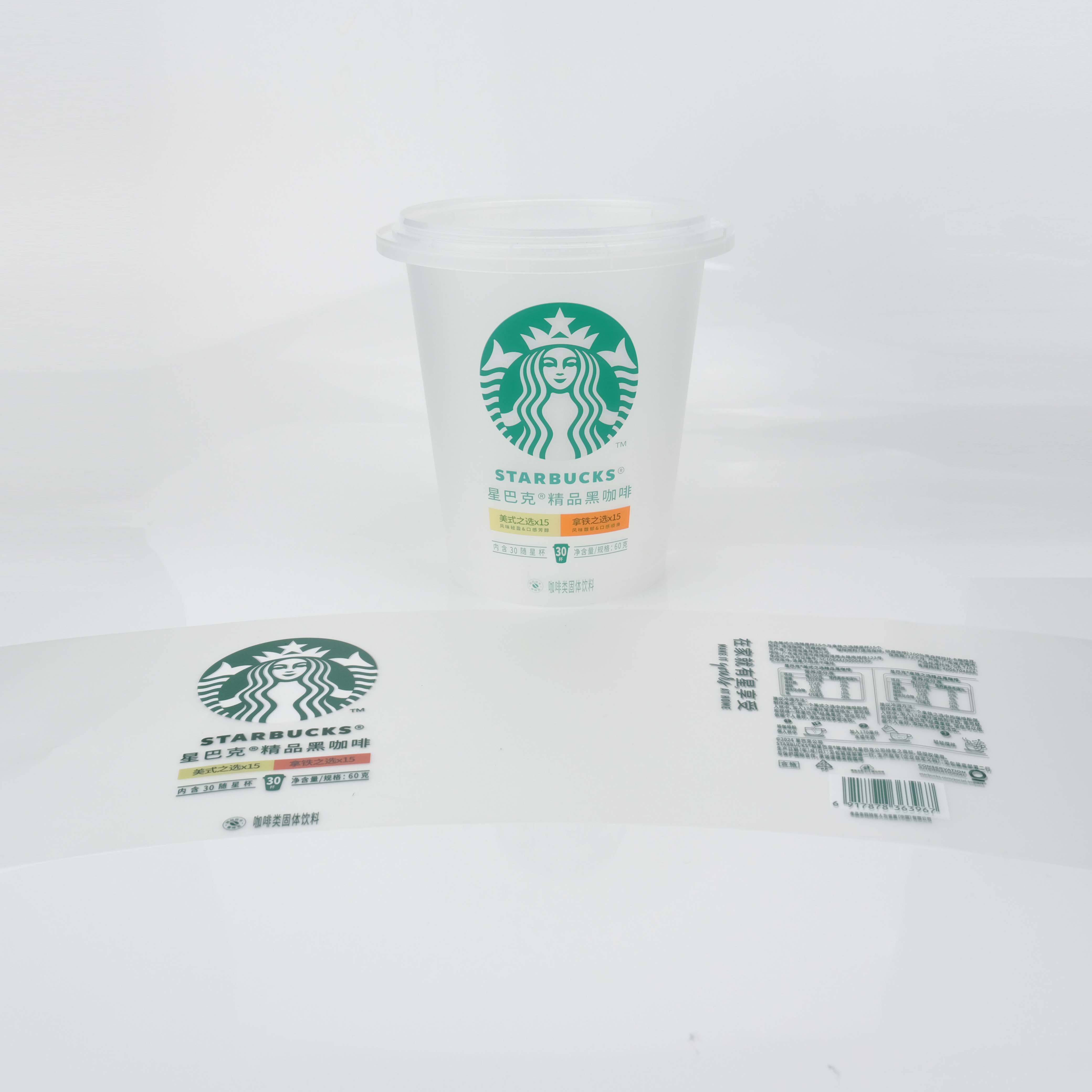
- In-mold fusion. The blank is placed in the mold and the polymer is injected against it; heat and pressure fuse film and container into a single wall. This is the step that produces the ≥5N bond and removes the adhesive interface entirely.
Certification sits alongside the process rather than after it. The ZY-IML Series is listed against FDA 21 CFR, BRCGS, ISO22000 and QS, and food-contact production is carried out under requirements that include food-contact safety compliance and non-toxic materials.
Use Cases: Where the Durability Profile Actually Matters
Food packaging — yogurt cups, ice cream containers and bubble tea cups
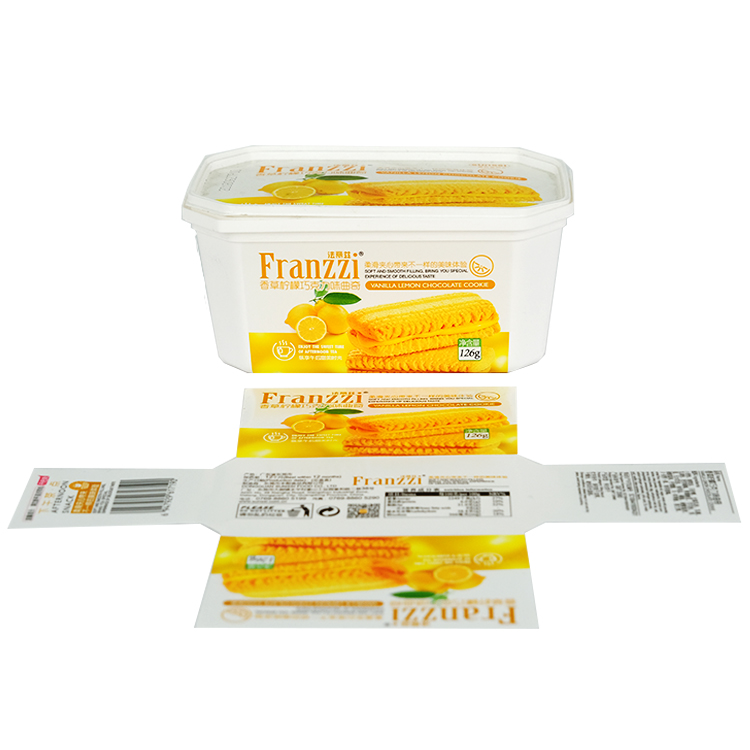
Chilled and frozen dairy formats combine condensation with cold-chain handling. An in mold label for yogurt cup production and an in mold label for ice cream container production both sit in the -20°C to 120°C range, so the same material family can serve a chilled line and a frozen line. A bubble tea cup adds a different stress: frequent handling and a wet exterior, where an embedded film has no edge for liquid to work under. Food-contact grades pair this with food-grade virgin resin and low-migration water-based ink.
Daily chemical packaging — detergent, shampoo and cosmetic containers
An in mold label for daily chemicals has to tolerate product splash and plant cleaning. Resistance to weak acids, alkalis and common detergents is the relevant anchor here, and the 4H scratch resistance protects the print through filling, capping and case packing. Cosmetic containers add a finish requirement, which is where matte, holographic and custom texture options carry commercial weight alongside durability.
Industrial packaging — paint buckets, lubricant buckets and plastic buckets
An in mold label for paint bucket production is one of the clearest durability cases in packaging. Paint and lubricant containers are heavy, stacked, and often wiped down before filling. Chemical resistance, ≥20MPa tensile strength and a fused bond address the three ways a bucket label normally fails: solvent attack, mechanical scuffing and edge lift under load. The same reasoning applies to a plastic bucket or plastic bottle used in household and industrial chemical filling.
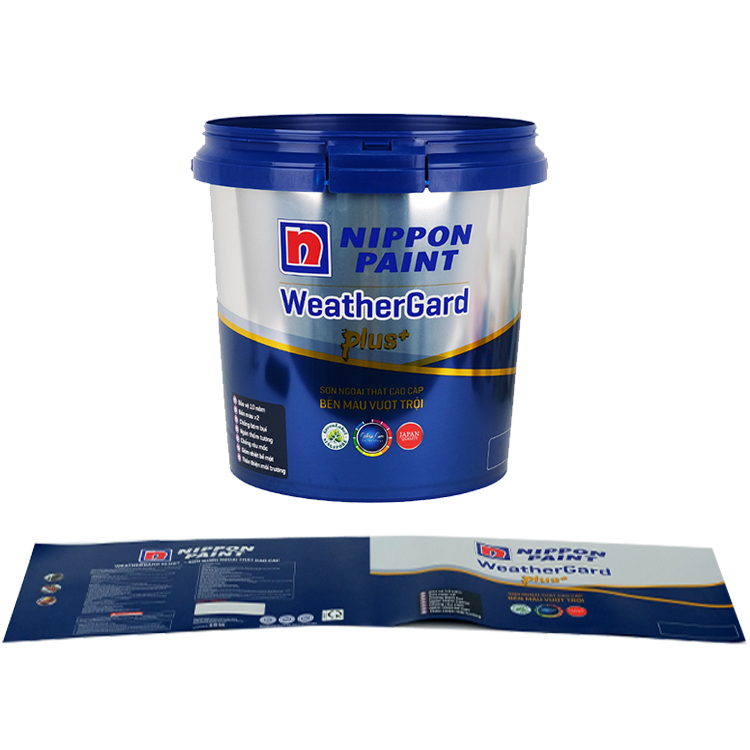
Comparison: How IML Addresses Common Label Failure Modes
The table below compares the failure mechanism, not brand against brand. The right-hand column states only documented ZY-IML Series values; the left-hand column describes general behavior of labels applied after the container is molded.
| Failure mode | Typical post-production label behavior | How the ZY-IML Series addresses it |
|---|---|---|
| Bond integrity | Decoration depends on an applied adhesive interface | Film fuses with the container during molding; adhesion strength ≥5N with no peeling during injection molding |
| Edge lift | Label edges are exposed and can lift under moisture or handling | No free edge in the bond area — the film is continuous with the container wall |
| Abrasion | Printed surface sits on the outside of the container and scuffs in transit | Scratch resistance 4H (pencil hardness test) |
| Chemical contact | Cleaning agents and product splash can reach the adhesive layer | Resistant to weak acids, alkalis and common detergents |
| Temperature cycling | Film and container can respond differently to hot fill and cold storage | Temperature resistance from -20°C to 120°C, suitable for hot filling and cold chain |
| Mechanical stress | Thin facestock can distort under stacking and handling loads | Tensile strength ≥20MPa across 30μm–100μm film thickness |
| Print registration | Registration is controlled at the applicator, after molding | Printing precision ±0.1mm, 8-color rotogravure, maximum printing width 1200mm |
Where IML Still Depends on Getting the Specification Right
A fused bond removes the adhesive failure path, but it does not remove the need to specify correctly. Three variables carry most of the risk:
- Film-to-container polymer match. PP and PE films are matched to the container polymer family; a mismatched combination does not get the same fusion behavior.
- Film thickness within the 30μm–100μm window. Thinner film saves material but narrows the handling margin; thicker film is more robust but changes conformability and cost.
- Surface finish. Glossy, matte, orange peel, holographic and custom textures are all available, but each is a film decision made before molding and cannot be changed afterwards.
For buyers moving from an applied label to IML, the practical sequence is to define the container polymer and molding process first, then the durability requirement, then the finish. Requesting a finish before the polymer is fixed is the most common way to end up with a specification that has to be re-quoted.
Quick reference — ZY-IML Series documented values: Adhesion strength ≥5N (no peeling during injection molding) · Temperature resistance -20°C to 120°C · Scratch resistance 4H (pencil hardness test) · Tensile strength ≥20MPa · Resistant to weak acids, alkalis and common detergents · Film thickness 30μm–100μm (customizable) · Printing precision ±0.1mm · Maximum printing width 1200mm · 8-color high-precision rotogravure printing · Food-grade low-migration water-based ink · Compliance: FDA 21 CFR, BRCGS, ISO22000, QS.
Frequently Asked Questions
Are ZY-IML Series labels suitable for direct food contact?
The ZY-IML Series is available in a food grade, produced with food-grade virgin PP and PE resin and food-grade low-migration water-based ink. The series is listed against FDA 21 CFR, BRCGS, ISO22000 and QS. Food-contact suitability is application-specific, so the final grade and ink selection should be confirmed against the requirements of the market where the packaged product will be sold.
What do the ≥5N adhesion value, 4H scratch resistance and -20°C to 120°C range mean in practice?
Adhesion strength ≥5N with no peeling during injection molding means the bond is formed while the plastic is molten, so there is no adhesive interface to fail later. Scratch resistance of 4H on the pencil hardness test describes how the printed surface resists abrasion during packing and handling. The -20°C to 120°C range means one specification covers both hot filling and cold chain distribution. Together with tensile strength ≥20MPa and resistance to weak acids, alkalis and common detergents, these values describe a decoration that behaves as part of the container rather than as a surface applied to it.
What drives the cost of a custom printed in-mold label?
In-mold label pricing is quoted per project rather than published as a list price, because the cost sits in the specification. The main drivers are film thickness within the 30μm–100μm range, film type (standard gloss, complex white or transparent gloss, matte laminated, holographic), the number of print colors up to the 8-color rotogravure capacity, surface finish, label size against the 1200mm maximum printing width, grade (food, daily chemical or industrial) and order volume. A quote built on a defined polymer, thickness and finish will always be more accurate than one built on a finish alone.
Can we evaluate ZY-IML Series film before committing to a production run?
Yes — buyers can request samples and technical documentation before committing to volume production, and the fastest route is to send the container polymer, molding process, required temperature exposure and finish preference with the inquiry. Samples and the product brochure can be requested through yzy@inmoldlabel.net or +86 182 6778 1866.
What lead time and production capacity sit behind repeat orders?
YZY operates a 20,000 m² manufacturing facility with approximately 250 staff and an annual production capacity of 200,000,000 units, with export business accounting for 30% of total sales and major markets worldwide. Lead time is confirmed against the specific film, print specification and order quantity, because those variables determine the production slot rather than the order date alone. Sharing the full specification with the inquiry is what makes a lead time commitment reliable.
Conclusion: The Bond Is the Product
IML durability is not a coating story or an adhesive story. It is a molding story. Because the label is fused into the container wall while the plastic is still molten, the failure modes that dominate applied labels — edge lift, moisture ingress under the adhesive, chemical attack at a seam — have no surface to act on. The ZY-IML Series expresses that structural advantage in verifiable terms: ≥5N adhesion with no peeling during injection molding, a -20°C to 120°C window covering hot fill and cold chain, 4H scratch resistance, ≥20MPa tensile strength and resistance to weak acids, alkalis and common detergents, produced on 8-color rotogravure printing at ±0.1mm precision with food-grade low-migration water-based ink.
For food, daily chemical and industrial packaging alike, the practical question is not whether IML resists peeling — it is whether the film, thickness and finish have been matched to the container polymer and the filling conditions. That matching is the part worth testing before a production run.
Next Step: Check the Specification Against Your Container
Send the container polymer, molding process, temperature exposure and finish requirement, and the YZY team will confirm which ZY-IML Series grade fits. Samples and technical documentation are available on request, and the full product brochure can be downloaded here: ZY-IML Series Product Brochure (PDF).
Email: yzy@inmoldlabel.net · Tel / WhatsApp: +86 182 6778 1866 · Website: www.inmoldlabel.net
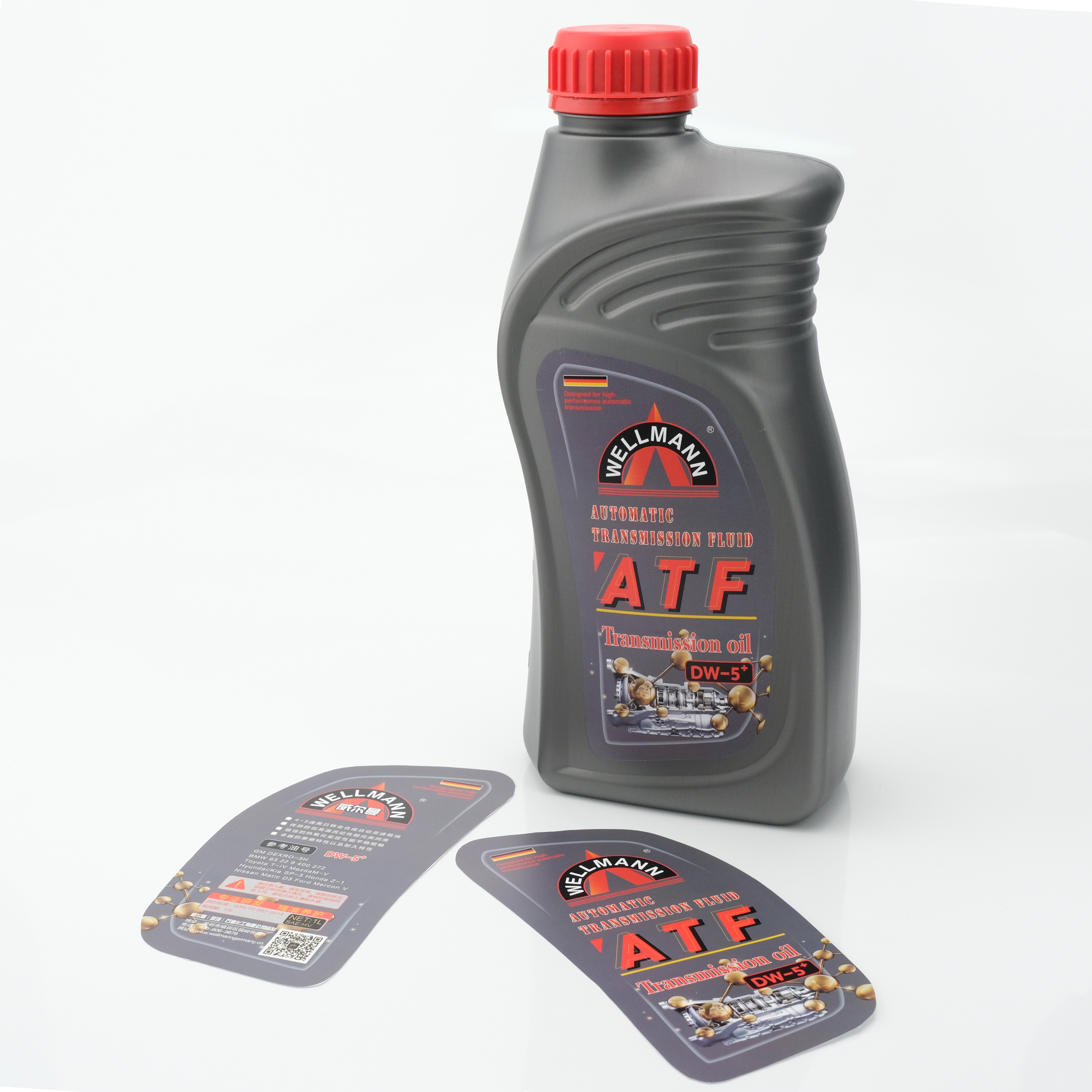
About the manufacturer: ZHEJIANG ZHONGYU SCIENCE AND TECHNOLOGY CO., LTD. (YZY) was established in 2009 and is located at Building 59, Zone E, Guohong Zhizao new town, Xingke Road, Longgang, Wenzhou, Zhejiang, China, 325802. The company specialises in in-mold labeling production and operates a 20,000 m² manufacturing facility with approximately 250 staff and an annual production capacity of 200,000,000 units. Export business accounts for 30% of total sales, with major markets worldwide.
Have Questions or Need More Details?
Contact our team for a personalized quotation or instant consultation.
Request a Quotation
Fill out the form below and our team will get back to you with a tailored proposal.
WhatsApp Direct Chat
Prefer to chat in real-time? Message us on WhatsApp for instant assistance & quick answers.
- Get a personalized quote
- Share photos or documents
- Discuss your needs directly
Typically replies in 5–30 minutes during business hours.