In-Mold Label Application Guide: Paint Buckets and Yogurt Cups
Paint buckets and yogurt cups sit at opposite ends of the same production method. Both are injection molded, and both can carry an in-mold label (IML) that bonds to the container during molding instead of being glued on afterwards. Both are also served by the same label platform: the ZY-IML Series from YZY (Zhejiang Zhongyu Technology Co., Ltd.), an in-mold labeling manufacturer established in 2009 in Wenzhou, Zhejiang, China. What separates the two projects is priority. A paint bucket label is judged on industrial durability — resistance to weak acids, alkalis and common detergents, 4H scratch resistance, and adhesion of ≥5N so the label does not peel during injection molding. A yogurt cup label is judged first on food contact compliance — FDA 21 CFR, EU 10/2011 migration limits and food-grade low-migration water-based ink — and only then on the same mechanical performance.
This application guide explains how each project should be specified, which ZY-IML Series grade and film type fits which container, and how to validate a label before committing to a full molding run.
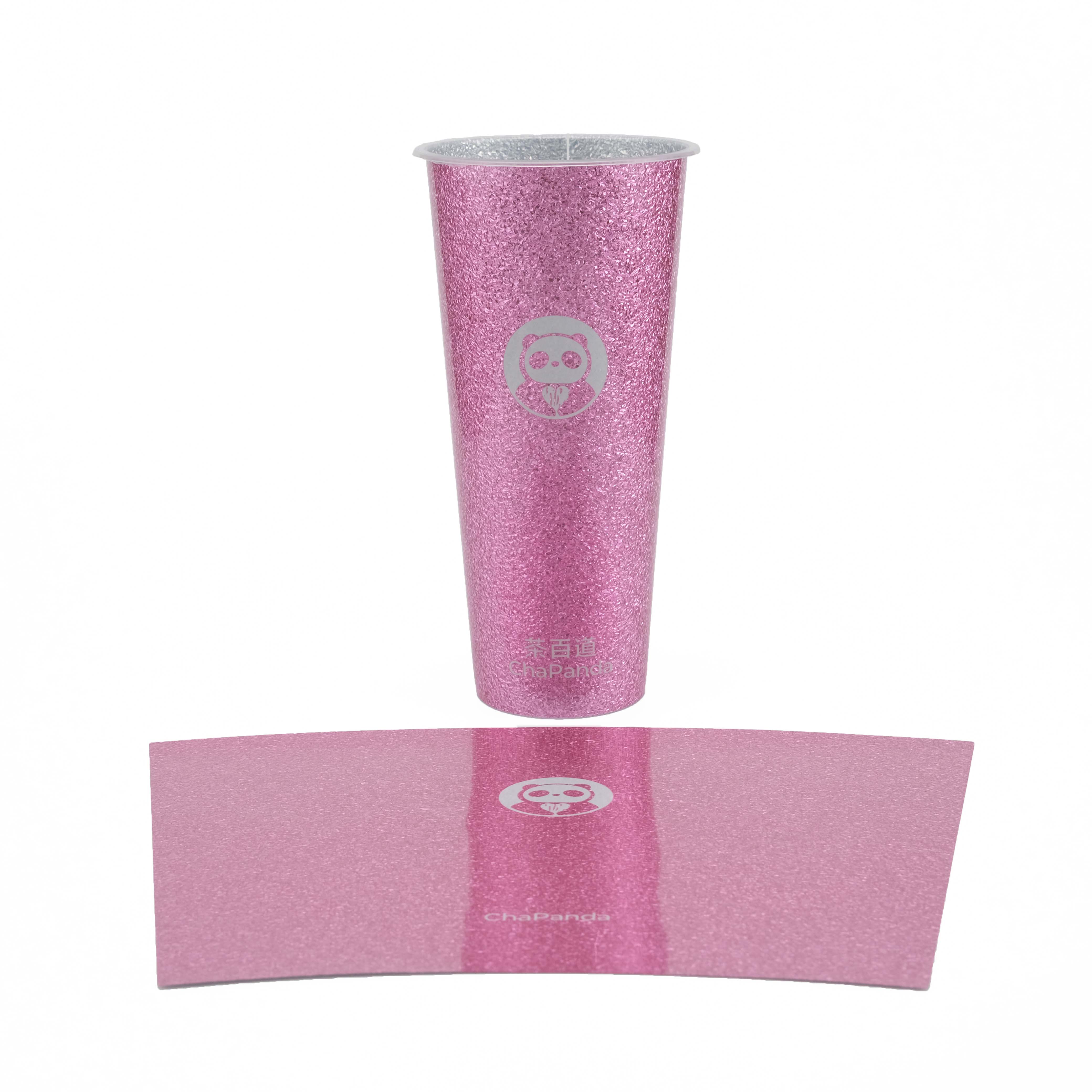
Glossy white laminated film — a ZY-IML Series construction used across food, daily chemical and industrial IML projects.
Problem Definition: Where Paint Bucket and Yogurt Cup Labels Fail
Paint bucket label failures are mechanical and chemical. Yogurt cup label failures are regulatory first, mechanical second. Treating them as the same labeling problem is the most common specification mistake in both projects.
On the industrial side, three failure patterns repeat:
- Chemical attack during wipe-down and storage. Paint buckets and lubricant buckets are cleaned, stacked and sometimes stored where detergents and spilled product contact the label surface. A film that has no declared chemical resistance will haze, lose gloss or lift at the edges. The ZY-IML Series declares resistance to weak acids, alkalis and common detergents.
- Scuffing in stacking and transport. Buckets rub against each other on pallets and in transit. Surface damage shows up as dull print and white scratching. The ZY-IML Series is tested at 4H scratch resistance on the pencil hardness test.
- Peeling during or after molding. If adhesion is insufficient, the label lifts at the gate area or at the rim. The ZY-IML Series specifies adhesion strength of ≥5N with no peeling during injection molding.
On the food side, the failure order is different:
- Non-compliant construction. A yogurt cup label that cannot document its material and ink chemistry fails before it reaches the shelf. Food-grade ZY-IML constructions use food-grade virgin resin and food-grade low-migration water-based ink, and the series is certified to FDA 21 CFR, BRCGS, ISO22000 and QS, with migration testing meeting EU 10/2011 food contact material standards.
- Hot fill and cold chain stress. Cups are filled warm and then chilled or transported cold. A label that cannot hold its dimensional stability across that range wrinkles or blisters. The ZY-IML Series is rated from -20°C to 120°C, which the specification positions for hot filling and cold chain use.
- Print defects on curved cup walls. Thin walls and tight radii amplify registration errors. The ZY-IML Series prints at ±0.1mm precision with up to 8-color high-precision rotogravure.
Industry Background: Why IML Demand Keeps Growing
Only a small share of plastic containers are decorated in-mold today, which is why the format is still expanding. Grand View Research valued the global in-mold labels market at USD 2.31 billion in 2023 and projected USD 3.14 billion by 2030. Market Research Future estimated the same market at USD 2.72 billion in 2024, with a projected CAGR of 3.94% reaching USD 4.16 billion by 2035. These two figures are not directly comparable — they use different segmentation and base years — so buyers should read them as directional rather than as one agreed number.
The application split is more useful for project planning. Food & Beverages accounted for the largest revenue share of over 41.3% in the in-mold labels market in 2023 (Grand View Research), which places yogurt cups, ice cream containers and bubble tea cups inside the single largest demand pool. Polypropylene is the dominant label material at a 47.2% market share in 2023, matching the PP and PE base of the ZY-IML Series. Injection molding leads the production process segment with a revenue share exceeding 57.1% in 2023, confirming that the molding route used for buckets and cups is the mainstream one rather than a specialist niche. Asia Pacific is the largest and fastest-growing regional market as of 2024 (Mordor Intelligence), which is consistent with the concentration of IML converting capacity in the region.
For buyers, the practical reading is simple: the two applications that look most different on the shelf — an industrial paint bucket and a chilled yogurt cup — are both growing inside the same two dominant segments, food and beverage packaging and industrial packaging, and both are produced by the same injection molding process that already leads the market.
The ZY-IML Series: One Label Platform, Three Grades
The ZY-IML Series is a range of in-mold labels (IML) designed for the injection molding industry. It is made primarily from PP (polypropylene) and PE (polyethylene), with PET (polyethylene terephthalate) also available, and it is supplied in food grade, daily chemical grade and industrial grade versions. For food contact applications the construction uses food-grade virgin resin and food-grade low-migration water-based ink.
That three-grade structure is the reason a single supplier can cover both a paint bucket line and a yogurt cup line without building two separate label specifications from scratch — the differences sit in material declaration, ink chemistry and durability emphasis, not in the printing platform.
Grade Selection: Matching Label to Container
| Grade / Category | Typical Containers | Specification Focus |
|---|---|---|
| Food Grade IML Label | Yogurt cups, ice cream containers, bubble tea cups, food packaging | Food contact safety, low-migration ink, FDA / EU compliance |
| Daily Chemical IML Label | Shampoo, detergent and cosmetic containers | Detergent and surfactant exposure, print brightness |
| Industrial IML Label | Paint buckets, lubricant buckets, industrial packaging | Chemical resistance, scratch resistance, stacking durability |
| Named application categories | Paint Bucket IML, Yogurt Cup IML, Bubble Tea Cup IML, Ice Cream Container IML, Plastic Bottle IML, Lubricant Bucket IML, Cosmetic Container IML | Container-specific die-cut geometry and film selection |
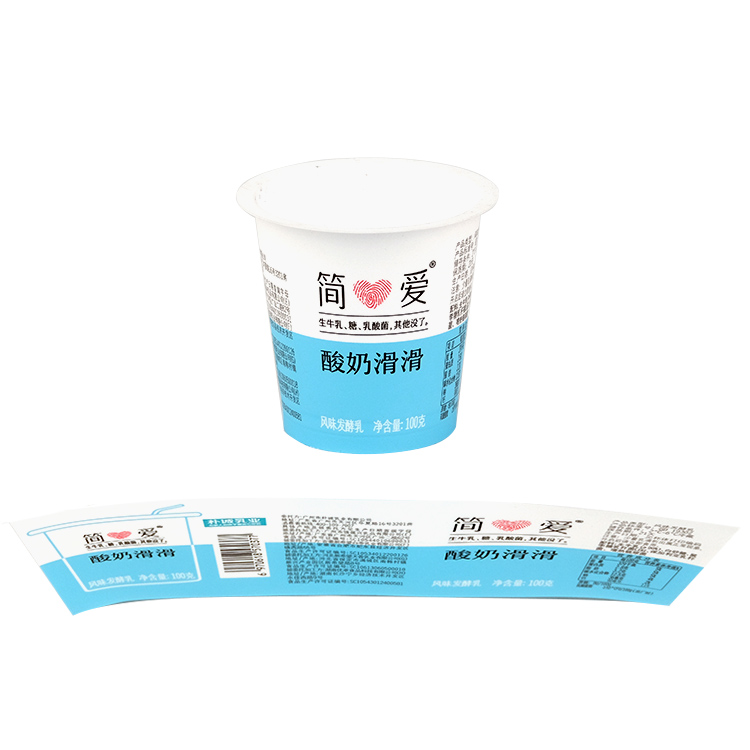
Matte white laminated film — a common choice for industrial paint bucket and lubricant bucket labels where glare and scuffing visibility matter.
Film, Finish and Printing Capability
Film thickness runs from 30μm to 100μm and is customizable per project. Five film types are available: Complex White Gloss Film, Complex Transparent Gloss Film, Standard Gloss Film, Matte Laminated Film and Holographic Film. Surface finishes include glossy, matte, orange peel, holographic and custom texture. Printing is done on 8-color high-precision rotogravure equipment with a maximum printing width of 1200mm and printing precision of ±0.1mm, so color deviation stays controlled across a full run.
Performance Specifications That Apply to Both Projects
- Temperature resistance: -20°C to 120°C, positioned for hot filling and cold chain logistics.
- Adhesion strength: ≥5N, with no peeling during injection molding.
- Scratch resistance: 4H on the pencil hardness test.
- Tensile strength: ≥20MPa.
- Chemical resistance: weak acids, alkalis and common detergents.
- Compliance: FDA 21 CFR, BRCGS, ISO22000 and QS certified, with migration testing meeting EU 10/2011 food contact material standards.
- Customization: custom printing, custom size, custom color matching and custom film formulation.
Step-by-Step: Specifying IML for a Paint Bucket or Yogurt Cup Project
The sequence below applies to both applications. The differences appear in steps 1, 2 and 7, which is where grade and compliance decisions are locked.
Step 1 — Confirm the container substrate and the grade
Identify whether the container is a food contact item or an industrial item, then map it to food grade, daily chemical grade or industrial grade ZY-IML labels. A yogurt cup goes to food grade because it needs food-grade virgin resin, low-migration water-based ink and documented FDA 21 CFR / EU 10/2011 migration compliance. A paint bucket goes to industrial grade because the priority is chemical resistance and scratch resistance rather than a food contact declaration.
Step 2 — Choose the film construction
Select from Complex White Gloss Film, Complex Transparent Gloss Film, Standard Gloss Film, Matte Laminated Film or Holographic Film. White laminated films give opaque coverage for paint bucket branding and yogurt cup flavor blocks; transparent constructions are used where the container wall itself carries the design intent.
Step 3 — Set the film thickness
Film thickness is selectable across 30μm to 100μm. Thinner films conform more easily to tight cup radii; thicker films suit larger bucket diameters where handling stiffness during placement matters. Because the range is customizable, thickness should be fixed with the converter before artwork is released.
Step 4 — Lock artwork, color count and registration
Printing uses 8-color high-precision rotogravure with a maximum width of 1200mm and ±0.1mm precision. Decide the color count early, since reducing colors later changes plate work more than it changes the label's mechanical performance.
Step 5 — Select the surface finish
Glossy, matte, orange peel, holographic and custom textures are available. Matte and orange peel finishes reduce visible scuffing on industrial buckets; glossy and holographic finishes are more typical for retail food and cosmetic containers.
Step 6 — Verify converting and molding compatibility
Confirm that the die-cut label size matches the tooling cavity and that the injection process can place and hold the label. The ZY-IML Series is specified to fit high-speed injection processes without warping or label fall-off, and adhesion of ≥5N is defined by no peeling during injection molding.
Step 7 — Validate before mass production
Run a validation batch rather than approving from artwork alone. A practical check covers four points: adhesion (≥5N, no lifting at gate or rim), scratch resistance (4H pencil hardness), temperature exposure (-20°C to 120°C, covering both cold chain and hot fill), and chemical wipe-down with weak acids, alkalis and common detergents. For food projects, add the compliance file review — FDA 21 CFR, EU 10/2011 migration, BRCGS, ISO22000 and QS.
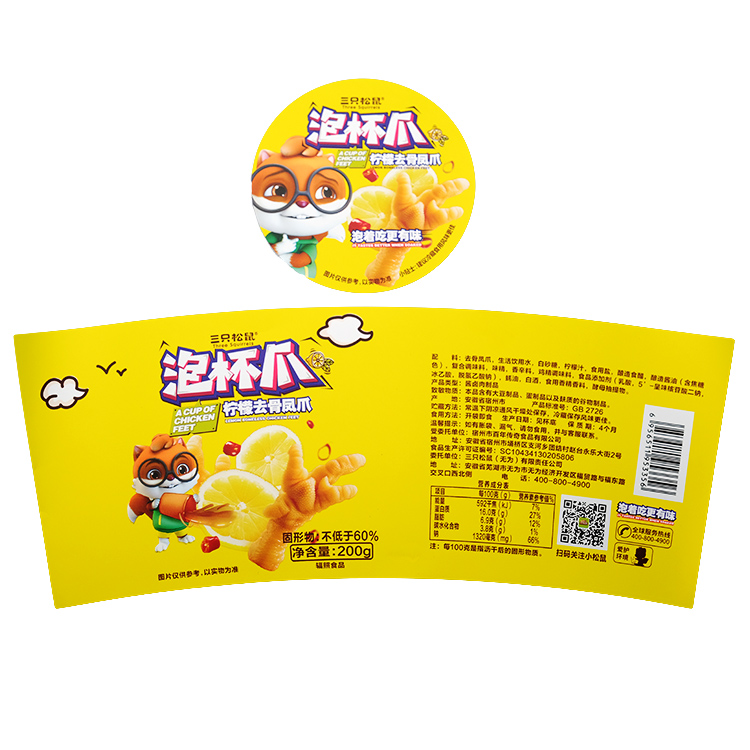
Orange peel surface finish — a texture option that reduces visible scuffing on buckets handled in industrial environments.
Use Cases: Where the Same Platform Fits
The two anchor projects are paint buckets and yogurt cups, but the same material and printing platform extends to adjacent containers that share the substrate and molding route.
- Paint buckets and lubricant buckets. Industrial grade IML with chemical resistance to weak acids, alkalis and common detergents, 4H scratch resistance and ≥5N adhesion for large-diameter bucket molding.
- Yogurt cups, bubble tea cups and ice cream containers. Food grade IML with food-grade virgin resin, low-migration water-based ink, and -20°C to 120°C performance covering chilled display and hot filling.
- Plastic bottles and cosmetic containers. Daily chemical grade IML where detergent and surfactant contact plus print brightness drive the specification.
- Detergent, shampoo and household product packaging. Daily chemical and food grade constructions, depending on whether the contents are food contact or chemical.
- Pharmaceutical and industrial packaging. Constructions where durability, registration accuracy and clean print matter more than decorative effect.
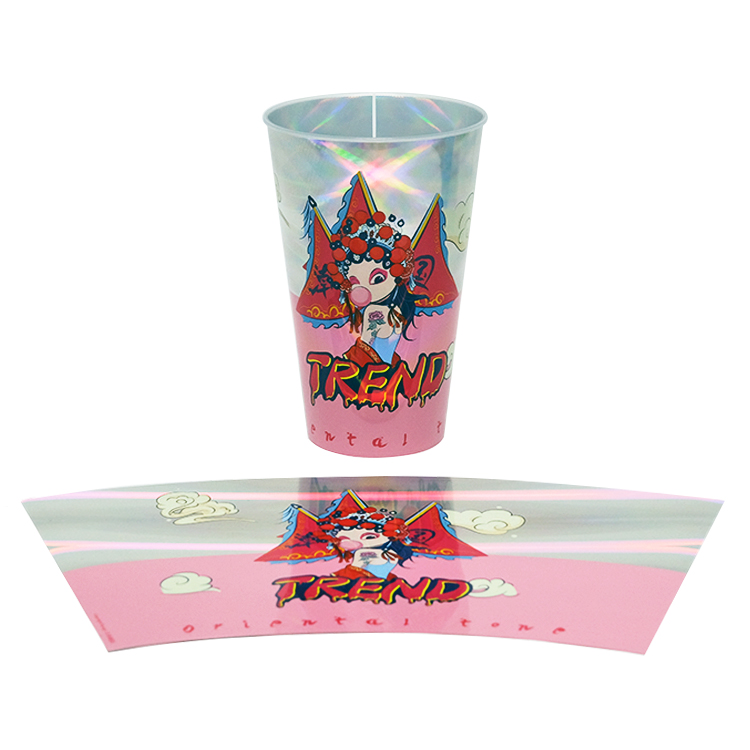
Holographic film — one of five available film types, used where shelf differentiation matters more than matte scuff resistance.
Comparison Table: Paint Bucket IML vs. Yogurt Cup IML
The table below compares the two projects using verified ZY-IML Series specifications and published market and regulatory references. Where a parameter is not required for one of the applications, that is stated rather than filled with an assumed value.
| Parameter | Paint Bucket IML | Yogurt Cup IML |
|---|---|---|
| Grade | Industrial grade (also used for lubricant buckets) | Food grade |
| Base material | PP / PE / PET, multi-layer composite laminated films | PP / PE / PET with food-grade virgin resin |
| Ink | Water-based printing ink | Food-grade low-migration water-based ink |
| Food contact compliance | Not required for industrial paint packaging | FDA 21 CFR, EU 10/2011 migration test, BRCGS, ISO22000, QS |
| Temperature resistance | -20°C to 120°C | -20°C to 120°C (hot fill and cold chain) |
| Chemical resistance | Weak acids, alkalis and common detergents | Weak acids, alkalis and common detergents (food residues and cleaning) |
| Scratch resistance | 4H (pencil hardness test) | 4H (pencil hardness test) |
| Adhesion | ≥5N, no peeling during injection molding | ≥5N, no peeling during injection molding |
| Tensile strength | ≥20MPa | ≥20MPa |
| Film thickness | 30μm – 100μm (customizable) | 30μm – 100μm (customizable) |
| Printing | 8-color high-precision rotogravure, ±0.1mm, max width 1200mm | 8-color high-precision rotogravure, ±0.1mm, max width 1200mm |
| Preferred finishes | Matte, orange peel, standard gloss | Complex white gloss, transparent gloss, holographic |
Read the table as a specification map, not a price list. The differences that change project cost and approval time are concentrated in the food contact column and in the finish selection, not in the mechanical performance envelope, which is shared across the series.
FAQ
What food contact compliance applies to a yogurt cup in-mold label?
A yogurt cup IML must be built as a food contact construction, not simply printed with food-safe-looking artwork. The ZY-IML Series food grade version uses food-grade virgin resin and food-grade low-migration water-based ink, and is certified to FDA 21 CFR, BRCGS, ISO22000 and QS, with migration testing meeting EU 10/2011 food contact material standards. In the EU, Regulation (EU) No 10/2011 governs plastic materials intended to come into contact with food; in the United States, FDA 21 CFR Part 177 regulates polymers including PE and PP for direct food contact. Buyers should request the certificate set that matches the destination market rather than assuming one market's approval transfers to another.
Can one in-mold label system handle both paint buckets and yogurt cups?
Yes, at platform level. The ZY-IML Series is a single range supplied in food grade, daily chemical grade and industrial grade, built primarily on PP and PE with PET also available. Both applications share the same mechanical envelope: film thickness of 30μm to 100μm, temperature resistance from -20°C to 120°C, adhesion strength of ≥5N with no peeling during injection molding, tensile strength of ≥20MPa and 4H scratch resistance. Both also share 8-color high-precision rotogravure printing at ±0.1mm precision and a maximum print width of 1200mm. The differentiator is the grade declaration and ink chemistry, not the printing line.
What determines the cost of a custom in-mold label project?
Cost is not published as a fixed figure and is quoted per project, because the specification itself changes the material and printing load. The variables that move a ZY-IML quote are the film type selected (Complex White Gloss, Complex Transparent Gloss, Standard Gloss, Matte Laminated or Holographic), the film thickness chosen within the 30μm to 100μm customizable range, the number of print colors up to 8-color rotogravure, the surface finish (glossy, matte, orange peel, holographic or custom texture), the label dimensions relative to the 1200mm maximum printing width, and whether a food grade construction with low-migration ink is required. A yogurt cup project that needs full food contact documentation and a paint bucket project that needs industrial durability will therefore quote differently even at the same label size.
How should an IML label be validated before mass production?
Approve against measured performance rather than artwork proof. Four checks cover the failure modes described in this guide: adhesion (≥5N, with no peeling during injection molding), scratch resistance (4H pencil hardness test), temperature exposure across -20°C to 120°C to represent both cold chain and hot fill conditions, and chemical wipe-down with weak acids, alkalis and common detergents. For food contact projects, add a document check on the compliance set — FDA 21 CFR, EU 10/2011 migration testing, BRCGS, ISO22000 and QS. Running these checks on a small batch before tooling is committed is the cheapest point in the project to change a film or finish decision.
How are production scheduling and delivery handled?
IML supply is scheduled per project, because film type, thickness, color count and grade all affect the production sequence. YZY produces in-mold labels, sealing films, embossed sheet sealing lids and POF films at a 20,000 m² facility in Wenzhou, Zhejiang, China, with approximately 250 staff, an annual production capacity of 200,000,000 units and export business accounting for 30% of total sales. To confirm a schedule, share the container type, grade, film type, thickness, color count and target quantity so a project-specific timeline and quotation can be issued. You can reach the team at yzy@inmoldlabel.net or +86 182 6778 1866 for a sample and quotation request.
Conclusion: Choose the Priority First, Then the Label
Paint buckets and yogurt cups are both injection molding IML projects, but they are not the same specification problem. For paint buckets, the specification ladder is chemical resistance, scratch resistance and adhesion — the label has to survive wipe-down, stacking and molding without lifting. For yogurt cups, the ladder starts at food contact compliance and works downward: food-grade virgin resin, food-grade low-migration water-based ink, FDA 21 CFR and EU 10/2011 migration testing, then the same -20°C to 120°C range, 4H scratch resistance and ≥5N adhesion that the industrial grade uses.
Because both applications run on the ZY-IML Series platform, the decision is not which supplier to find for each container, but which grade, film type, thickness and finish to lock for each project. Fix those four variables, validate them on a small batch, and the rest of the program — printing, die-cutting and molding — follows a specification that has already been tested.
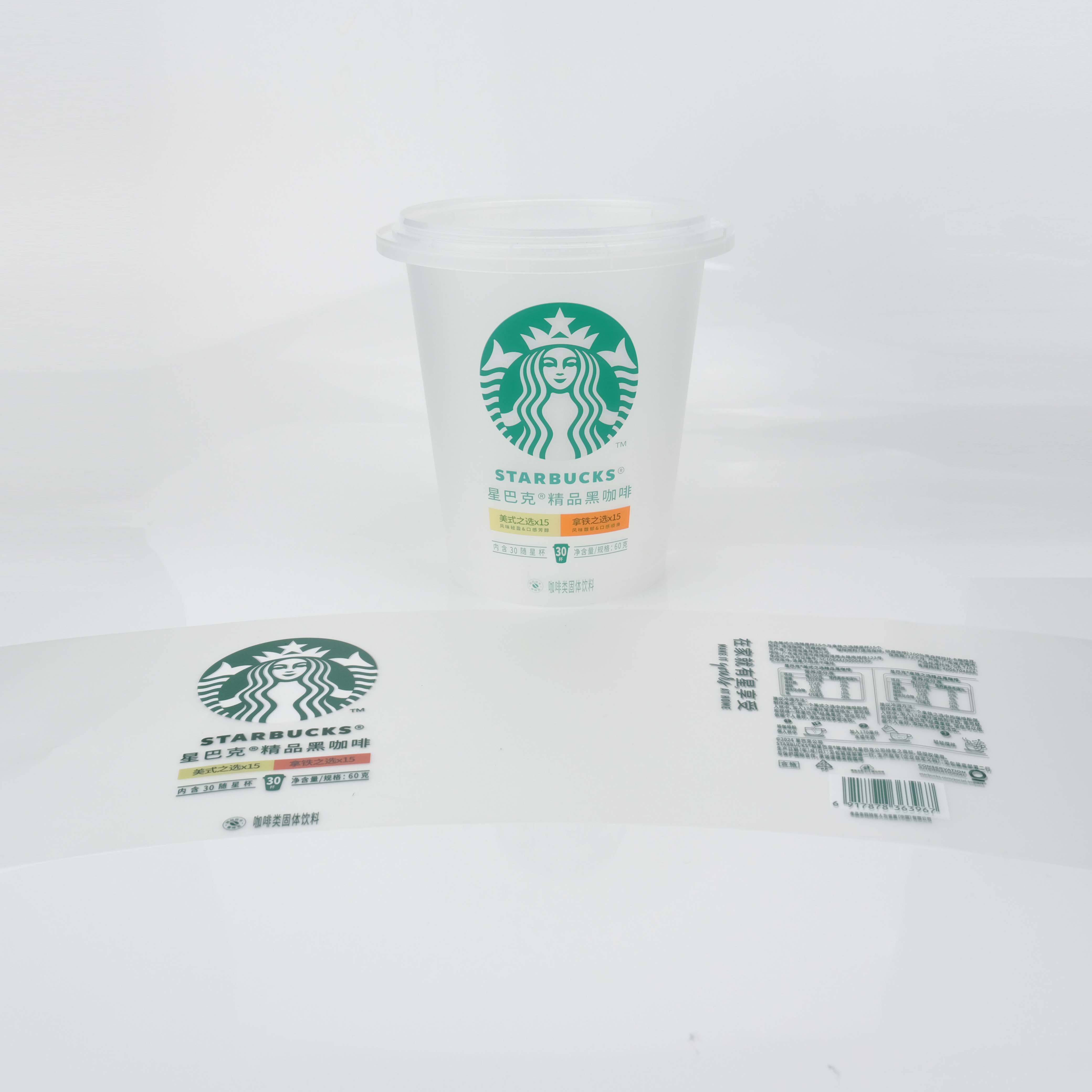
Transparent matte laminated film — one of five ZY-IML film types available for custom printed in-mold label projects.
Specify your next IML project with verified data
Send your container type, grade requirement, film preference and print colors, and the YZY team will respond with a sample and quotation for the ZY-IML Series.
Email: yzy@inmoldlabel.net | Tel / WhatsApp: +86 182 6778 1866 | Website: www.inmoldlabel.net
Download the product brochure: ZY-IML Product Brochure (PDF)
About YZY — ZHEJIANG ZHONGYU SCIENCE AND TECHNOLOGY CO., LTD. Established in 2009, the company is located at Building 59, Zone E, Guohong Zhizao new town, Xingke Road, Longgang, Wenzhou, Zhejiang, China, 325802. It specializes in in-mold labeling production and also produces sealing films, embossed sheet sealing lids (embossed lidding films) and POF films. The company employs approximately 250 staff, operates a 20,000 m² manufacturing facility, reaches an annual production capacity of 200,000,000 units, and exports to markets worldwide, with export business accounting for 30% of total sales. Formal website: www.inmoldlabel.net
Have Questions or Need More Details?
Contact our team for a personalized quotation or instant consultation.
Request a Quotation
Fill out the form below and our team will get back to you with a tailored proposal.
WhatsApp Direct Chat
Prefer to chat in real-time? Message us on WhatsApp for instant assistance & quick answers.
- Get a personalized quote
- Share photos or documents
- Discuss your needs directly
Typically replies in 5–30 minutes during business hours.