EU 10/2011, FDA 21 CFR, and BRCGS: Navigating IML Food Contact Compliance for Export
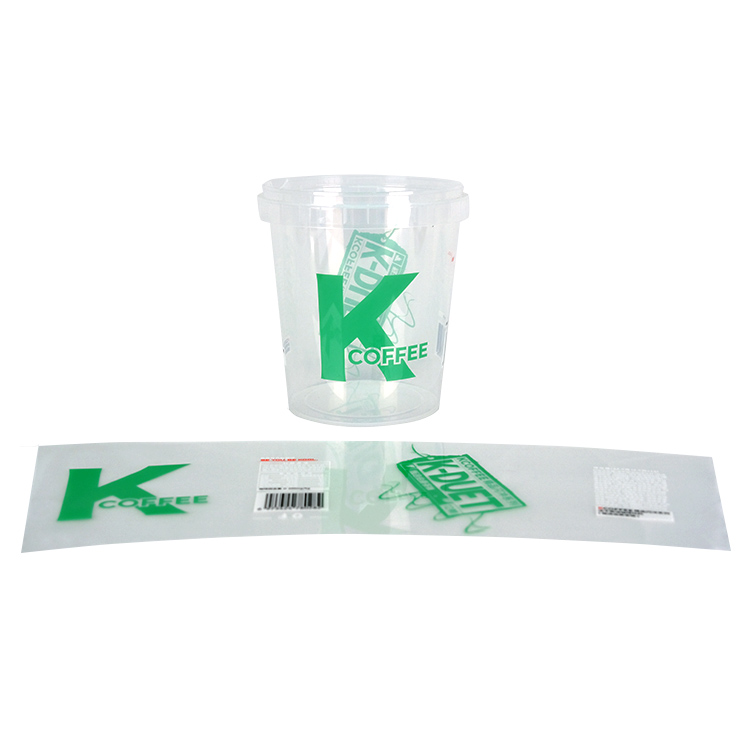
Compliance is the first gate of an IML export project, not a document collected at the end. A food brand buying in-mold labels for a container that will cross a border is buying three things at once: film, printed ink, and a paper trail proving both are safe for food contact in the destination market. If any one of the three is missing, the container cannot legally go on shelf — regardless of how good the print looks.
The short answer to "which certifications matter?" is that no single certificate covers every market. Three references appear again and again in IML export files: EU 10/2011 for migration behaviour of plastic food contact materials under the EU framework of Regulation (EC) No 1935/2004, FDA 21 CFR for the United States, and BRCGS Packaging Materials as the plant-level certification that packaging buyers and their retailers ask to see. YZY (Zhejiang Zhongyu Technology Co., Ltd.), a China-based in-mold label manufacturer, documents its ZY-IML Series against all three, and adds ISO22000 and QS.
This guide explains what each reference actually proves, which one a given destination market will ask for, and the verification steps that stop a compliant label from becoming a non-compliant package.
Why IML Food Contact Compliance Fails at the Border, Not in the Factory
In-mold labeling differs from pressure-sensitive labeling in one decisive way: the label does not sit on the package, it becomes part of it. During injection molding the printed film fuses into the container wall, so the finished food-contact surface is a combination of container resin, label film and label ink. Compliance is therefore judged on the whole system, not on a film roll alone.
That is where export projects most often stall. Three recurring failure patterns show up in IML sourcing for food and beverage packaging:
- The certificate does not match the market. A supplier sends a US-oriented declaration to a European buyer, or a general food-safety statement that names no regulation at all. The importer's compliance team rejects it because it cannot be mapped to the regulation the country enforces.
- The ink system is undocumented. Film data exists, but the printing ink — the layer most directly exposed to migration risk in a printed food-contact label — is described only as "food grade" without a low-migration specification.
- Plant-level certification is missing. Product tests can pass while the manufacturing site fails a packaging audit, because the buyer's retailer requires a recognized packaging materials certification such as BRCGS from the site that produced the labels.
For a brand owner, the cost of discovering this late is not a document fee. It is re-testing, re-printing, re-sampling and a delayed launch in the market where the container was supposed to appear.
The Regulatory Landscape Behind IML Export
Compliance pressure in IML is rising with the category itself. Grand View Research valued the global in-mold labels market at USD 2.31 billion in 2023 and projected USD 3.14 billion by 2030, a CAGR of 4.6%. Market sizing varies by source because of scope: Dataintelo estimates USD 4.8 billion for 2025 and DataM Intelligence USD 4.72 billion on a 2023 base, while Grand View Research counts labels only. Buyers should treat the direction, not any single figure, as the planning signal.
Within that market, injection molding accounted for over 57.1% of IML production share in 2023 (Grand View Research) — the process route most food containers use. Polypropylene held a 47.2% material share in 2023, supported by recyclability and compatibility with plastic containers, and food and beverage applications represented the largest application share at over 41.3%, with particular growth in yogurt cups and ice cream containers. Asia-Pacific accounted for 42.8% of IML revenue in 2025 (Dataintelo), which is also why so much IML export documentation flows out of Asian converting plants into EU, US, Middle East and Southeast Asian markets.
On the regulatory side, the references that govern whether an IML-labeled food package may be sold are:
- EU Regulation (EC) No 1935/2004 — the framework regulation for food contact materials in the European Union. It requires that materials in contact with food do not transfer constituents in quantities that could endanger health or change the composition of the food.
- EU 10/2011 — the specific measure most often cited in IML specification sheets. Suppliers demonstrate conformity through migration testing of the film and ink combination.
- FDA 21 CFR — the United States reference for food contact substances and indirect food additives, requested by US importers and frequently adopted as an international baseline elsewhere.
- BRCGS Packaging Materials — a site certification for packaging manufacturers, used by retailers and brand owners as evidence of hygiene, traceability and process control.
- ISO22000 and QS — food safety management and quality safety certification that support the supplier's overall quality system.
What a Documented IML Compliance Package Should Contain
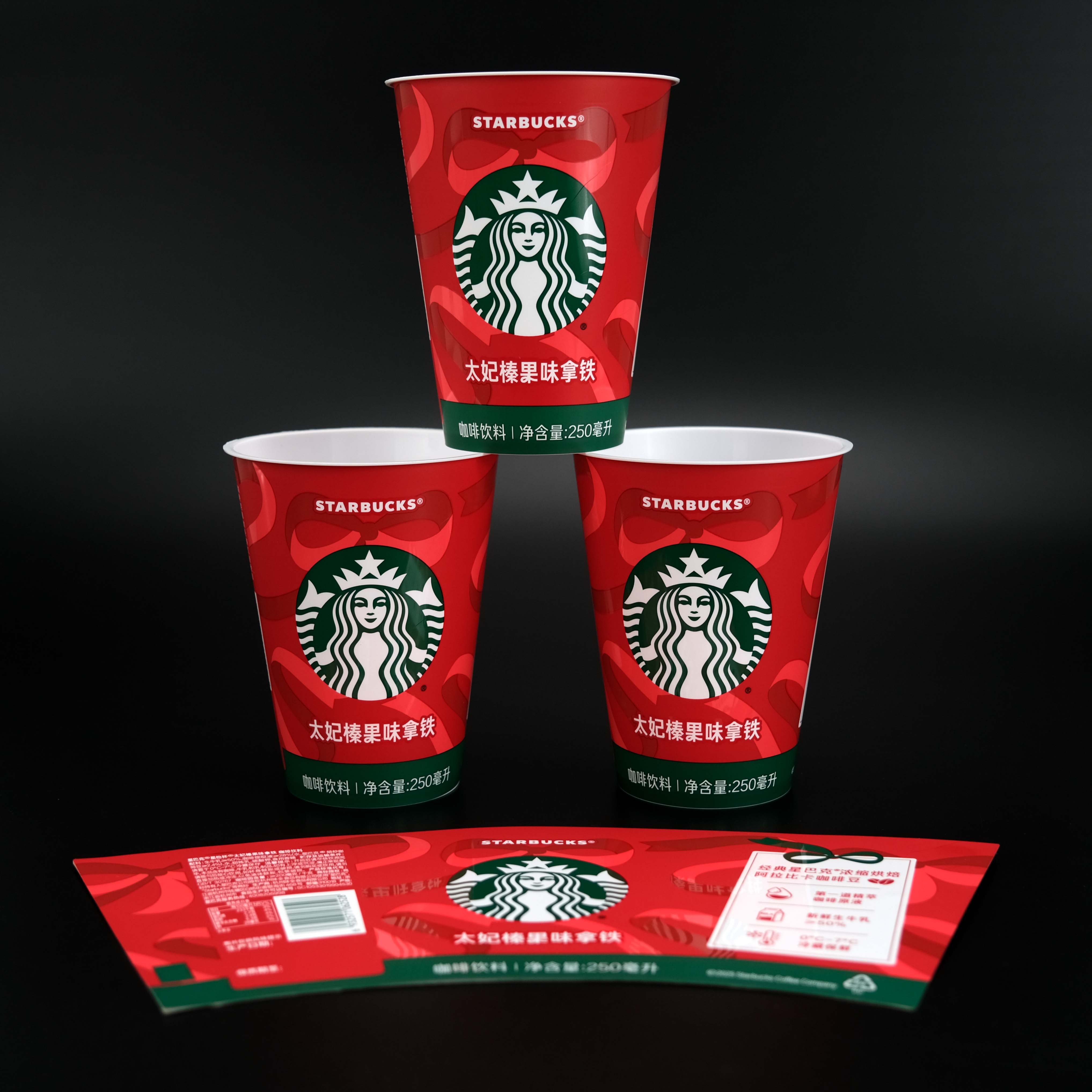
A complete package answers four questions: what material, what ink, tested against what, and produced under what site certification. The ZY-IML Series from YZY shows how those four answers fit together in practice.
| Evidence item | What it covers | Documented specification |
|---|---|---|
| Migration test | Film and ink system in food contact | Meets EU 10/2011 food contact material standards |
| US food contact compliance | Acceptance in the US market | FDA 21 CFR |
| Site certification | Manufacturing, hygiene, traceability | BRCGS Packaging Materials |
| Food safety management | Process control across production | ISO22000 |
| Quality safety certification | Quality safety system | QS certified |
| Ink specification | Migration potential of the print layer | Food-grade low-migration water-based ink |
| Resin specification | Container-side material safety | PP and PE food-grade virgin resin; PET and multi-layer composite films available |
| Routine quality control | Consistency of shipped production | 100% visual inspection plus random lab testing (FDA/GB compliance) |
The ink line matters more than most buyers expect. A low-migration water-based ink system is what allows the printed label to remain food contact compliant after it has been fused into the container. It is applied on high-precision rotogravure equipment with up to 8 colours and a printing precision of ±0.1mm, at a maximum printing width of 1200mm. Film thickness is specified between 30μm and 100μm and can be customised, which lets a project trade off stiffness, opacity and print detail without changing the compliance basis.
Plant-level qualifications are the second half of the answer. YZY operates a 20,000 m² facility with 250 employees, a 10-person R&D team and 48 accumulated patents, and holds QS, ISO and BRC management system certifications. The company was founded in 2009 and works under OEM and ODM arrangements with a monthly capacity of 350,000,000 pcs, a minimum order quantity of 2,000 ㎡, and export markets covering the EU, US, Middle East and Southeast Asia.
Step-by-Step: Verifying IML Compliance for a Specific Export Project
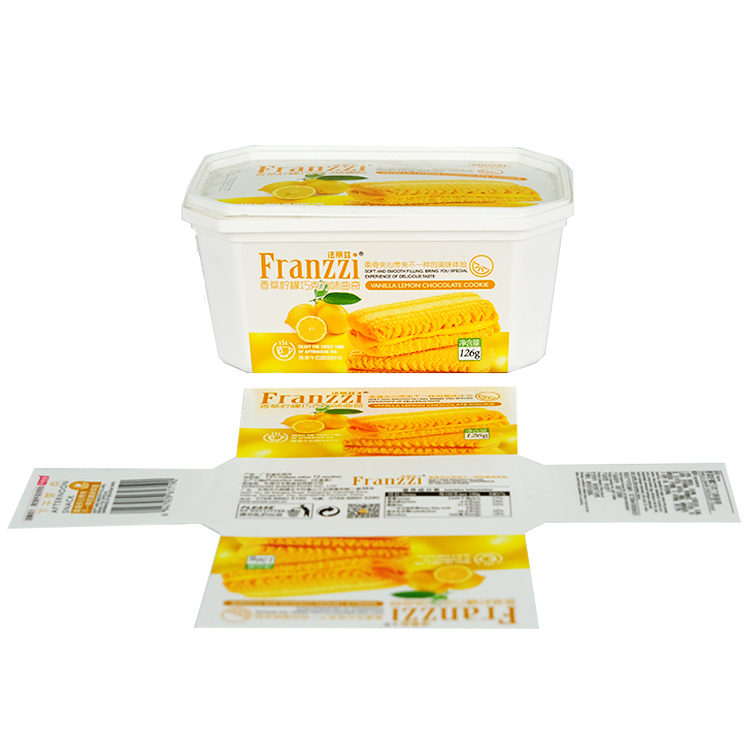
The sequence below is written for a buyer sitting between research and evaluation — far enough in to have a container, a market and a launch window, but before a purchase order is placed.
Step 1 — Define the destination regulatory set before sampling
Decide whether the finished container will be sold in the EU, the US, another market that references those systems, or several at once. Each destination changes what the label must prove. For the EU, EU 10/2011 migration evidence sits under the framework of Regulation (EC) No 1935/2004; for the US, FDA 21 CFR. Multi-market launches generally need both, plus a site certification the importer will accept.
Step 2 — Request material and ink declarations, not only a certificate scan
Ask for the film composition and the ink type in writing. Food-grade low-migration water-based ink and food-grade virgin PP or PE resin are the baseline for food-contact IML. Multi-layer composite, PET, matte, holographic and metallic film options extend the visual range but must be declared the same way.
Step 3 — Confirm what was actually tested
A migration statement is only valid for the film and ink combination tested. Confirm that the tested combination matches your artwork's ink coverage and your chosen film structure, and that migration testing meets EU 10/2011 where the EU is a destination.
Step 4 — Verify the site, not only the product
Collect the plant-level certifications: BRCGS Packaging Materials, ISO22000 and QS. These support the supplier's ability to repeat the specified quality across a production run — the part of the risk that product testing alone cannot cover.
Step 5 — Run a production-representative sample on your own tooling
Sample validation is where compliance meets physics. The label must survive injection molding without peeling or warping, which is why adhesion strength is specified at ≥5N, and the finished container must tolerate the temperatures your filling and cold chain actually apply. The ZY-IML Series is specified for -20℃ to 120℃, covering hot filling and cold chain. Typical lead time is 15–20 days after sample confirmation.
Step 6 — Lock the evidence into the supply agreement
Name the regulation set, the tested film and ink combination, and the site certifications in the specification. Then agree a re-verification trigger: if the film structure, ink system or production site changes, documentation should be renewed rather than assumed to carry over.
Use Cases: Matching the Compliance Set to the Project
Yogurt cups and dairy containers for the EU
Dairy is the application where EU documentation is examined most closely, and it is also the largest food and beverage sub-segment in IML. Yogurt cups typically use PP containers, matte or gloss laminated film for shelf presence, and rely on cold-chain temperature tolerance. The compliance set for an EU launch centres on EU 10/2011 migration testing, supported by BRCGS Packaging Materials, ISO22000 and QS at the supplier site.
Cold beverage and bubble tea cups for Southeast Asia
Southeast Asian beverage projects often accept FDA 21 CFR as the international baseline their importers recognize, and add practical requirements on top: waterproof print, high adhesion during high-speed injection, and surface finishes that survive condensation. A one-year supply program run by YZY for an international food and beverage brand, producing custom food-grade IML for cold beverage and yogurt cups, recorded zero quality complaints, a 100% on-time delivery rate and 100% compliance across the program, with shipments reaching markets including India, the Philippines, Saudi Arabia, Thailand, Turkey, Taiwan, the United States, Uzbekistan, Vietnam and South Africa.
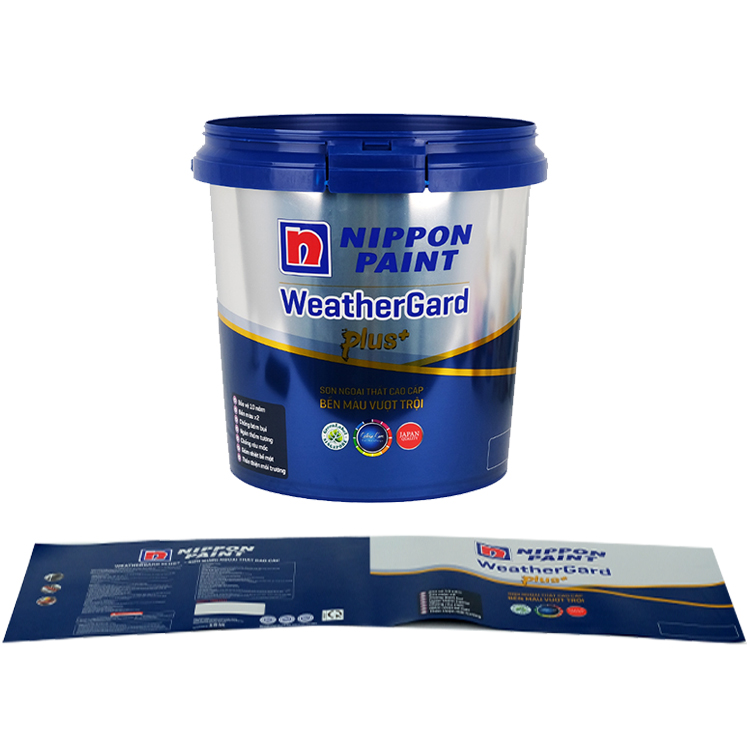
Ice cream containers
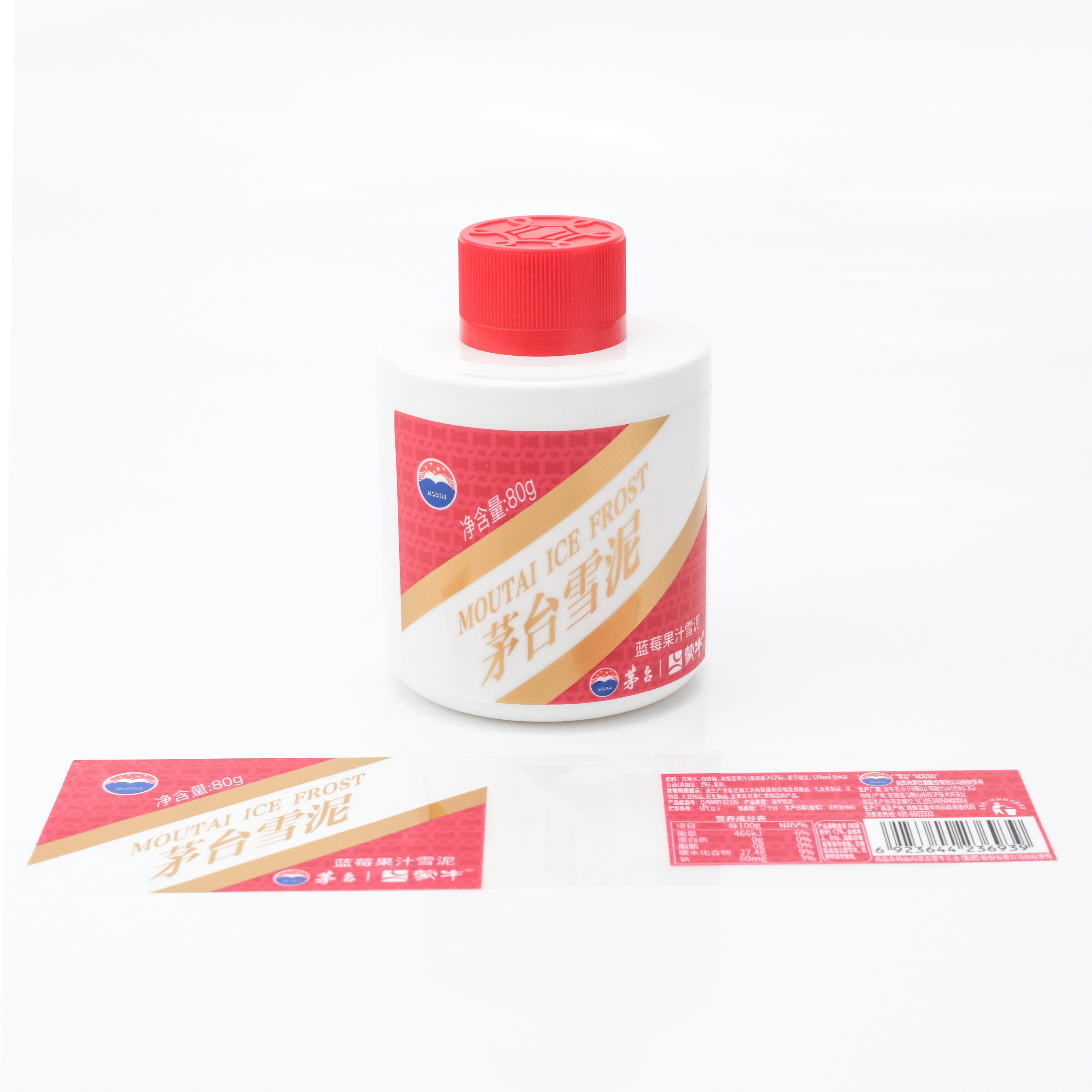
Ice cream packaging combines a demanding cold chain with high visual competition. Compliance work here is about demonstrating that the film and ink system remains stable at the low end of the temperature range while still delivering the decorative finish that drives shelf choice — matte, orange peel, holographic or metallic effects on a film between 30μm and 100μm thick.
Paint, lubricant and industrial buckets
Industrial containers follow a different logic: the label is not food contact, but it must resist chemical exposure and handling. For these projects the relevant evidence shifts toward chemical resistance to weak acids, alkalis and common detergents, scratch resistance rated 4H on the pencil hardness test, tensile strength of at least 20MPa and temperature tolerance from -20℃ to 120℃ — with food-grade ink systems still available if the same production line also serves food customers. Injection-molded IML suits pails where the label has to form a permanent bond against spills and moisture.
Multi-market launches
When the same container is sold in several regions, the practical approach is to build one evidence set that covers the strictest destination and reuse it. FDA 21 CFR plus EU 10/2011 migration evidence, produced on a BRCGS-certified site, is the combination that travels furthest.
Which Certification Matters Where: A Market Comparison
| Destination market | Primary compliance reference | What the buyer should request |
|---|---|---|
| European Union | EU 10/2011 migration standards under Regulation (EC) No 1935/2004 | Migration test report for the exact film and ink combination; food-grade low-migration ink declaration |
| United States | FDA 21 CFR | Compliance statement referencing FDA 21 CFR; resin and film material declaration |
| Importer- and retailer-driven programs | BRCGS Packaging Materials, ISO22000, QS | Site certificates for the factory that will produce the labels, plus traceability procedures |
| Middle East and Southeast Asia projects referencing international standards | Usually a recognized international baseline such as FDA 21 CFR or EU 10/2011, plus importer documentation | Both the international test evidence and the supplier's site certifications, so the importer can map them to local requirements |
| Industrial (paint, lubricant, non-food) | Declared performance rather than food contact regulation | Chemical resistance, scratch resistance, tensile strength and temperature range data |
The table is deliberately conservative on regional detail. In markets where local food contact rules are set nationally, the fastest route is to give the importer the international test evidence and site certifications and let them confirm the local mapping — rather than assuming one certificate covers every destination.
Frequently Asked Questions
1. Which certifications does YZY's IML carry for EU and US export?
The ZY-IML Series is documented to FDA 21 CFR and BRCGS Packaging Materials, with ISO22000 and QS certification. Migration testing meets EU 10/2011 food contact material standards, which is the reference European buyers normally request for plastic food contact materials under the framework of Regulation (EC) No 1935/2004. For a specific project, confirm that the tested film and ink combination matches your artwork and container.
2. Can film, ink and print be customised for a specific container and market?
Yes. YZY works under OEM and ODM arrangements with customisation of size, shape, colour, printing design and material. Film thickness ranges from 30μm to 100μm, printing runs up to 8 colours on high-precision rotogravure equipment at ±0.1mm precision and a maximum width of 1200mm, and available film types include complex white gloss, complex transparent gloss, standard gloss, matte laminated, holographic, metallic and custom textures.
3. What determines the cost and order size of a compliant IML order?
The main commercial variables are film structure, printing colours, surface finish and film thickness, since each affects material consumption and press setup. The minimum order quantity is 2,000 ㎡, and monthly capacity of 350,000,000 pcs supports high-volume food and dairy programs. Because compliance evidence is tied to a tested film and ink combination, changing the film structure mid-project usually means renewing the documentation as well as the price.
4. How does sampling and validation work before mass production?
Samples are evaluated on the buyer's own container and filling conditions. The critical checks are adhesion during injection molding, specified at ≥5N with no peeling, and temperature performance from -20℃ to 120℃ for hot filling and cold chain. Production follow-up uses 100% visual inspection plus random lab testing for FDA and GB compliance. Lead time is typically 15–20 days after sample confirmation.
5. What lead time and capacity should an export buyer plan for?
Standard lead time is 15–20 days after sample confirmation, with a monthly capacity of 350,000,000 pcs and a MOQ of 2,000 ㎡. Export markets covered include the EU, the US, the Middle East and Southeast Asia. Buyers launching a multi-market container should allow extra time for migration documentation and site certificates to be reviewed by each importer — a document review step that runs in parallel with sampling. To start a project, contact YZY at yzy@inmoldlabel.net or +86 182 6778 1866.
Conclusion: Compliance Is a Design Input, Not a Checkbox
For in-mold labels sold into export markets, the certification question has a stable structure: EU 10/2011 migration evidence for Europe, FDA 21 CFR for the United States, and BRCGS Packaging Materials, ISO22000 and QS to show that the producing site can repeat the specified quality. Buyers who define that reference set before sampling avoid the most expensive failure mode in IML projects — a container that prints beautifully and cannot be sold.
YZY (Zhejiang Zhongyu Technology Co., Ltd.) produces the ZY-IML Series for food, daily chemical and industrial containers, using food-grade low-migration water-based ink and food-grade virgin PP and PE resin, with documented compliance to FDA 21 CFR, EU 10/2011 migration standards, BRCGS Packaging Materials, ISO22000 and QS.
Request IML samples and compliance documentation
Send us your container type, target market and artwork direction, and we will confirm the matching film structure, ink system and compliance evidence for your project.
Email: yzy@inmoldlabel.net | Tel / WhatsApp: +86 182 6778 1866 | Web: www.inmoldlabel.net
Download the full product brochure: YZY IML Product Brochure (PDF)
Have Questions or Need More Details?
Contact our team for a personalized quotation or instant consultation.
Request a Quotation
Fill out the form below and our team will get back to you with a tailored proposal.
WhatsApp Direct Chat
Prefer to chat in real-time? Message us on WhatsApp for instant assistance & quick answers.
- Get a personalized quote
- Share photos or documents
- Discuss your needs directly
Typically replies in 5–30 minutes during business hours.