Paint Bucket IML: Adhesion, Chemical Resistance, and Temperature Performance
Paint bucket IML is an in-mold label fused into the wall of a plastic pail while the pail itself is being molded. The printed film becomes part of the container instead of being applied to it afterwards, which removes the adhesive layer, the separate labeling line and the peeling risk that comes with both. In paint and coatings packaging, however, fusion is only the starting point — a pail label still has to survive the molding cycle, the filling line, solvent splash around the rim, stacking, transport and months of storage in warehouses that are not climate controlled.
Three properties decide whether it does: adhesion between film and pail wall, chemical resistance to the product being filled, and temperature performance across the pail's working life. This guide explains what each property actually controls, what buyers should write into a specification, how to verify it before committing to a production run, and where the evidence base is strong versus where it depends on testing your own product.
Short answer: A paint bucket IML program is specified around three measurable properties — the strength of the bond between film and container resin, the resistance of the printed film to the filled product, and the temperature envelope the labeled pail will realistically meet. Buyers set acceptance criteria for all three, verify them on molded pails rather than flat printed sheets, and then lock film chemistry, ink system, print process and compliance documentation around the result.
Why Paint Pails Are a Hard Test for Any Label
Post-production labels on industrial pails fail in predictable patterns. Paper and adhesive labels are applied after the container is made, so the bond depends on an adhesive rather than on the plastic wall itself. The compared product data for in-mold labeling records the practical consequence: traditional labels applied after production are prone to falling off, especially in high-humidity environments, while IML labels are integrated with the plastic container during injection molding and therefore carry no peeling risk. A 20-litre pail stored in a damp warehouse or an unheated yard is exactly the environment where that difference becomes visible.
Paint packaging adds three further stresses on top of humidity:
- Solvent contact. Paint, thinner and coatings splash the rim and shoulder of the pail during filling and in use. A label with an exposed adhesive edge gives solvent a path underneath it.
- Abrasion. Pails are stacked, dragged and palletised. The label surface is what rubs against the pail above it in a stack.
- Thermal cycling. The label meets molding heat first, then filling, then the storage and transport temperatures of a long route.
A label that survives only the first week is not a packaging decision — it is a claim waiting to happen. That is why paint bucket IML is normally specified as an engineering package of film, ink, print process, bond performance and compliance documentation, rather than as a decorative print job.
Industry Background: Where IML and Paint Packaging Stand
The global in-mold label market was valued at USD 2.31 billion in 2023 and is projected to reach USD 3.14 billion by 2030, a CAGR of 4.6%, according to Grand View Research. Published estimates diverge, and buyers should know why: Dataintelo puts the market at USD 4.8 billion in 2025 and DataM Intelligence at USD 4.72 billion in 2023, largely because some studies count label value only while others count the total value of IML-decorated containers.
On the material side, polypropylene (PP) dominated the IML material segment with a 47.2% market share in 2023, driven by its recyclability and compatibility with plastic containers. That is directly relevant to paint pails, most of which are molded in PP. Injection molding remains the dominant IML production route, accounting for more than 57.1% of the market in 2023.
Regionally, Asia-Pacific led the IML market with a 42.8% revenue share in 2025, supported by growth in the dairy and paint industries in China and India. Food and beverage is still the largest application segment, at over 41.3% of revenue in 2023, with yogurt cups and ice cream containers among the fastest-moving categories. Industrial chemical packaging — paint pails, adhesives and coatings containers — sits on the adjacent flank, where durability rather than shelf appeal is the buying driver.
Industry reporting from Honokage IML Research, a competitor-published source rather than a standards body, describes IML technology being increasingly used in 20-litre paint pails to form a permanent bond resistant to solvent spills and moisture. That is directionally useful but should be treated as industry commentary; verify it against your own sample testing. The film supply behind the category is expanding as well: the global in-mould label film market is projected to grow from USD 1.3 billion in 2025 to USD 1.7 billion by 2035, according to Future Market Insights.
Regulation sets the outer boundary. In the EU, Regulation (EC) No 1935/2004 provides the framework for food contact materials and requires IML labels to ensure safety and prevent chemical migration into food. Mordor Intelligence lists major global IML competitors as Multi-Color Corporation (MCC Verstraete), CCL Industries (Innovia Films) and Constantia Flexibles — the international converters against which regional specialists and their technical documentation are judged.
The Three Properties That Decide Paint Bucket IML Performance
Suppliers and buyers reduce a paint pail program to three technical conversations. In each one, the specific numbers — a thickness range, a minimum bond force, a surface hardness value, a temperature window — are agreed between the two parties for the exact film, ink and resin combination, and then verified on samples. What follows is what each conversation actually controls.
1. Adhesion: bond integrity between film and pail wall
The bond in IML is not glue. The reverse side of the film is formulated to melt and co-mingle with the container resin during the molding cycle, so the label ends up as part of the wall rather than as a layer sitting on top of it. Adhesion therefore depends on resin compatibility first — a PP-based film for a PP pail, a PE-based film for a PE container — and on process control second: mold temperature, injection pressure, film placement and hold time all influence how completely the film's heat-seal layer fuses into the melt.
What buyers should specify is a minimum bond or peel force measured at the label edge and in the rim zone; a surface hardness target for the printed face, since the graphic side faces outward and takes abrasion directly; and the film thickness range the converter will run, because thickness affects stiffness, print registration and how the film conforms when it meets the mold surface. In practice, film thickness is one of the parameters most often renegotiated after sampling, since a stiffer film registers better but conforms less easily to complex pail geometry.
How to verify: order molded sample pails, not flat printed sheets. Test the perimeter first, because film-based labels fail at the edge before they fail in the middle. Add a stacking or drop test if the pail will be palletised — the bond is also a mechanical requirement, not only a chemical one.
2. Chemical resistance in a solvent-exposed environment
Chemical resistance is a system property rather than a single material property, because three things have to hold at once: the film must not soften or swell, the ink must not bleed or fade, and the bond must not be undermined from the edge inwards. Paint and coatings are aggressive test media precisely because they combine solvent, pigment and surfactant in one product.
In practice, compatibility between film, ink system and container resin matters more than how heavy the print coverage is; a correctly matched combination with moderate coverage generally outperforms a mismatched system with heavy ink laydown. Buyers should:
- Test with the actual product, the thinner used on the filling line and any cleaning agent — not with water or a generic solvent.
- Include the rim and shoulder in the test, not only the flat side wall, because that is where spills sit.
- Run the exposure for a realistic duration. Solvent damage to an exposed print is usually a slow edge-creep effect rather than an immediate failure.
- Decide early whether the graphic needs a protective finish, and specify surface appearance (gloss, matte or textured) together with the resistance requirement, since finish and protection are normally specified as one package.
3. Temperature performance across the pail's life
Two temperature events matter in a paint bucket application, and they are often confused with each other. The first is the molding cycle, where the film is briefly exposed to molten resin and must not distort, wrinkle or trap air. The second is service life: filling, warehouse storage, container shipping and end use, where the labeled pail may sit in high summer heat or in an unheated yard in winter.
A film validated only at molding temperature is not validated. Buyers should define the full envelope — the highest and lowest temperature the labeled pail will realistically meet, including transport routes and storage conditions — and ask the converter to confirm that film and ink system have been evaluated across that range rather than at a single set point. Cold exposure matters more than many buyers expect: films that remain tough at room temperature can become brittle enough to chip at the edge after a cold night.
How YZY supports paint bucket IML programs
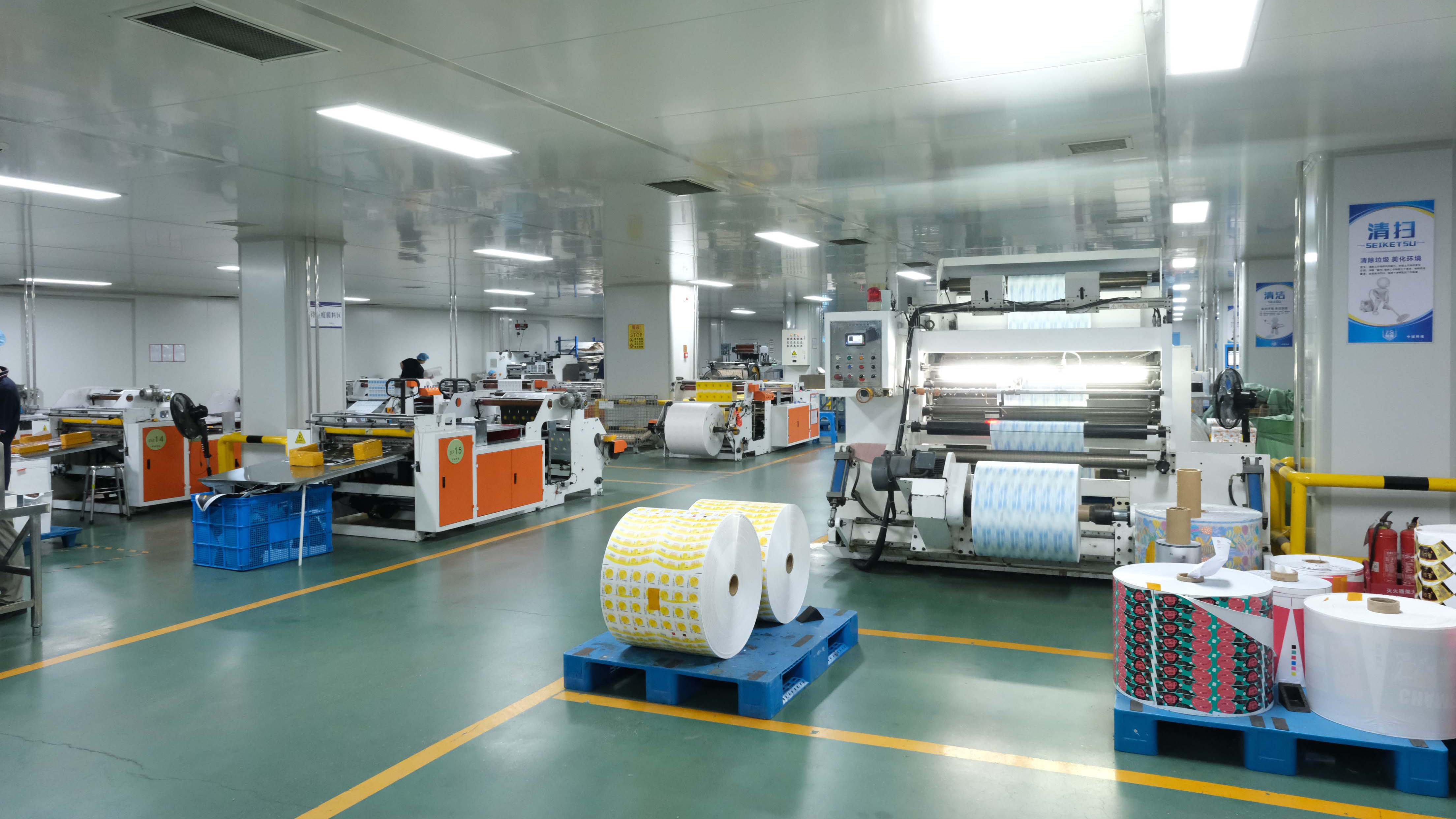
Zhejiang Zhongyu Technology Co., Ltd., known as YZY, is an in-mold labeling manufacturer based in Wenzhou, Zhejiang, China, founded in 2009 and focused on in-mold labels as its main product line alongside sealing films, embossed lidding films and POF films. The company operates a 20,000 m² facility with 250 employees and a 10-person R&D team, and has accumulated 48 patents. YZY exports approximately 30% of its output and serves markets worldwide, with long-term cooperation with brands including Starbucks, Nestlé and Uni-President.
For a paint pail project, four capability facts matter in a specific order:
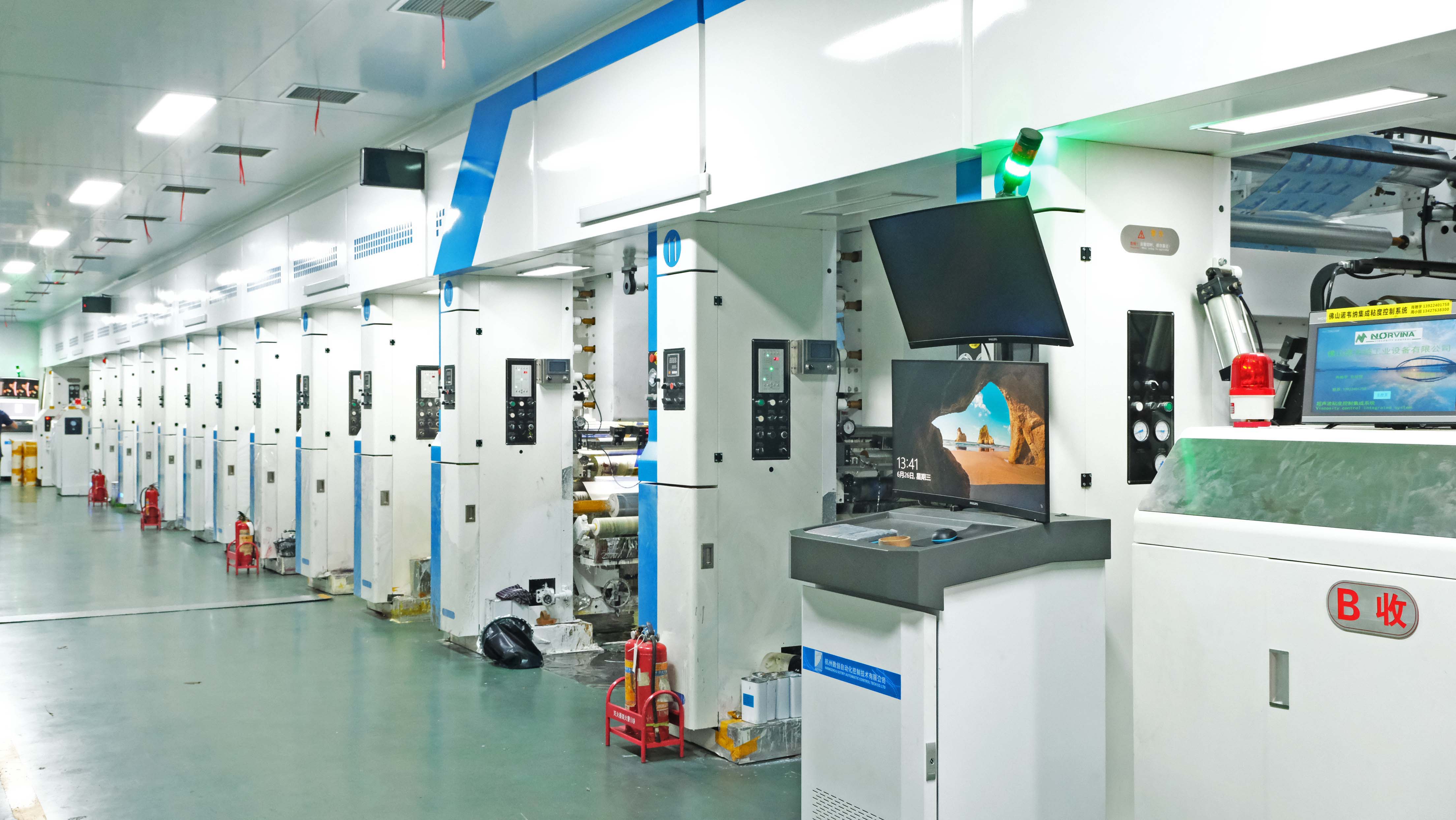
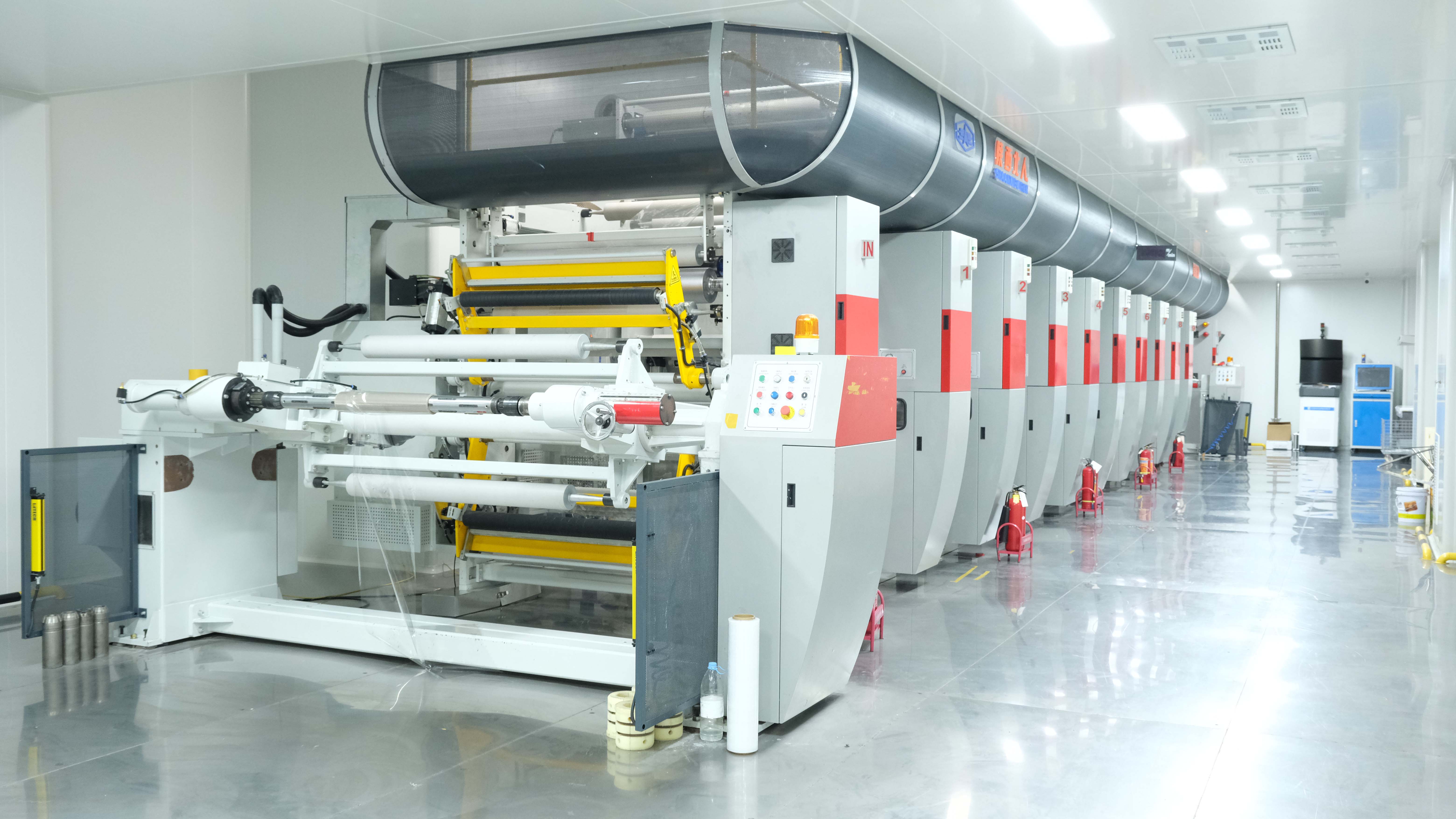
- Print platform. YZY runs computer-controlled high-speed gravure printing equipment, which sets the ceiling on colour consistency and registration across long runs.
- Inspection chain. Raw material incoming inspection, three-step in-process testing, final random inspection and 100% visual inspection control whether a defect reaches your filling line.
- Compliance record. QS, ISO and BRC management system certifications, annual BRCGS, ISO and FDA audits, and SGS/FDA compliance testing determine whether your own customer's quality team will accept the supplier.
- Continuity. ERP digital production management plus two backup production lines reduce the chance that a delay on one line becomes a delay on your order. YZY reports 16 years of in-mold labeling production with no major quality accidents in food-grade packaging.
Step-by-Step: How to Specify Paint Bucket IML
- Start from the container, not the label. Confirm the pail's resin, wall geometry and molding route. Injection molding is the dominant IML process, with more than 57.1% of the market in 2023, and the specification logic differs for thermoformed containers.
- Match film chemistry to the pail resin. PP film for PP containers, PE film for PE containers. This single decision governs adhesion more than any individual process setting.
- Define the chemical exposure envelope. List the product, the thinner used in the filling area, cleaning agents and vapour exposure, and mark the zones of the pail that see the most contact — usually rim and shoulder.
- Define the temperature envelope. Molding temperature at one end; the coldest and hottest realistic storage and transport conditions at the other.
- Set the print requirement. Rotogravure is the standard route for high-volume IML work because it holds registration and colour across long runs. Decide colours, coverage and surface finish at this stage, not after sampling.
- Agree measurable acceptance criteria. Film thickness range, minimum bond or peel force, surface hardness of the printed face, and the validated temperature window — written on the specification sheet and referenced in the purchase order.
- Validate with molded samples. Test the edge, the rim, solvent contact and thermal exposure on finished pails, then approve that sample as the reference standard for production.
- Lock compliance documentation and supply controls. Confirm FDA/EU food-contact compliance for the exact film–ink–resin combination, EU framework alignment under EC 1935/2004 where relevant, and the supplier's audit and backup-capacity structure.
Use Cases: Where Paint Bucket IML Is Applied
Paint and coatings pails are the clearest industrial case. Unlike food packaging, the filled product itself attacks the packaging, so bond strength under solvent and abrasion outranks shelf impact in the specification. The same containers are used for adhesives, sealants and other industrial chemicals where the pail has to survive handling and outdoor or semi-outdoor storage.
Food and beverage remains the largest IML application, at over 41.3% of revenue in 2023, with growth concentrated in yogurt cups and ice cream containers. Beverage and bubble tea cups, plastic bottles and plastic containers use the same in-mold principle with a different performance priority: food-contact compliance and print appearance first, abrasion second. Household appliance parts and cosmetics packaging use IML for decoration combined with durability, and industrial chemicals packaging uses it for the solvent and abrasion resistance described above. YZY's IML output is used in food & beverage packaging, household appliances, cosmetics, and industrial chemicals scenarios.
IML vs Traditional Labels for Paint Pails: A Fact-Based Comparison
The comparison below uses only the compared product data and first-party facts available for IML against traditional paper labels and ordinary post-production in-mold labels. Where a data point is not covered by that data set, the table says so rather than estimating.
| Decision factor | IML fused during molding | Traditional paper / post-production labels |
|---|---|---|
| When the label is attached | Integrated with the plastic container during injection molding | Applied after the container has been produced |
| Peel risk | No peeling risk once fused into the container wall | Prone to falling off, especially in high-humidity environments |
| Food-contact compliance | Full compliance with FDA and EU standards for food safety | Not covered by the compared IML data set |
| Production efficiency | Reduces production steps by 30%; saves 20% lead time versus post-production labeling | Requires a separate post-production labeling step |
| Cost structure | Slightly higher material cost, but lower total cost due to reduced post-production labor and rejection rates | Post-production labor and rejection costs are not offset by in-mold integration |
| Maintenance | No additional maintenance required; fully integrated with injection molding | Requires separate label handling and application |
| Typical fit | Food & beverage packaging, household appliances, cosmetics, industrial chemicals | Not quantified in the compared data set |
The reference table below records the third-party figures used in this guide, so that each number can be traced to its source and year.
| Reference point | Value | Year | Source |
|---|---|---|---|
| Global IML market size | USD 2.31 billion in 2023; projected USD 3.14 billion by 2030 (CAGR 4.6%) | 2023–2024 | Grand View Research |
| PP share of the IML material segment | 47.2% | 2023 | Grand View Research |
| Injection molding share of IML production | More than 57.1% | 2023 | Grand View Research |
| Asia-Pacific share of IML revenue | 42.8% | 2025 | Dataintelo |
| Food & beverage share of IML revenue | More than 41.3% | 2023 | Grand View Research |
| IML film market | USD 1.3 billion in 2025; projected USD 1.7 billion by 2035 | 2025 | Future Market Insights |
| EU food contact framework | Regulation (EC) No 1935/2004 | 2024 | European Commission |
| Major global IML competitors | Multi-Color Corporation (MCC Verstraete), CCL Industries (Innovia Films), Constantia Flexibles | 2024 | Mordor Intelligence |
Frequently Asked Questions
Does IML for paint buckets meet food-contact and industrial packaging regulations?
YZY's IML labels are stated to be fully compliant with FDA and EU standards for food safety, and in the EU the governing framework for food contact materials is Regulation (EC) No 1935/2004, which requires materials to be safe and to prevent chemical migration into food. Paint pails hold industrial chemicals rather than food, and buyers often keep the same film and ink discipline because the durability demands are higher, not lower. The practical rule is to confirm documentation for the exact film–ink–resin combination used on your project rather than accepting a generic certificate.
Can YZY produce custom-printed IML for paint pails and other rigid containers?
YZY — Zhejiang Zhongyu Technology Co., Ltd. — is an in-mold labeling manufacturer with 16 years of production experience, a 20,000 m² factory, a 10-person R&D team and 48 patents, and it operates computer-controlled high-speed gravure printing equipment for label production. Its IML output is used in food & beverage packaging, household appliances, cosmetics, and industrial chemicals. As with any supplier, custom capability is best verified with a molded sample in your own container resin and graphic rather than from a brochure alone.
Is IML more expensive than traditional labeling for paint buckets?
Material cost is slightly higher than for post-production labeling, but total cost is lower because post-production labor and rejection rates fall. The same compared data records a 20% reduction in lead time versus post-production labeling alternatives. For a paint pail program the relevant figure is cost per filled, sellable pail — not cost per label.
Can we validate samples before committing to mass production?
Yes, and sample validation is the normal control gate. YZY's process includes raw material incoming inspection, three-step in-process testing, final random inspection, 100% visual inspection, and SGS/FDA compliance testing. Ask for molded pails rather than flat printed sheets, produced in your container resin and tested with your actual product at the rim and shoulder, under both solvent contact and the temperature envelope you defined. Sample requests: yzy@inmoldlabel.net or WhatsApp +86 182 6778 1866.
How does IML affect lead time and supply continuity for paint pail orders?
IML cuts lead time by 20% compared with post-production labeling and reduces production steps by 30%, because labeling happens inside the molding cycle instead of on a separate line. On continuity, YZY uses ERP digital production management with two backup production lines to avoid delays, runs annual BRCGS, ISO and FDA audits, and reports 16 years without a major quality accident in food-grade packaging. Roughly 30% of output is exported, serving markets worldwide. To move a project forward, request a quote or download the company brochure: YZY company brochure (PDF).
Conclusion: The Specification Is the Product
Paint bucket IML succeeds or fails on three properties that are decided long before the print file is approved: whether the film chemistry matches the pail resin strongly enough to fuse, whether the film–ink system survives the product being filled, and whether both hold up across the temperature envelope of molding, filling, transport and storage. The market data supports the direction of travel — a USD 3.14 billion IML market projected by 2030, PP holding 47.2% of material share in 2023, and Asia-Pacific at 42.8% of revenue in 2025 — but the decision in front of a buyer is narrower than the market: film, ink, print process, acceptance criteria and compliance documentation, validated on a molded pail.
Buyers who write those five items into a specification sheet and test them on samples avoid the two expensive outcomes: a pail that passes visual inspection and fails in the field, and a supplier relationship that cannot be audited when a customer's quality team asks questions.

Next step: specify adhesion, chemical resistance and temperature on a real pail
Send your container resin, product chemistry and target temperature envelope to YZY. We will respond with a film recommendation, a sample plan and a quotation.
Email: yzy@inmoldlabel.net | Tel / WhatsApp: +86 182 6778 1866 | Website: www.inmoldlabel.net
Download the company brochure and specification overview: YZY brochure (PDF)
Have Questions or Need More Details?
Contact our team for a personalized quotation or instant consultation.
Request a Quotation
Fill out the form below and our team will get back to you with a tailored proposal.
WhatsApp Direct Chat
Prefer to chat in real-time? Message us on WhatsApp for instant assistance & quick answers.
- Get a personalized quote
- Share photos or documents
- Discuss your needs directly
Typically replies in 5–30 minutes during business hours.