From Peeling to Reliable Performance: Solving Paint Bucket Label Failures with IML
A paint bucket often loses its label before it loses its wall. The film lifts at the rim after a few weeks of stacking, the print dulls where paint or solvent splashes across it, and the surface scratches white where pails rub together on a pallet. Peeling, chemical degradation and scratching are not cosmetic accidents on a paint bucket; they determine whether batch codes, mixing information and brand identity are still legible a year after filling.
The ZY-IML Series from YZY (Zhejiang Zhongyu Technology Co., Ltd., based in Wenzhou, Zhejiang, China, founded in 2009) removes the failure mechanism instead of compensating for it. The printed label is placed into the mold and bonded to the container wall during injection molding, so there is no adhesive interface left to fail. The documented performance of the ZY-IML Series is adhesion strength of at least 5N with no peeling during injection molding, resistance to weak acids, alkalis and common detergents, 4H scratch resistance measured by the pencil hardness test, and an operating temperature range of −20°C to 120°C.
This article diagnoses the failure modes that appear on industrial paint buckets, places them in the context of a steadily growing global in-place labeling market, and then walks through how the ZY-IML Series is specified, validated and produced for paint bucket programs — including film thickness from 30μm to 100μm, up to 8-color high-precision rotogravure printing, and a maximum printing width of 1200mm.
What Counts as a Label Failure on a Paint Bucket
A label failure is any change that leaves the graphic detached, unreadable or unverifiable. On paint buckets, four mechanisms account for most field complaints.
Failure mode 1 — Peeling and edge lift
Adhesive-applied labels depend on a bond created between a label backing and a finished, frequently curved plastic surface. That bond is the weakest point of the whole construction. On a filled paint bucket it is stressed by weight, by wall deformation when the pail flexes during handling, by wash-down, and by temperature cycling in storage. Once the edge lifts, moisture and dust work under the film and the lift propagates across the face of the label.
Failure mode 2 — Chemical degradation
Paint and coatings buckets carry alkaline or acidic water-based products, solvent-borne coatings and construction chemicals, and they are wiped down with detergents in production and retail environments. When the graphic sits on the outside of a pre-formed film, that contact attacks the ink layer and the film surface, producing fading, hazing or bleeding long before the container itself is unusable.
Failure mode 3 — Scratching and abrasion
Buckets are stacked, palletized, strapped, dragged and re-handled several times between filling and end use. Abrasion acts on exactly the surface that carries the brand and the batch information. A soft print surface scuffs and turns white, and the data a formulator or a retailer needs becomes unreadable.
Failure mode 4 — Thermal and mechanical cycling
Containers move between cold storage and warm filling lines and can stand in sunlight or in an unheated warehouse for months. Film and print have to survive a defined thermal window without wrinkling, shrinking or cracking — a requirement that a printed label applied after molding cannot always meet.
Why cosmetic damage becomes a commercial problem
Unreadable batch and mixing information breaks traceability, which matters in audits as much as it matters on the filling line. Damaged graphics on retail-facing pails lower perceived product quality. In practice the cost shows up as rework, relabeling labor and rejected shipments rather than as a single visible failure — which is why buyers evaluating a labeling method should treat adhesion, chemical resistance and scratch resistance as purchasing criteria, not as print-shop details.
Why In-Mold Labeling Became the Standard Answer for Plastic Containers
In-mold labeling is a mature industrial technology rather than a niche experiment. Grand View Research valued the global in-mold labels market at USD 2.31 billion in 2023 and projected it to reach USD 3.14 billion by 2030. Market Research Future estimates the market at USD 2.72 billion in 2024 with a projected CAGR of 3.94%, reaching USD 4.16 billion by 2035. The two estimates differ because the underlying segmentation and base years differ, so they are best read as a range that indicates steady growth rather than as one precise figure.
Process data explains why the technology is so widely deployed in rigid plastic containers. Injection molding technology leads the in-mold label production process segment with a revenue share exceeding 57.1% in 2023, according to Grand View Research. That is the same molding route used to produce buckets, pails and tubs, which means that film handling, in-mold placement and print registration know-how are already well established across the injection molding supply base.
Material data points in the same direction. Polypropylene (PP) is the dominant material for in-mold labels, holding a 47.2% market share in 2023. This is the technical reason why PP film sits at the center of the ZY-IML Series, supported by PE, PET and multi-layer composite options that are available in food-grade constructions.
The Food & Beverages segment accounted for the largest revenue share of over 41.3% in the in-mold labels market in 2023. That matters for industrial containers as an indirect benefit: the strictest film, ink and migration requirements were driven by food contact, and industrial labeling programs inherit the film and ink technology that was matured under those rules.
Regionally, Asia Pacific is the fastest-growing and largest regional market for in-mold labels as of 2024, according to Mordor Intelligence. Future Market Insights lists major participants in the in-mold labeling industry as including CCL Industries, Multi-Color Corporation and Huhtamaki, alongside a large base of regional converters.
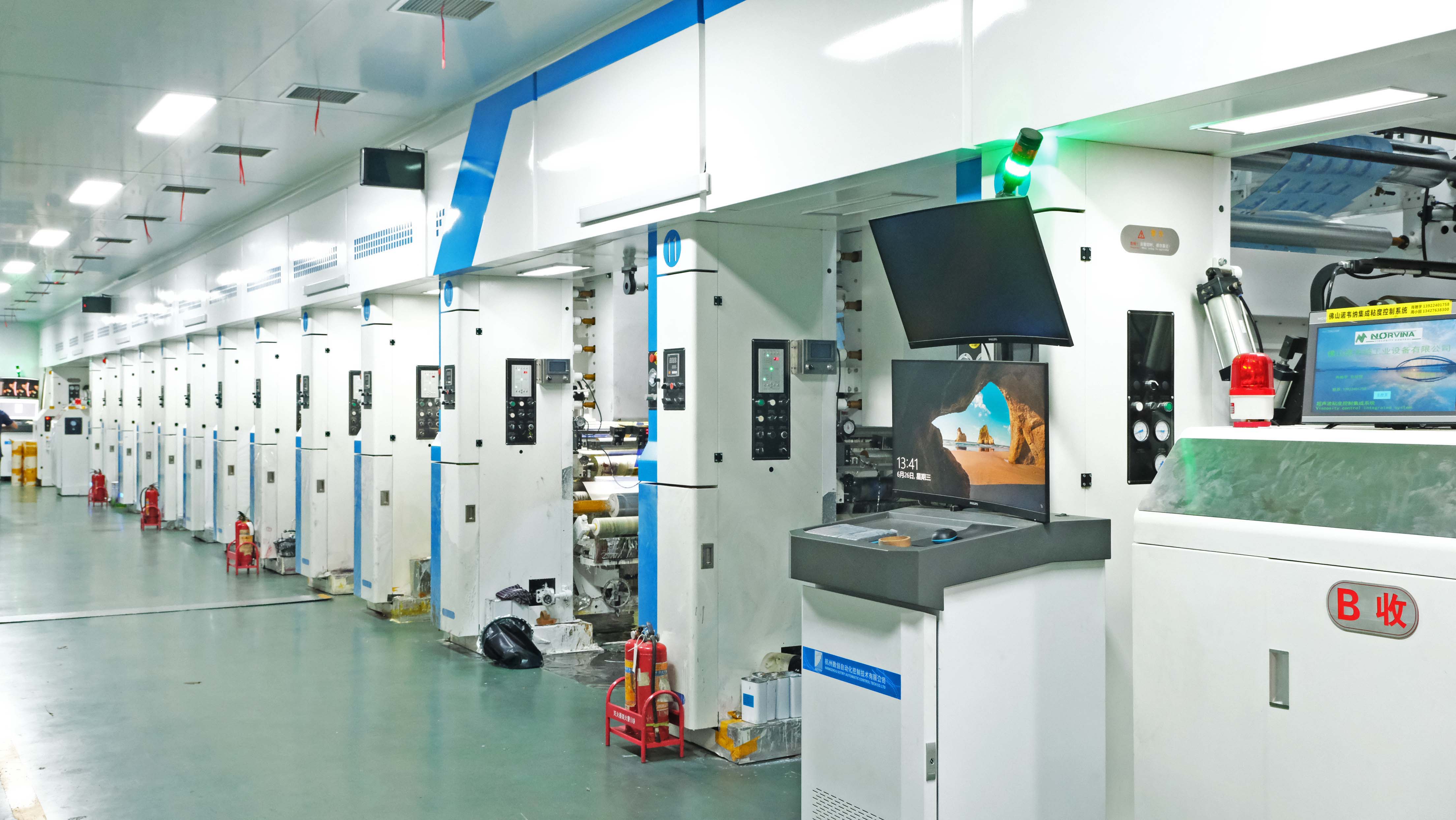
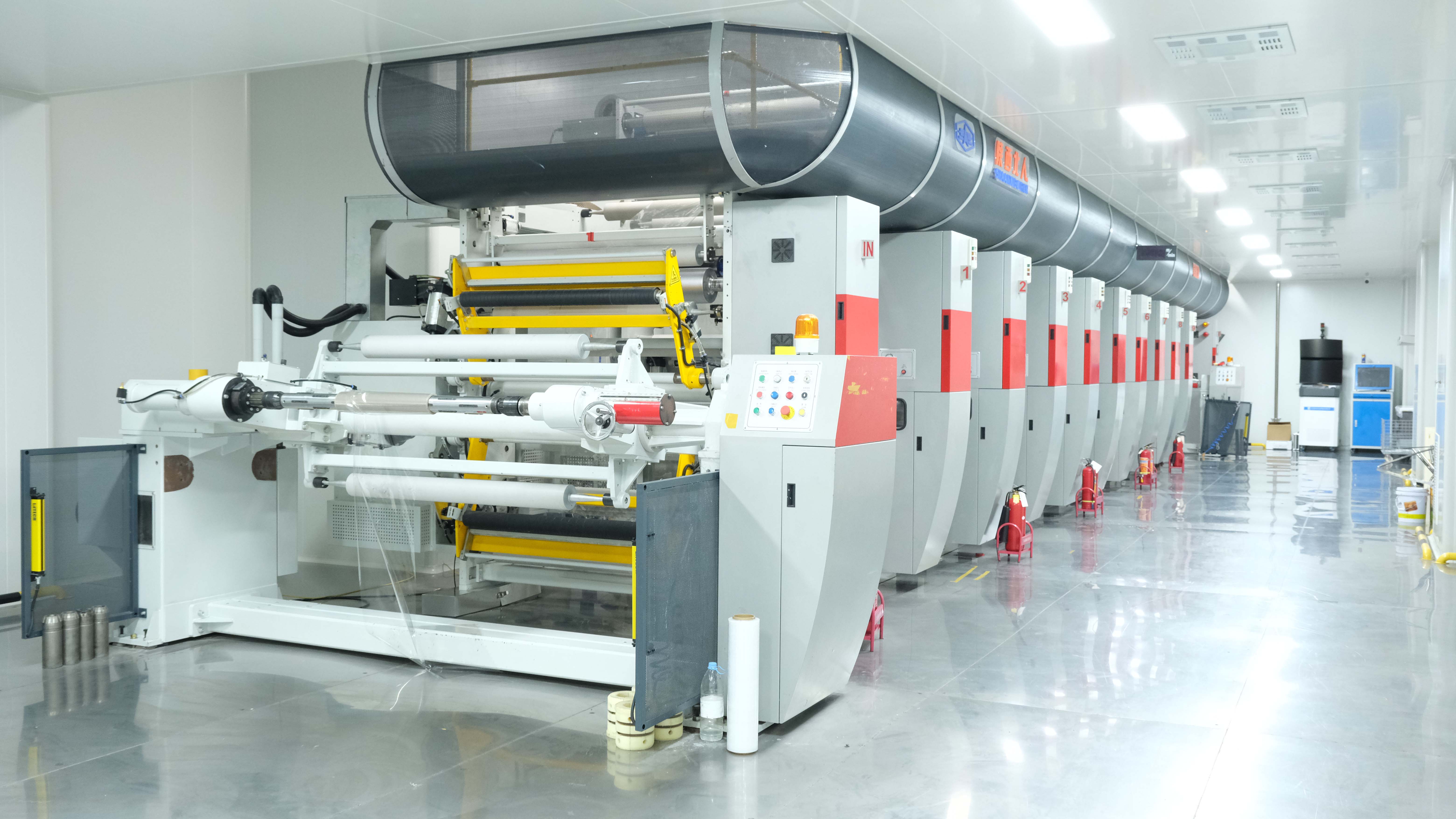
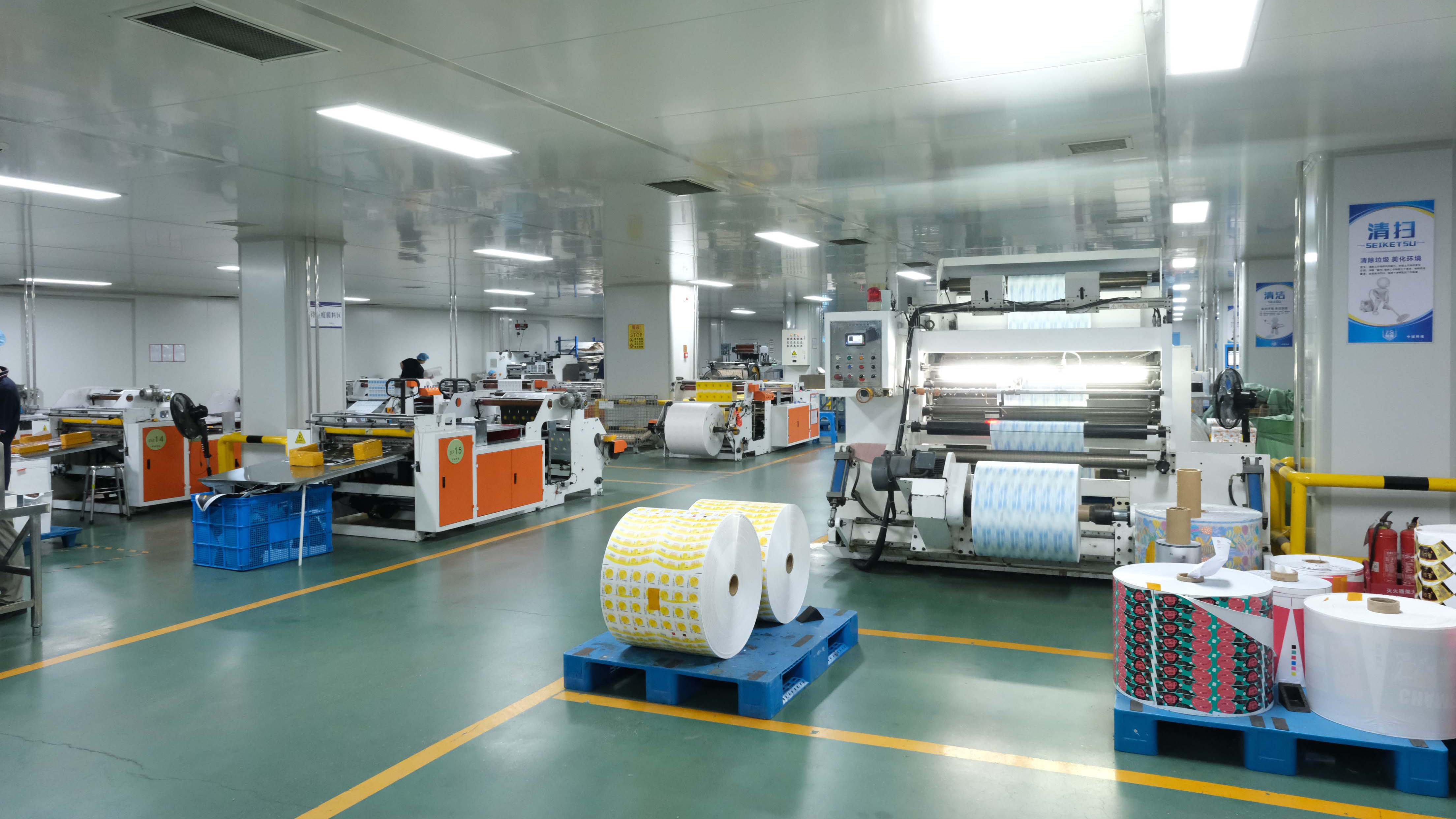
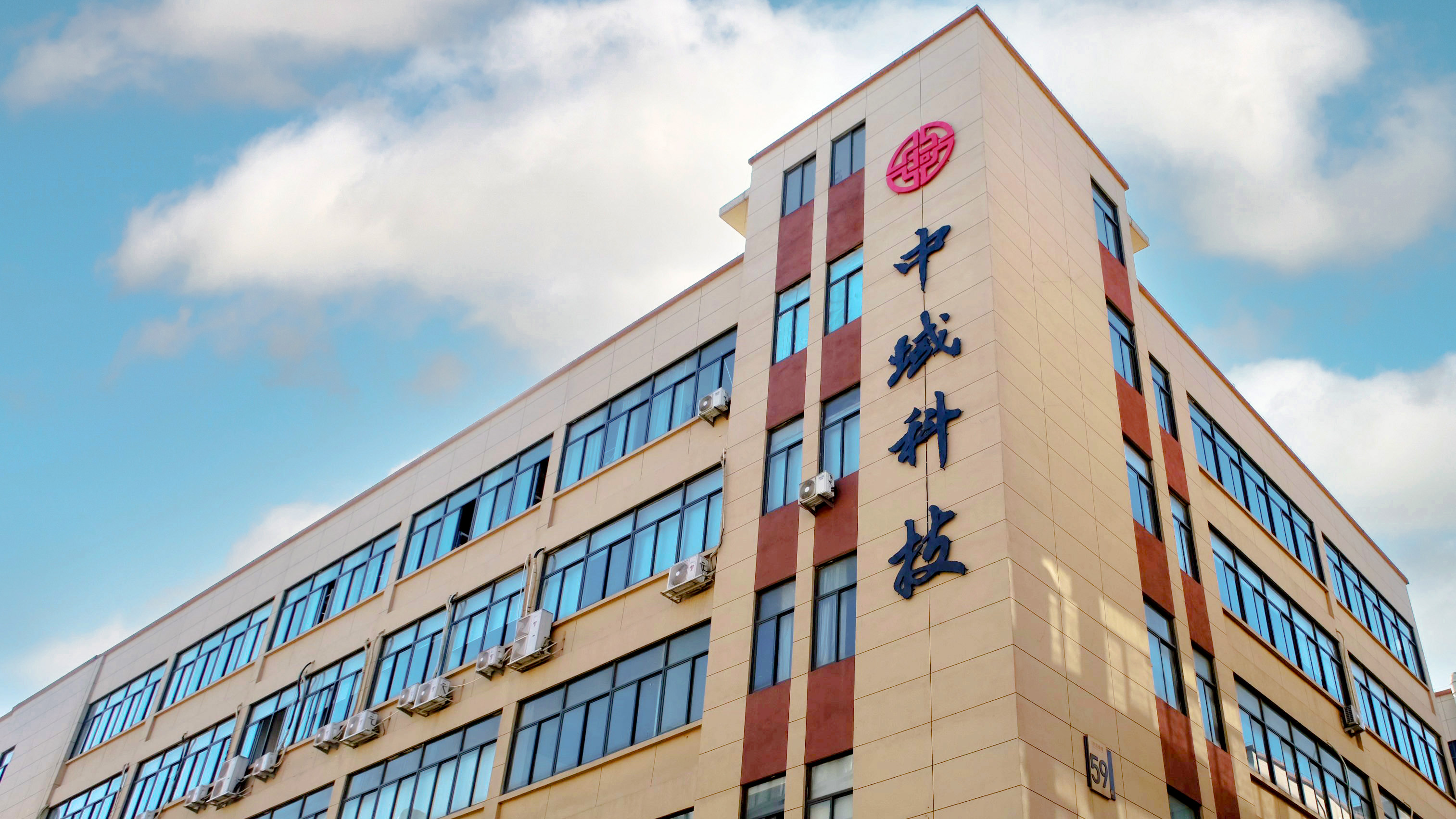
YZY operates within that regional base. Zhejiang Zhongyu Technology Co., Ltd. was founded in 2009, runs a 20,000 m² factory with 250 employees and an R&D team of 10, has accumulated 48 patents, and produces in-mold labels as its main product line alongside sealing films and related packaging films. The company holds QS, ISO and BRC management system certifications and exports to the EU, the US, the Middle East and Southeast Asia.
How the ZY-IML Series Solves Each Paint Bucket Failure Mode
The ZY-IML Series (product model ZY-IML-SERIES) is an in-mold label system in which the printed film becomes part of the container during injection molding. Its declared specification answers each of the four failure modes above with a measurable value rather than a marketing claim.
Core specification in one line: adhesion strength ≥5N with no peeling during injection molding, chemical resistance to weak acids, alkalis and common detergents, 4H scratch resistance, operating temperature range −20°C to 120°C, film thickness 30μm–100μm, and up to 8-color high-precision rotogravure printing within a maximum printing width of 1200mm.
Adhesion above 5N is created during molding, not applied afterwards
In the ZY-IML Series the label is integrated during the injection molding cycle, so the bond forms between the film and the molten polymer of the bucket wall itself. The declared adhesion strength is ≥5N, with no peeling during injection molding. The construction is also specified as compatible with high-speed injection processes with no warping and no label fall-off, and the film carries a tensile strength of ≥20MPa. For a paint bucket, this is the difference between a graphic that is attached to the container and a graphic that is part of it.
Chemical resistance covers weak acids, alkalis and common detergents
Chemical attack is the second cause of paint bucket label failure, and it is addressed at both the film and the ink level. The ZY-IML Series is specified as resistant to weak acids, alkalis and common detergents. The ink system is a food-grade low-migration water-based ink, and the migration test meets EU 10/2011 food contact material standards.
It is worth stating the boundary of that claim clearly, because it matters for procurement decisions: the documented chemical resistance covers weak acids, alkalis and common detergents. Where a bucket is filled with a strongly aggressive solvent-borne product, the correct procedure is to validate the actual film, ink and container resin combination through a sample test before mass production. Buyers should ask for that test rather than assume universal chemical resistance.
4H scratch resistance with a choice of surface finishes
Scratch resistance in the ZY-IML Series is specified as 4H by the pencil hardness test. That value is what keeps brand graphics and batch data intact through stacking, palletizing and retail handling. Surface finishes include glossy, matte, orange peel, holographic and custom texture, so a scratch-resistant surface does not have to mean a single visual look.
A defined thermal window from −20°C to 120°C
The operating temperature range of the ZY-IML Series is −20°C to 120°C, which the specification describes as suitable for cold chain and hot filling. For coatings and chemical containers this covers the realistic range of filling temperatures, winter transport and summer warehouse conditions without the film wrinkling or cracking.
Film, thickness and print capability for large bucket graphics
Paint buckets have large, often curved print areas, and the printing platform matters as much as the film. The ZY-IML Series uses high-precision rotogravure printing with up to 8 colors, a printing precision of ±0.1mm, and a maximum printing width of 1200mm. Film thickness ranges from 30μm to 100μm and is customizable. Film materials include virgin PP, PE, PET and multi-layer composite, with food-grade options available. Available film types include complex white gloss film, complex transparent gloss film, standard gloss film, matte laminated film and holographic film.
Industrial grade options and the compliance file
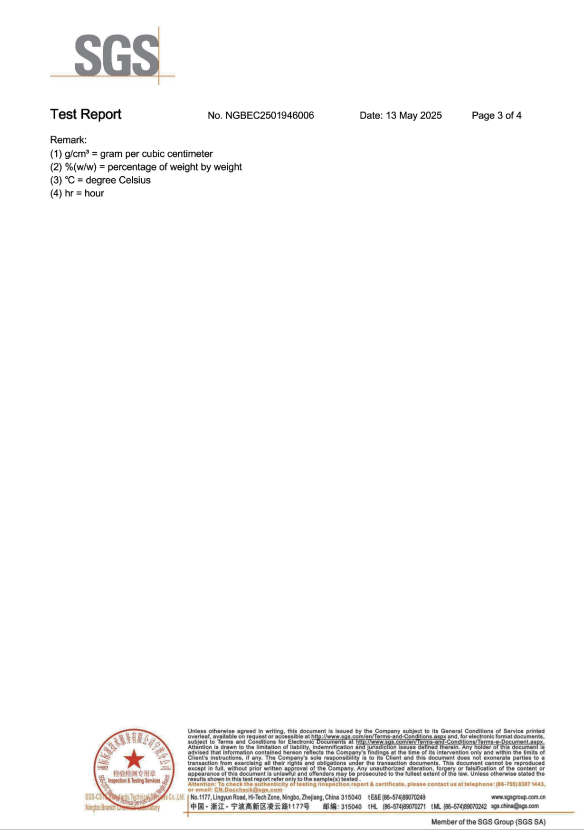
The ZY-IML Series is not limited to one container category. Its declared product types are Food Grade IML Label, Daily Chemical IML Label, Industrial IML Label, Yogurt Cup IML and Paint Bucket IML — so the paint bucket program runs on the same platform as food and daily chemical packaging. Compliance is documented rather than asserted: the series is certified to FDA 21 CFR, BRCGS Packaging Materials, ISO22000 and QS. An FDA Food Contact Test Report, certificate number NGBEC2501946006, was issued by SGS on 2025-05-13 under the standard FDA 21 CFR 177.1520 for food contact packaging materials, and the migration test meets EU 10/2011.
Documented specification at a glance
| Parameter | Documented value for ZY-IML Series |
|---|---|
| Adhesion strength | ≥5N, no peeling during injection molding |
| Injection molding compatibility | Compatible with high-speed injection processes, no warping, no label fall-off |
| Chemical resistance | Resistant to weak acids, alkalis and common detergents |
| Scratch resistance | 4H (pencil hardness test) |
| Operating temperature range | −20°C to 120°C (cold chain and hot filling) |
| Film thickness | 30μm – 100μm, customizable |
| Film material | Virgin PP / PE / PET / multi-layer composite, food-grade available |
| Printing method and colors | High-precision rotogravure, up to 8 colors, customizable |
| Printing precision | ±0.1mm |
| Maximum printing width | 1200mm, customizable |
| Tensile strength | ≥20MPa |
| Ink type | Food-grade low-migration water-based ink |
| Surface finishes | Glossy, matte, orange peel, holographic, custom texture |
| Compliance | FDA 21 CFR, BRCGS Packaging Materials, ISO22000, QS; migration test meets EU 10/2011 |
Failure Mode vs. Design Response: A Comparison Table
The table below compares the failure modes a paint bucket label can develop against the design response in the ZY-IML Series and the corresponding documented specification. Every value in the right-hand column is a declared specification of the ZY-IML Series.
| Failure mode | Root cause on a paint bucket | ZY-IML Series design response | Documented specification |
|---|---|---|---|
| Peeling, edge lift and label fall-off | Adhesive bond between a pre-printed backing and a finished plastic surface, stressed by weight, flexing, washing and temperature cycling | The label is placed in the mold and bonded to the wall during injection molding, eliminating the adhesive interface | Adhesion strength ≥5N; no peeling during injection molding; compatible with high-speed injection processes with no warping and no label fall-off |
| Chemical degradation of print | Contact with alkaline or acidic fill contents, production spills and cleaning detergents | Film and ink system selected for chemical exposure, with low-migration water-based ink | Resistant to weak acids, alkalis and common detergents; migration test meets EU 10/2011 |
| Scratching and abrasion | Stacking, palletizing, strapping, transport and retail handling acting on the print surface | Hard surface finish on the in-mold film, validated by a standard hardness test | 4H scratch resistance (pencil hardness test) |
| Colour fade and registration drift | Low-resolution print and unstable registration on large, curved bucket graphics | High-precision rotogravure printing with controlled registration tolerance | Up to 8 colors; printing precision ±0.1mm; maximum printing width 1200mm |
| Thermal distortion and cracking | Cold storage, hot filling and long storage across seasons | Film construction engineered for a defined thermal window and mechanical load | Operating temperature range −20°C to 120°C; tensile strength ≥20MPa; film thickness 30μm – 100μm |
| Regulatory non-conformity | Undocumented film, ink or migration behaviour in the supply chain | Documented compliance package with third-party testing | FDA 21 CFR, BRCGS Packaging Materials, ISO22000, QS; FDA Food Contact Test Report (SGS, certificate NGBEC2501946006); migration test meets EU 10/2011 |
From Brief to Mass Production: Seven Execution Steps
Failure prevention on a paint bucket program happens in the process, not in the artwork file. The execution path used for ZY-IML Series projects follows seven practical stages.
- Container and content review. Confirm the bucket resin, wall geometry, fill product chemistry and filling temperature, then map the label position and print area against the maximum printing width of 1200mm.
- Film and material selection. Select from virgin PP, PE, PET or multi-layer composite constructions, with food-grade options available, and set film thickness between 30μm and 100μm according to the container and print requirement.
- Artwork engineering and print specification. Prepare the graphic for high-precision rotogravure, up to 8 colors, at ±0.1mm printing precision, and choose the surface finish from glossy, matte, orange peel, holographic or custom texture.
- Mold and placement review. Align the label dimensions and placement method with the injection factory so the label is positioned consistently in the mold cavity before each shot.
- Sample production and acceptance. Sample test is the acceptance criterion for the program. Validate adhesion against the ≥5N specification and the no-peeling requirement, check chemical resistance against the fill product, and confirm 4H scratch performance and the −20°C to 120°C thermal window on the actual container.
- Mass production and quality control. Production runs with 100% visual inspection plus random lab testing complying with FDA and GB standards, covering 350,000,000 pcs per month of monthly capacity.
- Delivery and after-sales follow-up. Typical production lead time is 15–20 days after sample confirmation, with delivery terms of FOB or CIF, and ongoing online technical support, after-sales consultation and quality complaint handling.
Use Cases: Where This Configuration Fits
Paint and coatings buckets — the primary application
Paint Bucket IML is one of the declared product types of the ZY-IML Series, alongside Food Grade IML Label, Daily Chemical IML Label, Industrial IML Label and Yogurt Cup IML. For solvent-borne and water-based architectural coatings alike, the value of the in-mold route is that adhesion, chemical resistance and scratch resistance are controlled at the film and molding stage rather than depending on how well an operator applied a label after filling.
Construction chemicals, adhesives and sealants
The same Industrial IML Label configuration applies to pails and buckets that carry adhesives, sealants and construction chemicals, where the label has to survive repeated handling on site, dusty environments and direct contact with residues around the rim.
Daily chemical containers where detergent attack is routine
Daily Chemical IML Label production is part of the same series, which is relevant because detergent and cleaning products place continuous chemical demand on a graphic. Where a paint bucket is washed down with common detergents, the documented resistance of the ZY-IML Series to weak acids, alkalis and common detergents is the directly applicable part of the specification.
Food-grade programs as delivery proof for industrial buyers
Industrial buyers often want evidence that high-volume, compliance-heavy programs can actually be delivered. A one-year high-volume project for the ZY-IML Series supported international food and beverage, and dairy brand clients, including injection factory customers, across 14 countries including the United States, Algeria, Egypt and India. That project covered food contact packaging and product branding and identification, with food grade safety and custom special effects such as cold, heat and laser finishes. Reported outcomes were zero quality complaints, a 100% on-time delivery rate and 100% compliance. For a paint bucket program, the transferable value is disciplined high-volume execution and a documented compliance process — not the end product category.
Frequently Asked Questions
Are ZY-IML paint bucket labels compliant with the relevant packaging and food contact regulations?
The ZY-IML Series is certified to FDA 21 CFR, BRCGS Packaging Materials, ISO22000 and QS, and its migration test meets EU 10/2011 food contact material standards. A dedicated FDA Food Contact Test Report, certificate number NGBEC2501946006, was issued by SGS on 2025-05-13 under the standard FDA 21 CFR 177.1520 for food contact packaging materials. For industrial paint buckets, this documentation matters wherever the container carries consumer-facing branding or must satisfy a buyer audit, and it is the same documentation package used for food-grade IML programs. Buyers can request the certificate set together with the sample.
Can the ZY-IML Series be customised for a specific paint bucket size, shape and graphic?
Yes. The manufacturer provides OEM and ODM production services, and customisation services include options for size, shape, color, printing design and material. On the print side, the series supports up to 8-color high-precision rotogravure printing at ±0.1mm printing precision, a maximum printing width of 1200mm, film thickness between 30μm and 100μm, and film materials including virgin PP, PE, PET and multi-layer composite. Custom printing, custom size, custom color matching and custom film formulation are all available, together with surface finishes such as glossy, matte, orange peel, holographic and custom texture.
What are the commercial terms for a ZY-IML Series order?
The minimum order quantity is 2000㎡. Delivery terms are FOB or CIF, payment terms are 30/70, and the acceptance criterion is a sample test. Because the acceptance criterion is tied to sample validation rather than to a document review, the adhesion, chemical resistance and scratch specifications are verified on the actual container before the mass production order is released.
How should a buyer validate adhesion, chemical resistance and scratch performance before committing to mass production?
Validation starts from a sample test, which is the stated acceptance criterion for the program. Three checks matter for a paint bucket: adhesion, where the specification is ≥5N with no peeling during injection molding; chemical exposure, where the documented resistance covers weak acids, alkalis and common detergents and any strongly aggressive solvent-borne product should be tested against the actual container resin; and surface and thermal performance, where the targets are 4H scratch resistance by pencil hardness and an operating range of −20°C to 120°C. Testing on the real bucket wall and the real fill product is what converts a specification sheet into a validated program.
What is the lead time and production capacity for paint bucket IML orders?
Typical production lead time is 15–20 days after sample confirmation, with monthly production capacity of 350,000,000 pcs per month. Quality control runs 100% visual inspection plus random lab testing complying with FDA and GB standards, and the export markets served are the EU, the US, the Middle East and Southeast Asia. To move from evaluation to execution, request a sample or a quotation for your bucket format and graphic — a technical review of the container resin, fill product and print area is the fastest route to a validated specification.
Solving Peeling Means Changing Where the Label Lives
Peeling, chemical degradation and scratching on paint buckets are not random events. They follow from a construction decision: whether the graphic is applied to a finished surface or formed into the container itself. The ZY-IML Series answers each failure mode with a declared value — adhesion strength ≥5N with no peeling during injection molding, resistance to weak acids, alkalis and common detergents, 4H scratch resistance, an operating range of −20°C to 120°C, film thickness of 30μm to 100μm, up to 8 colors on high-precision rotogravure at ±0.1mm precision and a maximum printing width of 1200mm — backed by FDA 21 CFR, BRCGS, ISO22000 and QS documentation and a third-party FDA Food Contact Test Report from SGS.
For a procurement team in the evaluation and execution stage, the practical next step is not a broader supplier search but a narrower technical one: define the container resin, the fill product chemistry and the print area, then verify the three critical specifications on a sample before the mass production order. The supplier supporting that process is YZY (Zhejiang Zhongyu Technology Co., Ltd.) at www.inmoldlabel.net.
Request a Sample or a Quotation
Send your paint bucket size, resin and graphic requirements to YZY for a technical review and sample validation against the ZY-IML Series specification.
Email: yzy@inmoldlabel.net | Tel / WhatsApp: +86 182 6778 1866
Download the product brochure and full specification: YZY In Mold Label Brochure (PDF)
Have Questions or Need More Details?
Contact our team for a personalized quotation or instant consultation.
Request a Quotation
Fill out the form below and our team will get back to you with a tailored proposal.
WhatsApp Direct Chat
Prefer to chat in real-time? Message us on WhatsApp for instant assistance & quick answers.
- Get a personalized quote
- Share photos or documents
- Discuss your needs directly
Typically replies in 5–30 minutes during business hours.