How to Solve Label Peeling and Durability Issues in Injection-Molded Packaging
In-mold labeling (IML) prevents label peeling by removing the adhesive interface altogether. The printed label is placed into the mold and fuses into the container wall while the plastic is injected, instead of being glued onto a finished container. That single structural difference explains why packaging buyers who are trying to fix peeling, scratching or color deviation usually end up comparing two decoration routes — IML versus post-production labeling — rather than two label suppliers.
This guide is written for packaging buyers, product managers and brand owners at the decision stage, who need to know whether changing the decoration method will genuinely solve the defect in front of them. It separates the four failure modes behind 'bad labels', shows which of them IML removes by design rather than by tightening inspection, and lists the facts a supplier should be able to prove before you commit to a production run.

Problem Definition: The Four Failure Modes Behind 'Bad Labels'
Label failure is not one defect. In injection-molded packaging it is usually one of four distinct problems, and each has a different root cause, a different cost profile and a different fix. Mixing them together is the most common reason a buyer replaces a label supplier without solving anything.
1. Peeling and delamination
Peeling is the most visible failure, and it is almost always a bonding failure rather than a printing failure. A post-production label sits on top of the container surface and depends on an adhesive layer to stay attached. In high-humidity environments this bond is the weak point in the package, and it can fail long before the container itself does. Once a corner lifts, the label becomes a handling problem on the filling line and a quality signal in the consumer's hand.
2. Abrasion and scratch damage
Containers are stacked, palletized, shrink-wrapped and transported before anyone reads the pack. A printed surface that sits on the outside of the container is exposed to that entire journey. Scuffing, edge wear and gloss loss do not destroy the product, but they make a new product look used — which is why durability, not only adhesion, belongs in the specification.
3. Color deviation and print defects
Color drift from the approved artwork, misregistration and incomplete ink transfer are process-control failures rather than chemistry failures. They typically appear after the first full production run instead of during sampling, because they depend on press stability, IML film consistency and ink management across long runs. Printing defects are explicitly recognized as a production risk in IML manufacturing, which is why press-level control matters as much as the film grade itself.
4. Food-contact non-compliance and migration
The most serious failure mode is the one consumers never see. Non-compliance with food contact safety standards and material contamination are recognized risks in IML production. EU Regulation (EC) No 1935/2004 provides the governing framework for food contact materials and requires that they be manufactured so they do not transfer constituents into food in quantities that endanger human health. A decoration method that keeps the printed layer predictably inside the packaging structure is easier to keep compliant than one that introduces an adhesive interface between the food environment and the print.
Industry Background: Why Decoration Reliability Is Getting More Attention
Label durability is no longer a niche concern, because the volume of packaging that depends on in-mold decoration keeps growing. The global in-mold label market was valued at USD 2.31 billion in 2023 and is projected to reach USD 3.14 billion by 2030, a CAGR of 4.6%, according to Grand View Research. Within that market, injection molding is the dominant production process, accounting for over 57.1% of market share in 2023.
The application mix explains why peeling and durability problems are concentrated in specific product categories. Food and beverage applications accounted for the largest IML revenue share at over 41.3% in 2023, with specific growth in yogurt cups and ice cream containers. Polypropylene (PP) dominated the IML material segment with a 47.2% market share in 2023, driven by its recyclability and compatibility with plastic containers — a detail that matters when you are choosing between a PP IML label and a PE IML label for a specific container resin. Asia-Pacific, meanwhile, led the market with a 42.8% revenue share in 2025, driven by growth in the dairy and paint industries.
The supply side is expanding in step. The global in-mould label film market is projected to grow from USD 1.3 billion in 2025 to USD 1.7 billion by 2035, according to Future Market Insights. More film capacity means more options for buyers, but it also means more variation between IML label films — and variation is exactly what causes print and adhesion problems to move from one supplier to another instead of disappearing.
Regulatory pressure is the second driver. The EU framework for food contact materials under Regulation (EC) No 1935/2004 applies to the label that becomes part of a food container just as it applies to the container itself. Compliance is therefore not a certificate you file once; it is a property of the film, the ink system, the printing process and the molding process held together. That is why the practical question for a buyer is not 'does this supplier have a certificate' but 'can this supplier demonstrate the same construction on every batch'.
The IML Solution: Remove the Interface Instead of Strengthening It
Most peeling problems are treated as an adhesive problem: a stronger glue, a different face stock, a primer, a surface treatment. That approach accepts the interface and tries to make it stronger. In-mold labeling takes the opposite route and removes the interface.
With integrated IML, the label is combined with the plastic container during injection molding. The result is that there is no adhesive layer and no post-mold application step, which is the structural reason IML labels carry no peeling risk in the way that post-production labels do. Traditional labels, by contrast, are applied after production and are prone to falling off, especially in high-humidity environments.
That structural change produces a set of practical advantages that matter at the decision stage. IML offers higher durability than post-production decoration, food-grade safety, and special visual effects that can be produced without adding a separate finishing process. It complies with FDA and EU standards for food safety. Operationally, integrated IML labeling with injection molding reduces production steps by 30% and supports high-volume orders, and it shortens lead time by 20% compared with post-production labeling. The finished container requires no additional maintenance because decoration and container are one part.
How YZY Approaches the Problem
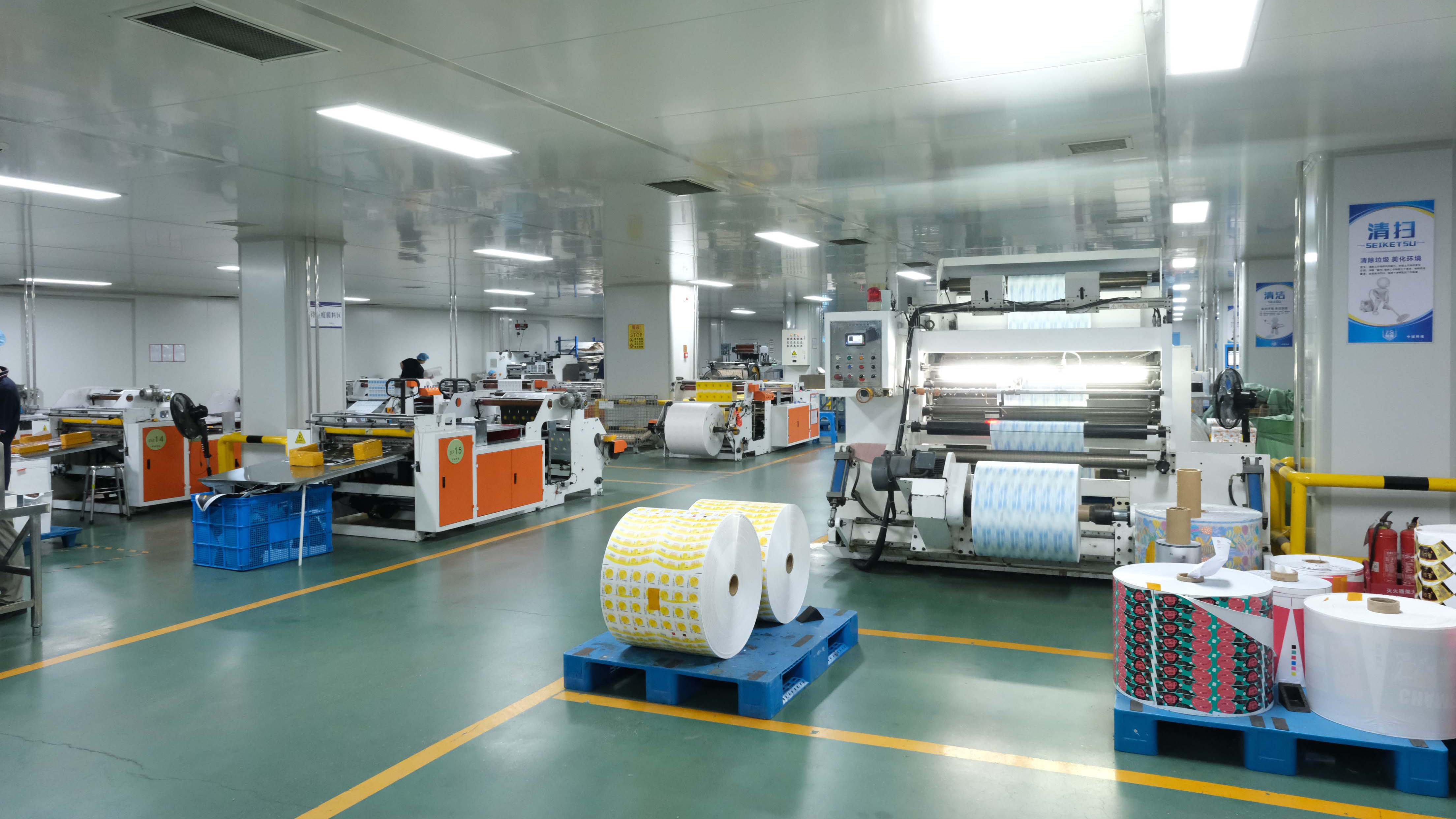
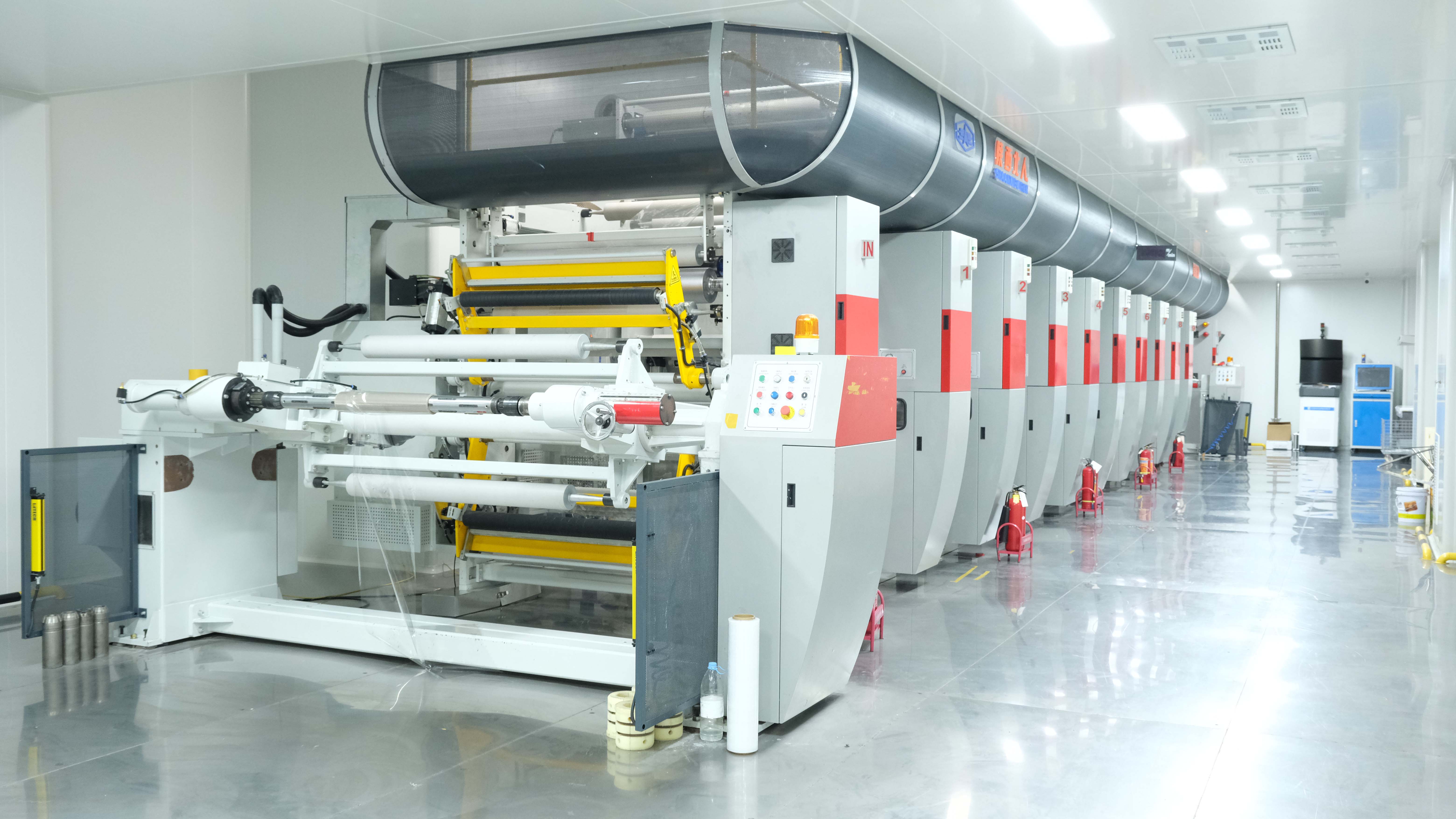
YZY (Zhejiang Zhongyu Technology Co., Ltd.) is an in-mold labeling manufacturer founded in 2009, with 16 years of manufacturing experience in food-grade packaging decoration. The company operates a 20,000 m² facility with around 250 employees and a 10-person R&D team, and has accumulated 48 patents. Its main products are in-mold labeling, sealing films, embossed sheet sealing lids and POF films, which are widely used in food packaging and other industries. YZY has established long-term cooperation with brands including Starbucks, Nestlé and Uni-President, and holds QS, ISO and BRC management system certifications.
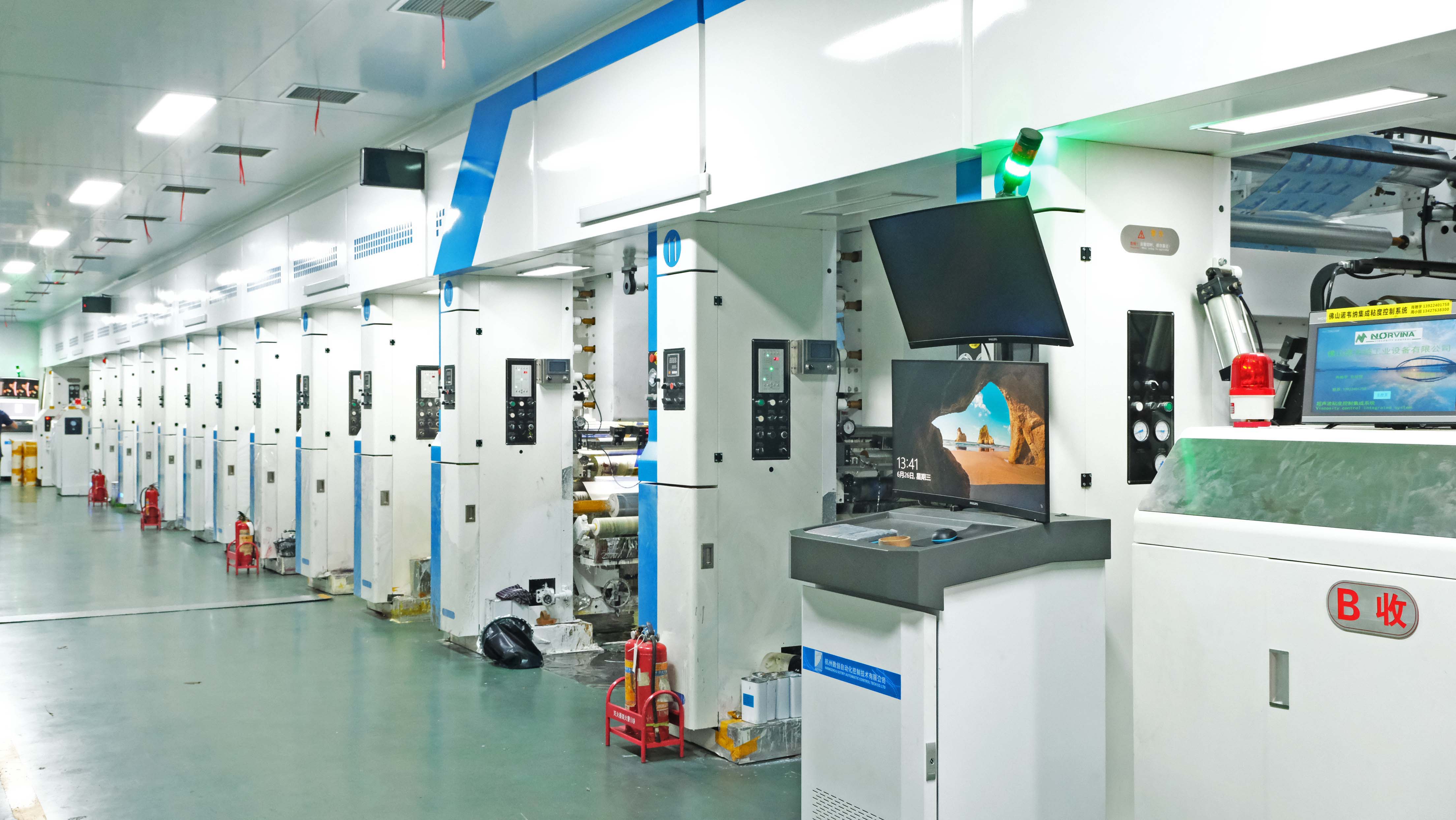
For buyers, the relevant part is not the certificate list but how the process is controlled. YZY applies inspection at three stages of the same production chain: raw material incoming inspection, a three-step in-process testing sequence, and a final random inspection, supported by 100% visual inspection. Printing defects and material contamination are treated as controllable process risks rather than random events, which is the difference between a label that passes sampling and a label that still passes in month six of a reorder cycle.
Step-by-Step Breakdown: Diagnosing and Eliminating Label Failures
The following sequence is the workflow a packaging buyer can use to move from an observed defect to a locked, repeatable specification. It works for custom IML projects as well as for standard container decoration.
Step 1 — Classify the failure before contacting suppliers
Write down whether the problem is peeling, abrasion, color deviation or a compliance concern, and where it appears: in the warehouse, after filling, after cold-chain storage, or after the consumer has handled the pack. A failure that appears in a humid warehouse points at the bond or the surface; a failure that appears only in stacked pallets points at abrasion resistance; a failure that appears only after a long run points at press control.
Step 2 — Trace the failure to the decoration method, not the container
If the container itself is intact and only the label is damaged, the decoration route is the variable under review. This is the point at which IML becomes relevant, because the mechanism it changes — the adhesive interface and the post-mold application step — is the mechanism that produces peeling, edge lifting and surface scuffing on post-production labels.
Step 3 — Match the film and print system to the container resin
PP and PE are not interchangeable as label substrates across every container. The film has to be compatible with the container resin and the molding conditions, since PP IML labels and PE IML labels are selected for different container types. Confirm the IML label film grade, the ink system and the surface finish (gloss, matte or special visual effect) against the container you are actually running, not against a generic sample.
Step 4 — Verify the supplier's process controls, not just the certificate
Ask how incoming raw material is checked, how many in-process test steps exist, and how print quality is verified at the end of the run. YZY runs raw material incoming inspection, a three-step in-process testing sequence and a final random inspection, with 100% visual inspection and third-party laboratory testing, plus material traceability and annual BRCGS, ISO and FDA audits. These controls are the mechanism that keeps compliance and print quality stable between batches.
Step 5 — Validate on your own container and your own filling line
A sample that is molded on your actual container geometry and then put through your own filling, capping, labeling and stacking conditions is worth more than any laboratory report. This is where humidity exposure, cold-chain handling and stacked-load abrasion either pass or fail, and where a thin film or unstable ink system shows up before mass production starts.
Step 6 — Lock the process and secure capacity behind it
Once the construction is approved, the specification should be fixed at the film, ink, container and molding-parameter level. Supply continuity is then a capacity question: YZY manages production with ERP digital production management and two backup production lines, so an interruption on one line does not automatically become a delivery delay on your order.
Use Cases: Where the Fix Changes the Outcome Most
Paint pails and industrial chemicals. IML is increasingly used in 20-liter paint pails, where the label forms a permanent bond that resists solvent spills and moisture. For chemical packaging, a peeling label is not only a cosmetic problem — it removes handling and safety information at the moment the user needs it most.
Yogurt cups and ice cream containers. These are among the fastest-growing IML applications within the food and beverage segment. Cold-chain storage and condensation are exactly the conditions in which post-production labels are most prone to lifting, and exactly the conditions IML is designed around.
Beverage and bubble tea cups. High-turnover foodservice packaging is handled wet and stacked while cold. Integrated decoration keeps the brand surface intact through that handling, and the 30% reduction in production steps supports the volumes these programs require.
Cosmetics and household appliances. These categories place more weight on visual effect and surface durability than on moisture exposure, and IML supports special visual effects without an additional finishing step.
General plastic containers and bottles. Wherever a decoration program is running at scale on injection-molded containers, the same logic applies: the fewer separate steps between the printed label and the finished part, the fewer places a defect can enter the process.
IML vs Post-Production Labeling: A Decision Comparison
The table below compares integrated IML against post-production labeling across the criteria that drive a decoration decision. It is built from verified product and process facts rather than from general market opinion.
| Decision factor | Post-production labeling (applied after molding) | Integrated IML (label fused during injection molding) |
|---|---|---|
| Attachment mechanism | Adhesive applied to a finished container | Label integrated with the plastic container during injection molding |
| Peeling risk | Prone to falling off, especially in high-humidity environments | No peeling risk, because there is no adhesive interface |
| Durability | Surface print remains exposed to abrasion and scuffing | Higher durability, with special visual effects available |
| Food-contact compliance | Depends on the adhesive and face stock combination | Full compliance with FDA and EU standards for food safety |
| Production steps | Adds a separate labeling operation after molding | Integrated with molding; reduces production steps by 30% |
| Lead time | Baseline | 20% reduction compared with post-production labeling |
| Material cost | Lower material cost | Slightly higher material cost |
| Total cost | Higher downstream labor and rejection cost | Lower total cost, due to reduced post-production labor and rejection rates |
| Maintenance | Requires handling care to avoid lifting | No additional maintenance required; fully integrated with injection molding |
| Best-fit applications | Low-volume or non-food decoration programs | Food and beverage packaging, household appliances, cosmetics, industrial chemicals |
The comparison points to a straightforward conclusion for decision-stage buyers: the material cost line favors post-production labeling, and every other line favors IML. The total cost outcome favors IML once post-production labor and rejection rates are included.
FAQ: Label Peeling and Durability in Injection-Molded Packaging
Do IML labels meet food-contact safety requirements?
IML labels are designed to comply with FDA and EU standards for food safety. In the EU, the governing framework is Regulation (EC) No 1935/2004, which requires food contact materials to be manufactured so that they do not transfer constituents into food in quantities that endanger human health. YZY holds QS, ISO and BRC management system certifications, runs annual BRCGS, ISO and FDA audits, and supports production with SGS/FDA compliance testing, incoming material inspection and 100% visual inspection.
Why do IML labels resist peeling when post-production labels do not?
Because the label is integrated with the plastic container during injection molding, there is no adhesive layer to weaken and no post-mold application step to go wrong. Traditional labels are applied after production and are prone to falling off, especially in high-humidity environments. The same structural difference also raises durability: the decoration is part of the container wall rather than a film sitting on top of it, and special visual effects can be produced without an extra finishing operation.
Is IML more expensive than post-production labeling?
Material cost is slightly higher with IML, but total cost is lower because IML reduces post-production labor and rejection rates. The economics also improve at the process level: integrated IML labeling with injection molding reduces production steps by 30% and shortens lead time by 20% compared with post-production labeling, and the finished container requires no additional maintenance. For high-volume programs, those process savings are usually where the cost difference is recovered.
Can we validate IML quality before placing a full order?
Yes. The standard approach is to build a sample on your actual container, film and artwork, then run it through your own filling and handling conditions before scaling. YZY's quality process covers raw material incoming inspection, a three-step in-process testing sequence, final random inspection and 100% visual inspection, with third-party laboratory testing and material traceability behind each batch. Combining a physical sample with those records lets you confirm print, fit and compliance before committing to volume production.
Does switching to IML change our lead time or supply risk?
IML shortens lead time by 20% compared with post-production labeling, because decoration and molding happen in the same step rather than as two separate operations. Supply risk is managed through ERP digital production management and real-time production tracking, supported by two backup production lines that allow capacity to be redirected if a line is interrupted. YZY brings 16 years of manufacturing experience in food-grade packaging to these programs. To move from evaluation to a decision, you can send your container specification and artwork to discuss a sample or a quotation.
Conclusion: Fix the Interface, Not the Symptom
Label peeling, abrasion and color deviation in injection-molded packaging are usually treated as label quality problems. In most cases they are decoration-method problems. Post-production labeling accepts an adhesive interface and an extra application step, and both of those are places where a package can fail. Integrated IML removes them: the label is fused into the container during molding, which is why it carries no peeling risk, offers higher durability, and complies with FDA and EU standards for food safety.
The decision case is equally direct. IML carries a slightly higher material cost, but a lower total cost through reduced post-production labor and rejection rates, a 20% shorter lead time, and 30% fewer production steps. For food and beverage packaging, household appliances, cosmetics and industrial chemicals, that combination is what turns a defect fix into a procurement advantage.
Next Step: Validate IML on Your Own Container
YZY (Zhejiang Zhongyu Technology Co., Ltd.) produces in-mold labeling, sealing films, embossed sheet sealing lids and POF films for food packaging and other industries, with 16 years of manufacturing experience, a 20,000 m² facility and 48 patents.
Send your container specification and artwork to request a sample or a quotation.
Email: yzy@inmoldlabel.net | Tel / WhatsApp: +86 182 6778 1866
Website: www.inmoldlabel.net
Download the full product brochure: YZY IML Product Brochure (PDF)
Have Questions or Need More Details?
Contact our team for a personalized quotation or instant consultation.
Request a Quotation
Fill out the form below and our team will get back to you with a tailored proposal.
WhatsApp Direct Chat
Prefer to chat in real-time? Message us on WhatsApp for instant assistance & quick answers.
- Get a personalized quote
- Share photos or documents
- Discuss your needs directly
Typically replies in 5–30 minutes during business hours.