In Mold Label: The Complete Guide to IML Technology, Materials, and Applications
An in mold label (IML) is a printed film label that is placed inside an injection mold before plastic resin is injected, becoming permanently fused to the container or part during the molding process. This guide explains how in mold label printing works, which materials are used, which applications benefit most, and how to evaluate a custom in mold label supplier for your packaging project.
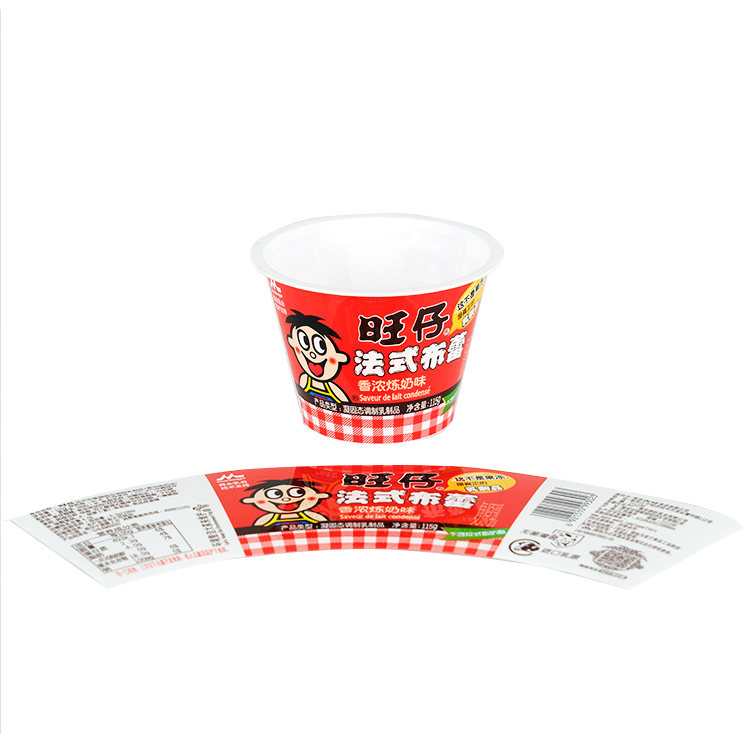
Glossy white laminated IML film — the base material used for in mold label printing.
What Is an In Mold Label?
An in mold label is a decorative or informational film that is molded together with a plastic container, lid, or component. Instead of applying a pressure-sensitive or glue-applied label after the part is formed, the label becomes an integral part of the product wall. This process is used for yogurt cups, ice cream containers, paint buckets, lubricant buckets, cosmetic containers, and many other plastic packaging formats.
The main purpose of IML is to combine decoration, branding, product identification, and barrier performance into a single molding step. The label also protects the container surface from scratching, chemicals, and moisture because it is embedded into the plastic structure rather than sitting on top of it.
Why IML Is Used in Modern Plastic Packaging
The global in-mold labels market was valued at USD 2.31 billion in 2023 and is projected to reach USD 3.14 billion by 2030, according to Grand View Research. Other analysts estimate the market at USD 2.72 billion in 2024 with a projected CAGR of 3.94%, reaching USD 4.16 billion by 2035 (Market Research Future). Estimates vary by source and base year, but the overall trend point in the same direction: IML continues to grow because it offers packaging efficiency and durability advantages over post-mold labeling.
Food & beverages accounted for more than 41.3% of IML market revenue in 2023 (Grand View Research), making food contact labeling the most important application area. PP is the dominant label material with a 47.2% market share, and injection molding accounts for over 57.1% of IML production processes. Asia Pacific is currently the largest and fastest-growing regional market for in-mold labels (Mordor Intelligence).
Buyers in the packaging industry use IML because it removes a separate labeling step, lowers label loss during filling, improves resistance to moisture and abrasion, and gives containers a premium "no-label" look.
How In Mold Label Printing Works
In mold label printing starts with a plastic film that is printed, laminated if required, and cut to the exact shape of the mold cavity. The label is transferred into the open mold, typically by a robotic arm or a vacuum-assisted handling system. Plastic resin is then injected, and the heat and pressure of the molding process melt the label’s back layer so that it bonds permanently with the container wall.
From the supplier’s side, successful IML decoration depends on four main stages:
1. Film Selection
IML films are selected according to the container material and the application environment. For example, PP film is used with PP containers, PE film with PE containers, and PET film for higher temperature or specific barrier requirements. Film thickness usually ranges from 30μm to 100μm, depending on the container size, molding temperature, and required stiffness.
2. Rotogravure Printing
Most high-quality in mold labels are printed with rotogravure, a process that delivers fine detail and consistent color on plastic films. A typical high-precision line uses up to 8 colors and can hold a printing precision of ±0.1mm. This level of accuracy matters because the label must align perfectly with the mold cavity, especially for complex shapes and multi-panel containers.
3. Lamination and Finishing
After printing, the film may be laminated to add gloss, matte texture, scratch resistance, or barrier properties. Common IML surface finishes include glossy, matte, orange peel, holographic, and custom texture. Film types include complex white gloss film, complex transparent gloss film, standard gloss film, matte laminated film, and holographic film.
4. Cutting and Die-Cutting
Printed film rolls are cut into individual labels with precise contours. The cutting tolerance directly affects how the label sits inside the mold; if the label is too large or too small, molding defects or visual flaws can appear.
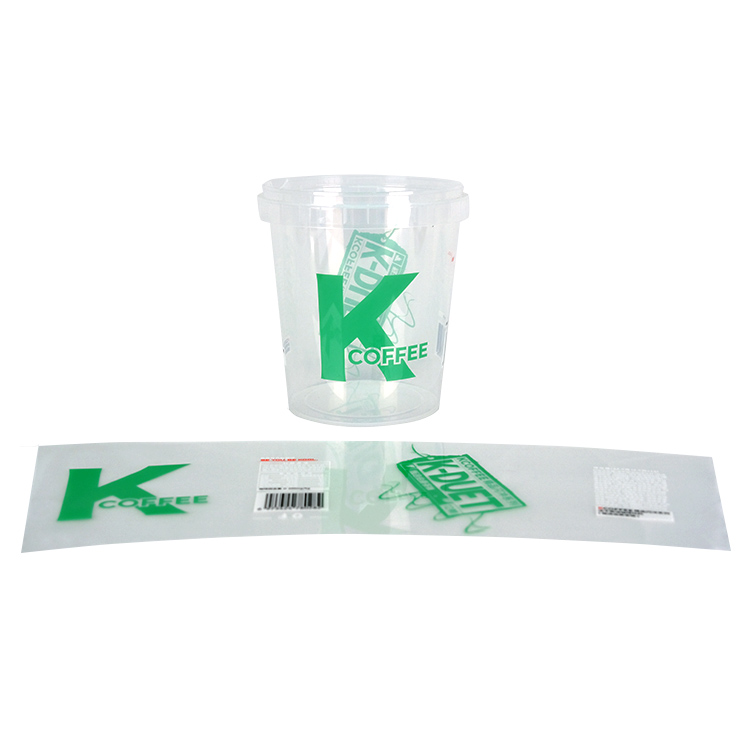
Clear glossy laminated film used for see-through IML decoration.
In Mold Label Materials: PP, PE, and PET
Material selection is the foundation of a successful in mold label application. The label material should match or be compatible with the plastic substrate of the container so that the two materials fuse properly during molding.
PP In Mold Label
Polypropylene is the dominant material in the IML market. PP in mold labels are widely used for injection-molded containers such as yogurt cups, ice cream containers, and daily chemical packaging. PP labels bond well with PP containers, offer good stiffness, and provide reliable performance during hot filling and cold chain distribution.
PE In Mold Label
Polyethylene labels are used for PE containers and thinner-wall packaging. PE offers flexibility and impact resistance, which is valuable for squeeze containers and certain blow-molded products. Food-grade PE in mold labels can be produced from virgin PE resin.
PET In Mold Label
PET in mold labels are used where higher temperature resistance or a more rigid label structure is needed. PET is also selected for transparent or glossy decorative effects, such as cosmetic and personal care containers.
Multi-Layer Composite Films
Many IML labels are made from multi-layer composite films that combine printing layers, bonding layers, and barrier layers. Composite films can be engineered to improve stiffness, adhesion, or heat tolerance for a specific molding process.
For food contact applications, labels must be made from food-grade virgin resin and printed with food-grade low-migration water-based ink. This is a meaningful difference from industrial or daily chemical labels, where migration and food safety requirements are different.
| Material | Typical Container Substrate | Common Applications | Key Characteristics |
|---|---|---|---|
| PP | PP containers | Yogurt cups, ice cream containers, daily chemical bottles | Good fusion with PP, stiffness, hot-fill and cold-chain tolerance |
| PE | PE containers | Squeeze bottles, flexible containers, household products | Flexibility, impact resistance |
| PET | PET or high-temperature applications | Cosmetic containers, premium packaging | Higher temperature resistance, rigid structure |
| Multi-layer composite | PP, PE, or custom substrate | Food, daily chemical, industrial packaging | Customized printing, adhesion, and barrier performance |
Key Technical Specifications of In Mold Labels
When comparing in mold label films from different suppliers, the following specifications determine whether the label will survive the molding process and perform well in the field.
- Film Thickness: 30μm – 100μm, customizable depending on container size and molding process.
- Printing Technology: 8-color high-precision rotogravure printing.
- Printing Precision: ±0.1mm, reducing color deviation and misalignment.
- Adhesion Strength: ≥5N, meaning the label does not peel during injection molding.
- Temperature Resistance: -20°C to 120°C, suitable for cold chain storage and hot filling.
- Tensile Strength: ≥20MPa.
- Scratch Resistance: 4H pencil hardness test.
- Chemical Resistance: Resistant to weak acids, alkalis, and common detergents.
- Maximum Printing Width: 1200mm.
- Ink Type: Food-grade low-migration water-based ink for food contact applications.
These parameters matter in specific ways. A higher adhesion strength reduces label fall-off during high-speed injection molding. Temperature resistance determines whether the label can be used for yogurt cups that enter cold chains or for containers that experience hot filling. Scratch resistance is especially important for reusable containers, shipping and handling, and retail shelf environments.
Injection Molding vs. Blow Molding In Mold Labels
In mold labels are used in two major molding processes: injection molding and blow molding.
Injection molding is the dominant production process for IML packaging, accounting for over 57.1% of the market in 2023 (Grand View Research). In this process, labels are placed into the mold cavity before resin is injected. The label fuses with the container wall during the injection cycle. Common examples include yogurt cups, ice cream containers, paint buckets, and thin-wall food packaging.
Blow molding is used for hollow containers such as bottles and jerry cans. The label is placed in the mold, and the parison is expanded with compressed air to press against the mold wall, bonding the label to the container. Blow molding IML is common for lubricant bottles, detergent bottles, and other daily chemical or industrial containers.
Not every IML film works for both processes. Labels for blow molding often need different stiffness, adhesive activation, and shape stability compared with injection molding labels. This is why buyers should confirm that the supplier has tested and documented compatibility with the specific molding method they use.
Common Applications: Where IML Is Used Today
Food & Beverage Packaging
Food packaging is the largest application segment for in-mold labels. Typical end products include yogurt cups, bubble tea cups, ice cream containers, and food-grade plastic containers. These applications require food contact safety compliance and non-toxic materials.
Daily Chemical Packaging
Shampoo bottles, detergent containers, and household cleaning products use IML because the label resists moisture, soap, and surrounding chemicals better than paper or glue-applied labels. The label becomes part of the bottle, so it does not peel or wrinkle in wet environments.
Industrial Packaging
Paint buckets, lubricant buckets, and other industrial containers benefit from IML’s abrasion resistance and strong bond. Original equipment manufacturers often prefer custom printed in mold labels because they deliver product information, safety instructions, and branding without the cost of secondary label application.
Cosmetic and Personal Care
Cosmetic containers use transparent, holographic, and custom-texture IML films for a seamless, premium appearance. The in mold label process also makes the label resistant to the oil-based ingredients commonly found in cosmetics.
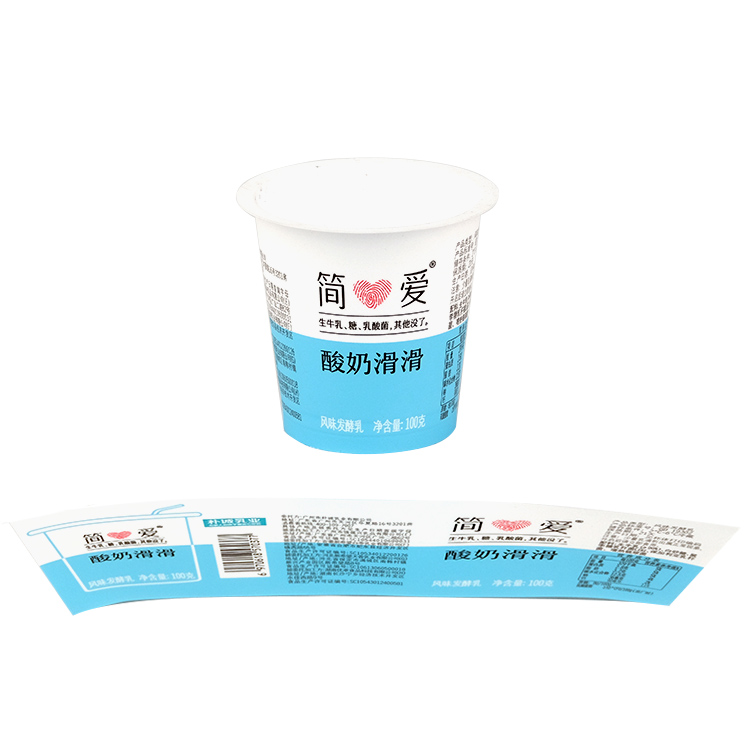
Matte white laminated film, a common choice for food and daily chemical IML packaging.
Custom In Mold Labels: What Can Be Customized?
A custom in mold label involves more than changing artwork. Customization can cover the entire label system:
- Custom printing: brand colors, logos, text, and visual effects.
- Custom size and shape: label dimensions and die-cut profile matched to the mold cavity.
- Custom color matching: Pantone or brand-specific color calibration.
- Custom film formulation: adjusting stiffness, adhesion, lamination, or surface texture for a specific container and molding process.
- Custom surface finishes: glossy, matte, orange peel, holographic, custom texture.
Suppliers with in-house printing and film expertise can usually advise on which combination of film type, finish, and ink system will perform best for a given product type. For example, a yogurt cup running on a high-speed injection line will have different IML requirements than a blow-molded lubricant bottle running at lower cycle speeds.
Food Safety and Compliance Standards for Food Grade In Mold Labels
Food grade in mold labels must satisfy strict safety requirements because they are in direct contact with food or become a structural part of food packaging.
In the EU, plastic materials intended to come into contact with food must comply with Regulation (EU) No 10/2011, which covers the composition and migration limits of plastic food contact materials. In the United States, FDA 21 CFR Part 177 regulates the polymers used for direct food contact applications, including PE and PP. Suppliers that serve international markets should also maintain manufacturing control systems such as ISO22000, BRCGS, and QS certification.
For food contact IML production, the film is commonly made from food-grade virgin resin and printed with food-grade low-migration water-based ink. These choices reduce the risk of odor, taste transfer, or unsafe substance migration into food.
| Compliance Framework | Relevance |
|---|---|
| FDA 21 CFR Part 177 | Regulates food-contact polymers such as PE and PP in the US market. |
| (EU) No 10/2011 | Sets composition and migration rules for plastic food contact materials in the EU. |
| BRCGS Packaging Materials | Packaging safety and quality management certification for the packaging supply chain. |
| ISO22000 | Food safety management system certification. |
| QS | Quality safety certification widely used in the Chinese food packaging industry. |
Buyers should ask for documentation, not just claims. A reliable supplier should be able to show food contact material documentation, migration test reports, and evidence that food-grade films and inks are actually used in production.
Choosing a Custom In Mold Label Supplier
Selecting the right IML supplier requires more than comparing unit prices. The supplier’s manufacturing depth directly influences label quality, consistency in large orders, and the ability to solve problems when the container design is difficult.
Use these evaluation points as a starting checklist:
Manufacturing capability
Look for a supplier with in-house rotogravure printing, lamination, cutting, and film formulation knowledge. A supplier with integrated production can keep quality control consistent from raw film to finished label.
Experience with your type of packaging
IML for yogurt cups is not the same as IML for paint buckets. Ask the supplier whether they have produced labels for your container type, molding process, and material combination. Suppliers with relevant experience can reduce trial-and-error during sampling.
Technical parameters and testing
Request specifications such as adhesion strength, printing precision, thickness range, temperature resistance, scratch resistance, and chemical resistance. If the supplier provides a technical data sheet, verify that the values match the materials supplied.
Certifications and documentation
For food packaging, confirm food grade certifications and migration testing. For other industries, confirm quality management certifications and any industry-specific compliance documents.
Sampling and defect control
Ask how the supplier handles sampling, color approval, and defect prevention. High-speed injection molding demands consistent label dimensions and adhesion; a supplier with strict inspection standards from raw material intake to finished goods can reduce production line interruptions.
How to Evaluate IML Sample Quality
Before placing a large order, most buyers complete a sampling stage. When you evaluate IML samples, look at these factors:
- Color accuracy: Compare the printed label to the approved color target under standard lighting.
- Edge cutting: Check that die-cut edges are smooth and match the mold cavity contour.
- Surface finish: Confirm the expected gloss, matte, or texture effect.
- Molding performance: Run the label through the actual injection or blow molding line to confirm adhesion and no warping.
- Label position: Verify that the label stays centered in the mold during high-speed cycles and does not fall off.
Price Considerations and Total Cost of Ownership
IML unit price depends on film type, thickness, print complexity, number of colors, size, finishing, and order volume. Custom IML is generally not a commodity product; the lowest quoted price can lead to higher losses on the molding line if the label has inconsistent adhesion or dimensional accuracy.
Buyers should compare total cost of ownership, which includes the label price, line wastage, defect rate, logistics, and the risk of shelf failure. A label with stronger adhesion and better scratch resistance may cost more per unit but can reduce rejects and protect the brand’s image.
Comparing IML Suppliers: What to Look For
When comparing suppliers, focus on comparable technical and commercial dimensions rather than generic marketing claims. The following table summarizes typical evaluation criteria.
| Evaluation Criterion | What to ask | Why it matters |
|---|---|---|
| Production depth | Does the supplier print, laminate, and cut in-house? | Integrated production normally means more consistent quality and shorter feedback loops. |
| Material range | Is PP, PE, PET, and multi-layer composite available? | Material flexibility helps match the label to the container resin. |
| Printing quality | Number of colors, printing precision, and color management process. | High precision reduces visual defects and brand inconsistency. |
| Certifications | Food contact and quality system certifications. | Certified systems are a baseline for international packaging supply. |
| Production capacity | Annual output, number of lines, and lead time. | Capacity affects delivery reliability and scalability. |
| Problem solving | Can the supplier adjust film formulation if molding results are poor? | A knowledgeable supplier can fix root causes rather than only rejecting bad labels. |
Workflow: From Inquiry to In Mold Label Production
A typical IML procurement project follows these stages:
- Project definition: Define the container type, plastic resin, molding process, filling conditions, distribution environment, and compliance requirements.
- Supplier inquiry: Share product photos, dimensions, desired label size, quantity, and your compliance requirements.
- Technical review: The supplier recommends film material, thickness, ink system, surface finish, and lamination structure.
- Sampling: The supplier produces artwork proofs, printed film samples, or molded samples for evaluation.
- Production: After sample approval, the supplier runs rotogravure printing, lamination, cutting, and quality inspection.
- Quality control and shipment: Finished labels are inspected and packed according to agreed standards, then shipped to your molding facility.
Buyers who provide clear requirements at the inquiry stage receive more accurate recommendations and a faster sampling process. It is especially helpful to mention whether the label is for food contact, whether the container will experience hot filling or cold chain, and whether the molding process is injection or blow molding.
Illustrative IML Supplier Profile: YZY (Zhejiang Zhongyu Science and Technology Co., Ltd.)
ZHEJIANG ZHONGYU SCIENCE AND TECHNOLOGY CO., LTD. is a manufacturer that specializes in in-mold labeling production. The company, established in 2009, is located at Building 59, Zone E, Guohong Zhizao New Town, Xingke Road, Longgang, Wenzhou, Zhejiang, China. It employs approximately 250 staff and operates a manufacturing facility covering 20,000 square meters, with an annual production capacity reaching 200,000,000 units.
The company’s main products include in mold labeling, sealing films, embossed sheet sealing lids, and POF films. Its product range includes the ZY-IML Series, which covers food grade, daily chemical grade, and industrial grade in mold labels. Export business accounts for 30% of total sales, with major markets worldwide.
Yzy has accumulated 48 patents and holds QS, ISO, BRC, and other management system certifications. The company states that it has established long-term cooperation with brands such as Starbucks, Nestlé, and Uni-President. These facts are relevant because they show manufacturing experience, certification coverage, and established trust in international food and beverage packaging.
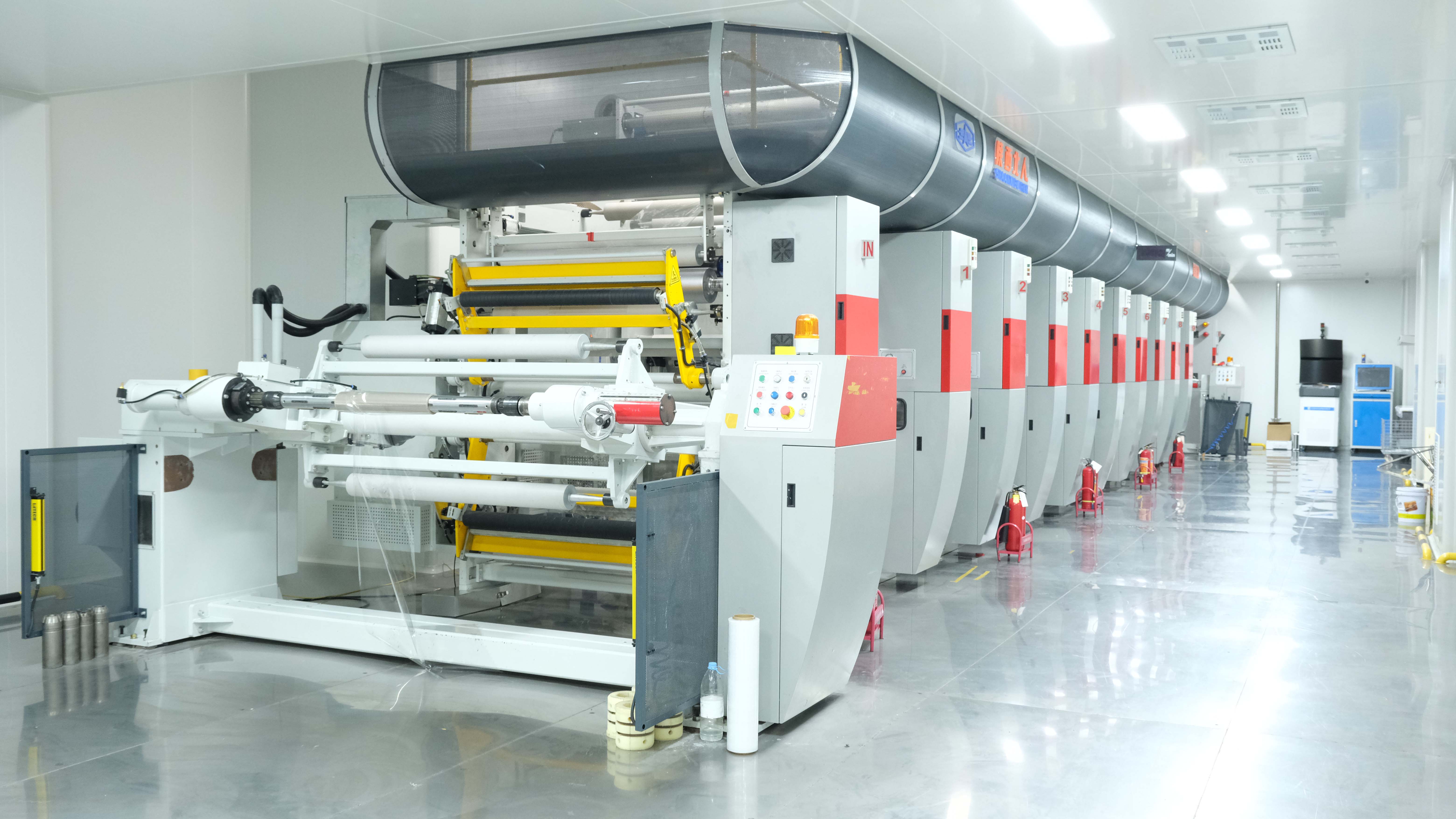
In-house printing press used for rotogravure in mold label film production.
How to Contact YZY
For product samples, custom IML project inquiries, or distributor partnerships, you can contact YZY directly:
- Email: yzy@inmoldlabel.net
- Phone / WhatsApp: +86 182 6778 1866
- Website: www.inmoldlabel.net
- Download the company brochure: YZY In Mold Label Catalog
Frequently Asked Questions
Is in mold label technology compliant with food contact regulations?
Yes, food grade in mold labels can be manufactured to comply with food contact regulations. For the EU market, plastic food contact materials must comply with Regulation (EU) No 10/2011. For the US market, FDA 21 CFR Part 177 covers polymers such as PE and PP used in direct food contact applications. Food grade IML should be produced with food-grade virgin resin and food-grade low-migration water-based ink to minimize migration risk. YZY's ZY-IML Series is marketed as meeting FDA 21 CFR, BRCGS Packaging Materials, ISO22000, and QS certification standards, with migration testing according to EU 10/2011 requirements.
Can in mold labels be used for injection molding and blow molding?
Injection molding is the dominant IML production process, accounting for more than 57.1% of the market in 2023 (Grand View Research). In mold labels are also used in blow molding for hollow containers such as lubricant bottles and detergent bottles. The label must be designed for the specific molding process because film stiffness, adhesive activation, and label shape stability may need to be adjusted. When buying custom in mold labels, confirm that the supplier has experience with your process, whether injection molding or blow molding.
What is the typical price of a custom in mold label?
Custom in mold label pricing depends on film material, thickness, size, number of print colors, surface finish, lamination, order volume, and compliance requirements. There is no universal unit price because material and specification differences are large. Buyers should compare total cost of ownership, including line wastage and defect rates, rather than only comparing unit prices. Request a quotation with your specific label dimensions, material, printing requirements, and annual volume to receive accurate pricing.
What samples can a supplier provide for in mold label evaluation?
A typical IML sample package includes artwork proofs, printed film samples, and sometimes molded sample containers produced with the label embedded. Sample evaluation should cover color accuracy, die-cut edge quality, surface finish, adhesion during molding, and label positioning under high-speed molding conditions. Contact a supplier with your product details to request samples that match your container and application.
How long does it take to produce custom in mold labels?
Lead time depends on design confirmation, film availability, printing complexity, order volume, and the supplier's production schedule. After artwork and specification approval, an established manufacturer with in-house gravure printing capacity can typically provide a more predictable timeline than a trading company. To get an accurate lead time, submit your project requirements and target launch date when requesting a quote.
If you are evaluating an IML project, download the YZY product brochure or contact yzy@inmoldlabel.net / +86 182 6778 1866 for sample and quotation support.
Conclusion
In mold label technology turns the label into a permanent part of the plastic container, combining branding, decoration, protection, and food contact safety in a single manufacturing step. PP, PE, and PET films, custom rotogravure printing, and exact die-cutting allow IML to serve yogurt cups, bubble tea cups, paint buckets, lubricant buckets, cosmetics, and daily chemical packaging.
When buying in mold labels, focus on material compatibility, printing precision, adhesion strength, temperature resistance, scratch resistance, and food contact compliance. Choose a supplier with demonstrated manufacturing depth, relevant certifications, and experience with your container type and molding process. A reliable IML supplier will help you reduce line waste, protect your branding, and bring your packaging to market with confidence.
Request IML samples or a custom quotation
Email: yzy@inmoldlabel.net | Phone / WhatsApp: +86 182 6778 1866
Download Company BrochureHave Questions or Need More Details?
Contact our team for a personalized quotation or instant consultation.
Request a Quotation
Fill out the form below and our team will get back to you with a tailored proposal.
WhatsApp Direct Chat
Prefer to chat in real-time? Message us on WhatsApp for instant assistance & quick answers.
- Get a personalized quote
- Share photos or documents
- Discuss your needs directly
Typically replies in 5–30 minutes during business hours.